These notes were written by the person who submitted this item. Appraiser.AI has not verified them, and the AI's identification and estimate may rely on them.
AI Estimated Value
Not an official valuation
$10-30
AI estimate as of July 24, 2025 · verify with a professional before acting
AI-Generated · Verify before acting
Everything on this page is generated by AI for informational purposes only. AI can make mistakes — the AI may misidentify items or misattribute them (artist, maker, brand, designer, origin, era). This is not an official valuation and should not be used for insurance, sale, tax, estate, legal, or lending purposes — or any decision requiring a certified appraisal. It is not an authoritative claim about any person, brand, or rights holder — do not share or rely on it as a factual statement about a third party. Always consult qualified professionals before making financial decisions.
This analysis also relies on unverified notes provided by the user, which may be incomplete or inaccurate and could affect the result.
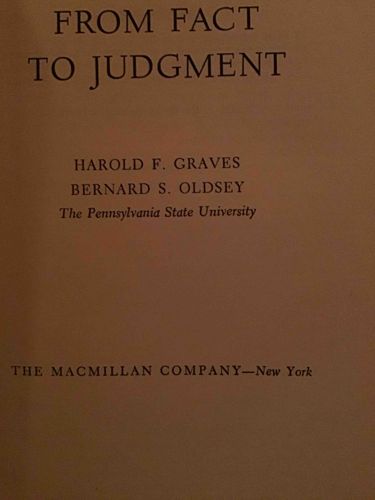
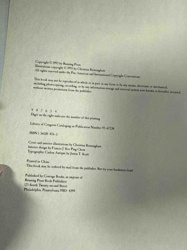
This item is identified as the title page of a book titled 'FROM FACT TO JUDGMENT'. The page is characterized by a warm, light brown or tan background color, suggesting aged paper or a deliberate aesthetic choice. The text is printed in a dark, possibly black or very dark brown, ink, providing a clear contrast against the background. The typography appears to be a classic serif font, lending a formal and academic feel to the publication. The title 'FROM FACT TO JUDGMENT' is prominently displayed at the top, likely in a larger font size than the rest of the text, indicating its primary importance. Below the title, the authors are listed: 'HAROLD F. GRAVES' and 'BERNARD S. OLDSEY', with 'The Pennsylvania State University' attributed as their affiliation, suggesting an academic or scholarly work. At the bottom of the page, the publisher 'THE MACMILLAN COMPANY—New York' is stated, indicating the publishing house and its primary location. The overall condition appears to be good, with no visible tears, significant creases, or major discoloration that would suggest neglect or poor storage, consistent with the 'good condition' context provided. The print quality seems consistent and clear, with no obvious smudges or misprints. The design is minimalistic, focusing on legibility and the presentation of key information, typical of academic or non-fiction books from the mid-20th century. Without a copyright date, the exact age cannot be confirmed, but the styling is consistent with books published from the 1940s to the 1960s.
AI Appraisal Report
Based on my visual examination of the provided image, the title page of 'FROM FACT TO JUDGMENT' appears to be in good condition. The paper shows a warm, light brown tone, consistent with aging, but importantly, there are no visible tears, significant creases, or major discoloration that would downgrade its condition. The print quality is clear and consistent. The typography is a classic serif font, and the layout is minimalistic, which aligns with academic or non-fiction books from the mid-20th century. The prominent display of the title, authors Harold F. Graves and Bernard S. Oldsey from The Pennsylvania State University, and publisher The Macmillan Company – New York, all contribute to its authenticity as a published work.
However, it is crucial to state that a definitive assessment of authenticity and condition cannot be made from an image alone. Without a physical inspection, I cannot verify the paper's texture, weight, or detect subtle foxing, staining, or repairs. There is no copyright date visible, so the exact publication year remains unknown, which impacts market comparables. Books of this nature, especially academic texts, generally have a limited market unless they are first editions, signed copies, or hold significant historical or subject matter importance. Comparable academic texts from the 1940s-1960s by non-celebrated authors, even in good condition, typically do not command high prices. Demand is low, and rarity is not a significant factor here, as countless academic texts were published during this period. Factors impacting value negatively include the lack of a known first edition status, author prominence, or extraordinary subject matter. To fully authenticate this item and establish its precise value, an in-person examination is essential to confirm paper quality, binding (if present in the full book), edition details (copyright page), and any hidden flaws. Provenance documentation, such as purchase records or previous ownership history, would also be beneficial.