AI estimate as of August 16, 2026 · verify with a professional before acting
AI-Generated · Verify before acting
Everything on this page is generated by AI for informational purposes only. AI can make mistakes — the AI may misidentify items or misattribute them (artist, maker, brand, designer, origin, era). This is not an official valuation and should not be used for insurance, sale, tax, estate, legal, or lending purposes — or any decision requiring a certified appraisal. It is not an authoritative claim about any person, brand, or rights holder — do not share or rely on it as a factual statement about a third party. Always consult qualified professionals before making financial decisions.
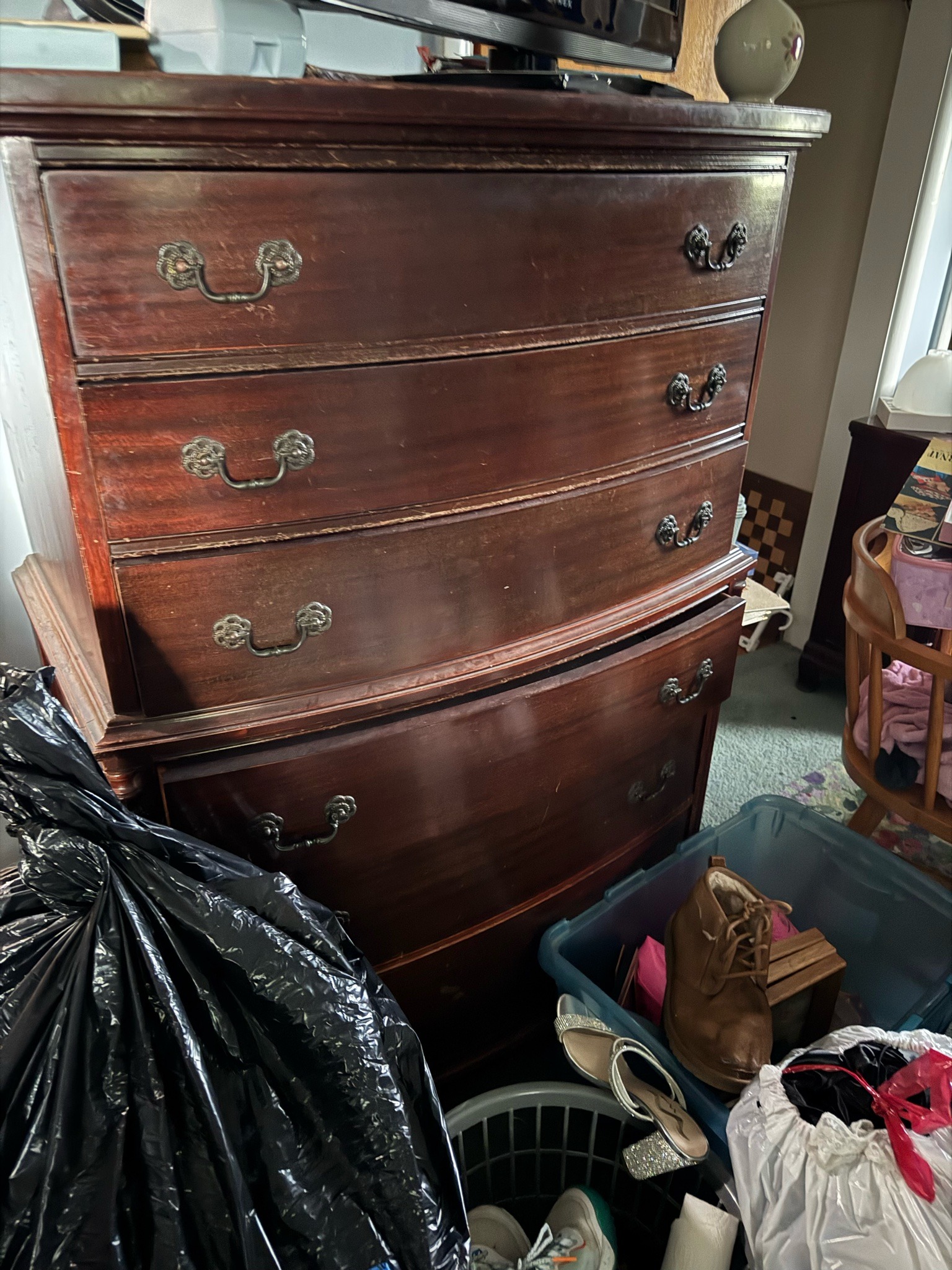
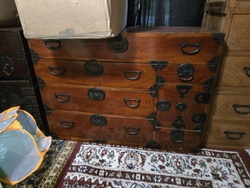
This is a large wooden chest of drawers, styled in a traditional Victorian serpentine or bowed-front design. Constructed from dark-toned hardwood, likely mahogany or a mahogany veneer over secondary woods, the piece features multiple stacked drawers showing graduated depths. The upper drawers are narrower, while the lower drawers provide substantial storage capacity, following the gently curving, undulating swell of the front facade. The hardware consists of decorative cast metal swing handles featuring ornate backplates and small drop pulls, which display a dark, aged finish. The surface exhibits a warm reddish-brown wood grain with significant visible wear, scratches, scuffs, and edge chipping, particularly along the drawer borders and top surface edges, consistent with age and heavy use. The overall craftsmanship and styling suggest a nineteenth-century period piece, though there are no visible maker's marks or stamps captured in the photograph. The identification is based entirely on the visual characteristics, form, and structural silhouette.
AI Appraisal Report
Based on what I can see in the photograph, this chest of drawers displays visual characteristics consistent with a nineteenth-century Victorian serpentine-front piece, likely crafted from mahogany or featuring a mahogany veneer. The undulating facade, stacked graduated drawers, and ornate metal hardware align with traditional period styling. However, I can't verify the exact wood species, internal construction methods, or age from a photo alone; physical inspection to confirm joinery and secondary woods would be necessary. The estimated value range of $1,200 to $2,000 assumes that the attribution to the Victorian period is correct and that the piece is structurally sound despite the significant visible wear, edge chipping, scuffs, and surface scratches noted along the borders and top. General market demand for antique case pieces of this type remains steady among traditional interior decorators, though items showing heavy surface degradation often require professional conservation, which impacts buyer interest. To establish the age, materials, and potential workshop origin more thoroughly, one would need an in-person examination by a qualified furniture conservator, detailed inspection of interior drawer construction, and a search for any hidden maker's stamps or historical provenance documentation. If this item were to turn out to be a later reproduction, replica, or made simply in the style of nineteenth-century furniture rather than a period piece, the market value would drop substantially, typically falling closer to $300 to $600 depending on the quality of construction.