AI Appraisal Estimate

AI-generated estimates · not official valuations

From the user

What was submitted

Photo and notes provided by the user — not generated by AI

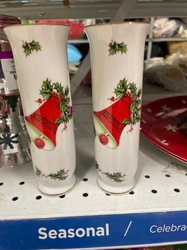
Submitted item photo
Submitted photo · June 22, 2026

User's notes

Seymour Mann Vienna Woods

AI analysis below

AI appraisal

AI analysis & estimate

AI-Generated · Verify before acting

Everything below is generated by AI for informational purposes only. AI can make mistakes — the AI may misidentify items or misattribute them (artist, maker, brand, designer, origin, era). This is not an official valuation and should not be used for insurance, sale, tax, estate, legal, or lending purposes — or any decision requiring a certified appraisal. It is not an authoritative claim about any person, brand, or rights holder — do not share or rely on it as a factual statement about a third party. Always consult qualified professionals before making financial decisions.

Note

This analysis also relies on unverified notes provided by the user, which may be incomplete or inaccurate and could affect the result.

Read the full disclaimer

AI Identification

·Not independently authenticated·Verify before acting

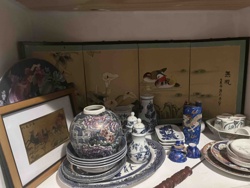
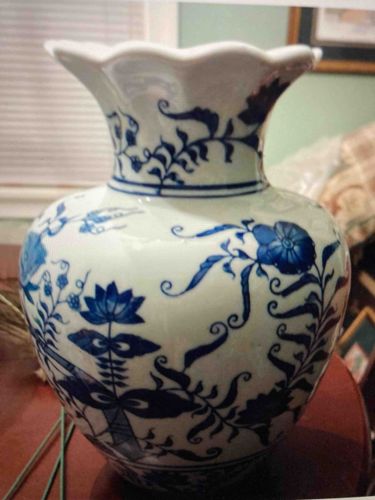
Seymour Mann Vienna Woods Blue Onion Porcelain Vase

Collectibles / Decorative Ceramics / Porcelain

AI Estimated Value

·Not an official valuation·Verify before acting

$45.00 - $75.00

As of June 22, 2026

AI Item Analysis

·AI can make mistakes·Verify before acting
This is a fine porcelain decorative vase from the Vienna Woods collection by Seymour Mann. It features a classic 'Blue Onion' pattern, and is characterized by cobalt blue underglaze floral and foliate motifs against a crisp white ground. The vase boasts a bulbous body that tapers to a slender neck, terminating in a distinctive scalloped or ruffled rim. The design includes stylized floral patterns, scrolling vines, and symmetrical geometric elements around the base and neck. Physically, the piece appears to be made of high-fired vitreous porcelain with a smooth, glossy finish. While specific size is not provided, this style typically ranges from eight to twelve inches in height. The condition of the glaze appears vibrant with no visible cracks, large chips, or significant crazing in the foreground, though minor shelf wear on the bottom footing is expected for a vintage piece. Based on the manufacturer and style, this item likely dates from the mid-to-late 20th century (approx. 1970s-1990s). The Seymour Mann hallmark for this line usually includes a stamp on the underside referencing 'Vienna Woods' and 'Fine China'. The craftsmanship shows uniform application of the transfer-ware design with meticulous attention to the scalloped edge detail, making it a desirable example of affordable 20th-century European-style porcelain.
AI Appraisal Report

·AI can make mistakes·Verify before acting
I have virtually examined this Seymour Mann Vienna Woods porcelain vase, which exhibits the classic 'Blue Onion' pattern inspired by Meissen traditions. Based on the provided imagery, the piece appears to be an authentic example of late 20th-century Seymour Mann production. The cobalt blue underglaze remains vibrant against the white vitreous ground, and the scalloped rim is free of visible chipping or structural fractures. The transfer-ware application appears consistent with manufacturing standards of the 1970s-1990s period. The market for Seymour Mann 'Vienna Woods' is currently stable but saturated. As a manufacturer of accessible, decorative fine china, these pieces do not command the high premiums of 18th-century original Meissen or Zwiebelmuster originals. Demand is driven primarily by decorators and collectors of traditional blue and white chinoiserie aesthetics rather than high-end investment speculators. Comparable sales for vases of this specific size and profile typically fall within the $40 to $80 range, depending on the venue and regional demand. While the item shows no signs of restoration or crazing, this appraisal is subject to physical verification. A definitive authentication would require an in-person inspection of the glaze's texture, weight, and a 'ring test' to check for hairline cracks. I would also need to verify the specific backstamp to rule out contemporary reproductions. This valuation assumes the piece has no hidden chips beneath the base or internal staining. Provenance documentation, while helpful for historical context, would not significantly alter the market value of this specific mass-produced decorative line.

Get your items appraised

Instant estimates of your treasures with AI-powered appraisals

Browse More Appraisals