AI estimate as of October 9, 2025 · verify with a professional before acting
AI-Generated · Verify before acting
Everything on this page is generated by AI for informational purposes only. AI can make mistakes — the AI may misidentify items or misattribute them (artist, maker, brand, designer, origin, era). This is not an official valuation and should not be used for insurance, sale, tax, estate, legal, or lending purposes — or any decision requiring a certified appraisal. It is not an authoritative claim about any person, brand, or rights holder — do not share or rely on it as a factual statement about a third party. Always consult qualified professionals before making financial decisions.
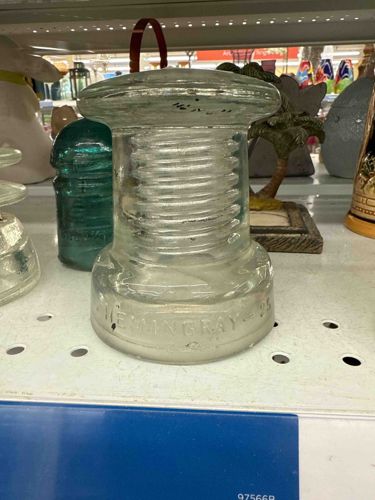
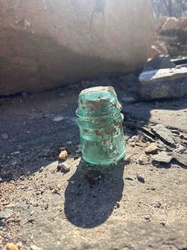
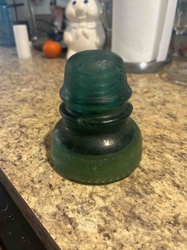
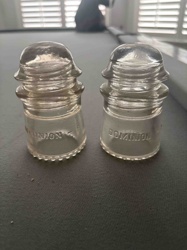
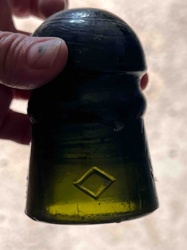
This item is a clear glass electrical insulator, specifically a Hemingray No. 95, based on the embossed lettering clearly visible around the base. It is constructed from a robust, translucent glass, exhibiting a very faint greenish or bluish tint, characteristic of earlier glass manufacturing processes and impurities in the silica. The overall form is typical of a spool-style or 'pony' insulator, designed for securely holding electrical wires on utility poles. Physically, it features a rounded top or dome, below which the body tapers slightly inward before flaring out to a broader base. The central part of the insulator is threaded internally, designed to screw onto a pin. These threads are clearly visible through the clear glass, spiraling downwards. The surface appears smooth, though consistent with molded glass, minor seam lines might be present but are not clearly discernible in the provided image. There are no obvious cracks or large chips; however, some surface wear, scuffs, and possibly some dirt or discoloration, particularly around the top and base, are noticeable, consistent with age and previous outdoor use. Small black specks on the top dome could be dirt or minor imperfections. The embossed 'HEMINGRAY' and '95' confirm its maker and model number, indicating a manufacturing origin from the Hemingray Glass Company, a prominent producer of insulators during the late 19th and early 20th centuries. The '95' typically refers to the style or size. Given its common clear glass composition and style, this insulator likely dates from the late 1890s through the mid-20th century, though dating would be more precise with mold numbers or drip points. The craftsmanship is functional, typical of mass-produced industrial glass, designed for utility rather than aesthetic perfection. The glass quality suggests a dependable, durable item for its intended purpose.
AI Appraisal Report
Based on my visual examination of the provided image, I can confirm this is a Hemingray No. 95 glass insulator. The embossed 'HEMINGRAY' and '95' are clear, establishing its authenticity as a product from the well-known Hemingray Glass Company. The clear glass with a faint greenish/bluish tint is characteristic of insulators produced from the late 1890s through the mid-20th century. The functional design, threaded pin, and overall proportions are consistent with this model.
The condition appears to be good for an item of its age and intended outdoor use, exhibiting typical surface wear, scuffs, and minor dirt/discoloration, particularly on the dome and base. I do not observe any significant chips or cracks, which would considerably reduce its value. The small black specks are likely surface dirt or minor inclusions.
Regarding market conditions, Hemingray No. 95 insulators are among the most common and widely collected pieces. While authentic, their sheer volume in the market means they are not rare. Demand exists within the insulator collecting community, but due to their commonality, their value is modest. Factors impacting value positively would be pristine condition, unusual colors (which this is not), or rare mold variations; conversely, significant damage would decrease it. This particular example falls squarely into the common category.
It is important to note the limitations of image-based appraisal. While authenticity as a Hemingray No. 95 is clear, a full in-person examination would allow for definitive assessment of hairline cracks, internal damage, precise color variations (often subtle), and confirmation of the absence of repairs or alterations. Measuring 'drip points' or inspecting mold numbers/manufacturer's marks (if present elsewhere on the insulator) through physical handling could narrow down the manufacturing date range more precisely. Provenance documentation (e.g., original sales receipts, historical installation photos) would add to its historical value but is not typically available or necessary for common insulators like this.