AI Appraisal Estimate

AI-generated estimates · not official valuations

From the user

What was submitted

Photo and notes provided by the user — not generated by AI

Submitted item photo
Submitted photo · June 4, 2026

User's notes

No additional notes provided.

AI analysis below

AI appraisal

AI analysis & estimate

AI-Generated · Verify before acting

Everything below is generated by AI for informational purposes only. AI can make mistakes — the AI may misidentify items or misattribute them (artist, maker, brand, designer, origin, era). This is not an official valuation and should not be used for insurance, sale, tax, estate, legal, or lending purposes — or any decision requiring a certified appraisal. It is not an authoritative claim about any person, brand, or rights holder — do not share or rely on it as a factual statement about a third party. Always consult qualified professionals before making financial decisions.

Read the full disclaimer

AI Identification

·Not independently authenticated·Verify before acting

Rococo-Style Resin Cherub and Cornucopia Tabletop Mirror

Home Decor - Decorative Mirrors

AI Estimated Value

·Not an official valuation·Verify before acting

$45 - $75

As of June 4, 2026

AI Item Analysis

·AI can make mistakes·Verify before acting
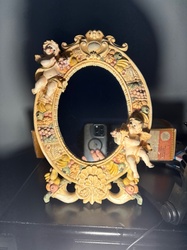
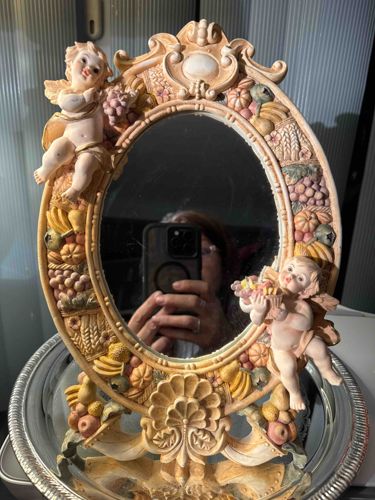
This is a decorative oval tabletop mirror featuring an ornate, relief-molded frame in a Rococo-revival style. The frame is constructed from a cast resin or cold-cast porcelain material, finished in muted pastel tones of cream, ochre, dusty rose, and pale green. The design motif is centered around the theme of harvest and plenty, featuring two distinctively sculpted cherubs (putti) perched on the upper-left and lower-right sides. The cherub on the left appears to be holding a cluster of grapes, while the one on the right holds a small basket. The frame is densely decorated with a 'cornucopia' of fruits and vegetables, including grapes, pears, wheat stalks, and pumpkins, interwoven with scrollwork and a prominent shell-like palmette at the base. In terms of condition, the piece shows some accumulation of dust in the deep crevices of the relief molding, which is typical for items of this complexity. There is a visible patina that may be intentional to mimic aged stone or plaster, though some surface grime is present. No major chips or structural cracks are immediately visible on the frame, though the mirror glass shows some minor surface smudging. There are no visible maker's marks or signatures on the face of the item, suggesting it is a mass-produced decorative object rather than a fine art original. The quality of the molding is moderate, showing some soft edges characteristic of late 20th-century decorative resin casting. The overall aesthetic is romantic and classical, likely dating from the 1980s to the early 2000s.

AI Appraisal Report

·AI can make mistakes·Verify before acting
Upon visual inspection of this Rococo-style tabletop mirror, I find it to be a contemporary decorative accessory produced in the late 20th century, likely between 1985 and 2005. The piece is cast in a synthetic resin or polyresin, a material favored for its ability to mimic the weight and detail of carved stone or porcelain at a lower production cost. The motifs of putti and a cornucopia of harvest fruits are well-executed but lack the crispness found in high-end bisque or hand-carved wood. The pastel finish and intentional patina suggest a mass-market provenance common to high-end giftware retailers. The condition appears fair to good; while the frame is structurally sound, the accumulation of dust and minor surface grime in the deep relief indicates a need for professional cleaning to restore visual appeal. Market demand for this 'shabby chic' or romantic aesthetic remains stable but saturated. Comparables for mass-produced resin mirrors of this size typically sell within the $40 to $80 range at estate sales or online secondary markets. The lack of a maker's mark further confirms its status as a decorative rather than a collectible investment piece. Limitations: This appraisal is based solely on digital images. A physical examination is required to rule out hidden structural repairs, verify the exact material composition (e.g., to ensure it is not a heavy composite stone), and check the silvering on the mirror's reverse for age-related desilvering. Provenance documentation or original sales receipts would be necessary to identify the specific manufacturer if higher valuation were sought.

Get your items appraised

Instant estimates of your treasures with AI-powered appraisals

Browse More Appraisals