AI estimate as of October 25, 2025 · verify with a professional before acting
AI-Generated · Verify before acting
Everything on this page is generated by AI for informational purposes only. AI can make mistakes — the AI may misidentify items or misattribute them (artist, maker, brand, designer, origin, era). This is not an official valuation and should not be used for insurance, sale, tax, estate, legal, or lending purposes — or any decision requiring a certified appraisal. It is not an authoritative claim about any person, brand, or rights holder — do not share or rely on it as a factual statement about a third party. Always consult qualified professionals before making financial decisions.
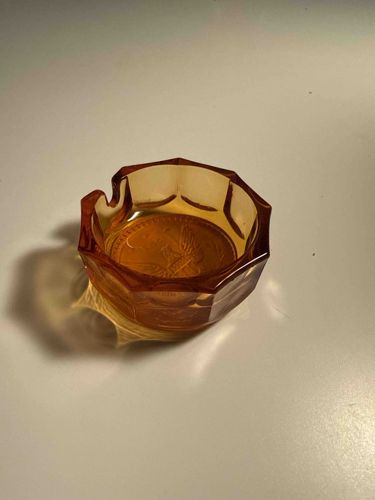
This is a small, octagonal ashtray crafted from amber-colored glass, likely pressed glass, exhibiting a warm translucent brown hue. The design features faceted exterior walls that catch and refract light, adding to its visual appeal. The rim includes two U-shaped indentations, typical for holding cigarettes. A unique and prominent feature is the circular depression in the center of the interior, which houses a coin. While the exact details of the coin are somewhat obscured by the glass and lighting, it appears to be a U.S. coin, possibly a dollar coin, given its size and visible relief, which includes what looks like an eagle or similar emblem. The coin is permanently embedded within the glass, indicating it was incorporated during the manufacturing process, either by being pressed into molten glass or set within a composite resin below a glass layer. The overall construction suggests a vintage piece, likely from the mid-20th century, a period when such decorative glass items were popular. The glass shows no obvious cracks or major chips, but typical surface wear consistent with age and use may be present, though not clearly discernible from the image. The craftsmanship is utilitarian but decorative, with the faceted forms demonstrating common glass molding techniques of the era. The inclusion of the coin serves as a distinctive design element, making it more than just a functional ashtray.
AI Appraisal Report
Based on my visual examination of the provided image, this amber glass ashtray with an embedded coin appears to be a vintage piece, likely from the mid-20th century. The octagonal shape, faceted exterior walls, and U-shaped cigarette rests are characteristic of pressed glass utility wares from that period. The amber hue is a common and appealing color for such items. I observe no obvious cracks or significant chips from the image, suggesting good overall condition for its age, though minor surface wear, scratches, or fleabites common with used glassware cannot be ruled out without a tactile inspection.
The most distinctive feature is the embedded coin. While its exact denomination and year are unclear, it appears to be a U.S. coin, possibly a quarter or fifty-cent piece, rather than a dollar coin as initially suggested, given the typical size of these ashtrays. The embedment method suggests it was incorporated during manufacture, a novelty popular during that era. Authenticity, in terms of it being a period piece, seems likely given the style and glass characteristics visible. However, definitively authenticating the coin itself or its precise embedment method would require in-person examination.
Market conditions for vintage pressed glass ashtrays are generally modest. While the embedded coin adds a unique selling point, it doesn't dramatically inflate value unless the coin itself is rare or of significant numismatic interest, which is not determinable here. Comparable items rarely exceed $50. Demand is moderate among collectors of vintage glassware or Americana curiosities. The rarity of this specific model is not exceptionally high, as coin-embedded items wereproduced by various manufacturers. Factors impacting value are primarily condition, the appeal of the amber glass, and the novelty of the embedded coin. Without physical inspection, I cannot confirm the absence of imperfections, the exact coin details, or any maker's marks, which would refine this appraisal. Provenance documentation, if available, could also enhance its value by confirming its history.