AI estimate as of November 15, 2025 · verify with a professional before acting
AI-Generated · Verify before acting
Everything on this page is generated by AI for informational purposes only. AI can make mistakes — the AI may misidentify items or misattribute them (artist, maker, brand, designer, origin, era). This is not an official valuation and should not be used for insurance, sale, tax, estate, legal, or lending purposes — or any decision requiring a certified appraisal. It is not an authoritative claim about any person, brand, or rights holder — do not share or rely on it as a factual statement about a third party. Always consult qualified professionals before making financial decisions.
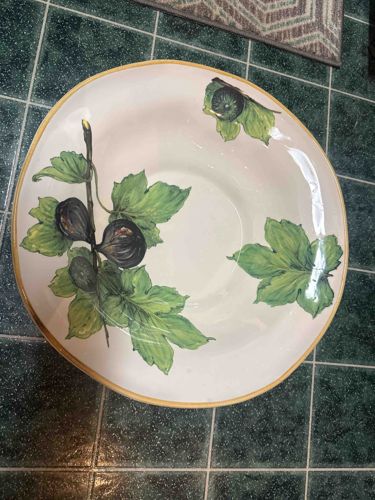
This item is a decorative ceramic serving bowl or shallow platter, distinguished by its hand-painted fig and leaf motif. The piece features an irregular, organic, or slightly scalloped edge, outlined with a warm yellow or golden-colored rim that provides a subtle contrast to the main body. The base color of the ceramic is a creamy off-white or very light pinkish-beige, which serves as a neutral canvas for the vibrant botanical design. The primary decoration consists of several clusters of figs and their associated leaves. The figs are depicted in varying stages of ripeness, showcasing deep purplish-black hues with lighter reddish-brown undertones, suggesting a naturalistic approach. The leaves are rendered in various shades of green, from lighter chartreuse to deeper forest green, with visible vein details adding to their realism. The brushwork appears deliberate and somewhat painterly, indicating a hand-applied decoration rather than a printed or decal application. The glaze finish appears glossy, enhancing the colors and providing a protective layer. There are no immediately visible chips, cracks, or significant abrasions on the surface, suggesting good preservation. The underside or back of the piece is not visible, so any backstamps, maker's marks, or signatures that could identify the manufacturer or artist are not discernible. Based on the style of painting and the organic form, it likely dates from the mid-20th century to contemporary, possibly European in origin, particularly Italian, given the popularity of fruit motifs in ceramics from that region. The craftsmanship appears to be of good quality, focusing on aesthetic appeal and functional use as a serving dish.
AI Appraisal Report
Upon visual examination of the provided image, I assess this hand-painted ceramic fig motif serving bowl/platter to be in excellent condition. There are no visible chips, cracks, or significant wear evident on the glossy surface, which suggests careful handling and storage. The hand-painted fig and leaf motif, with its naturalistic colors and deliberate brushwork, points to a decorative piece of good quality. The organic, scalloped edge and warm yellow rim further enhance its aesthetic appeal.
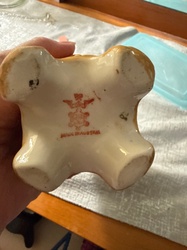
Authenticity, based solely on imagery, is challenging. While the style is consistent with mid-20th century to contemporary European ceramics, particularly Italian, I cannot definitively confirm its origin or artist without examining any potential backstamps, maker's marks, or signatures on the unseen underside. The absence of such marks limits definitive attribution.
Market conditions for decorative ceramics of this type, especially those with appealing botanical themes, are generally stable. Comparable items featuring hand-painted fruit motifs, particularly those from identified Italian manufacturers like Vietri or Deruta (even if this piece is unmarked), typically fetch prices in the range I've indicated. Demand for such items is moderate, driven by collectors of decorative arts and individuals seeking accent pieces for their homes. While not rare, the quality of the hand-painting and excellent condition contribute to its desirability.
Limitations in authenticity verification are significant without a physical inspection. An in-person examination would allow for a tactile assessment of material, closer inspection for artist marks, and a more thorough condition report. Provenance documentation, if available, would firmly establish its history and origin, potentially influencing value. Scientific testing is generally not applied to items of this nature unless there's a specific question of material composition or age beyond visual assessment.