AI Appraisal Estimate

AI-generated estimates · not official valuations

From the user

What was submitted

Photo and notes provided by the user — not generated by AI

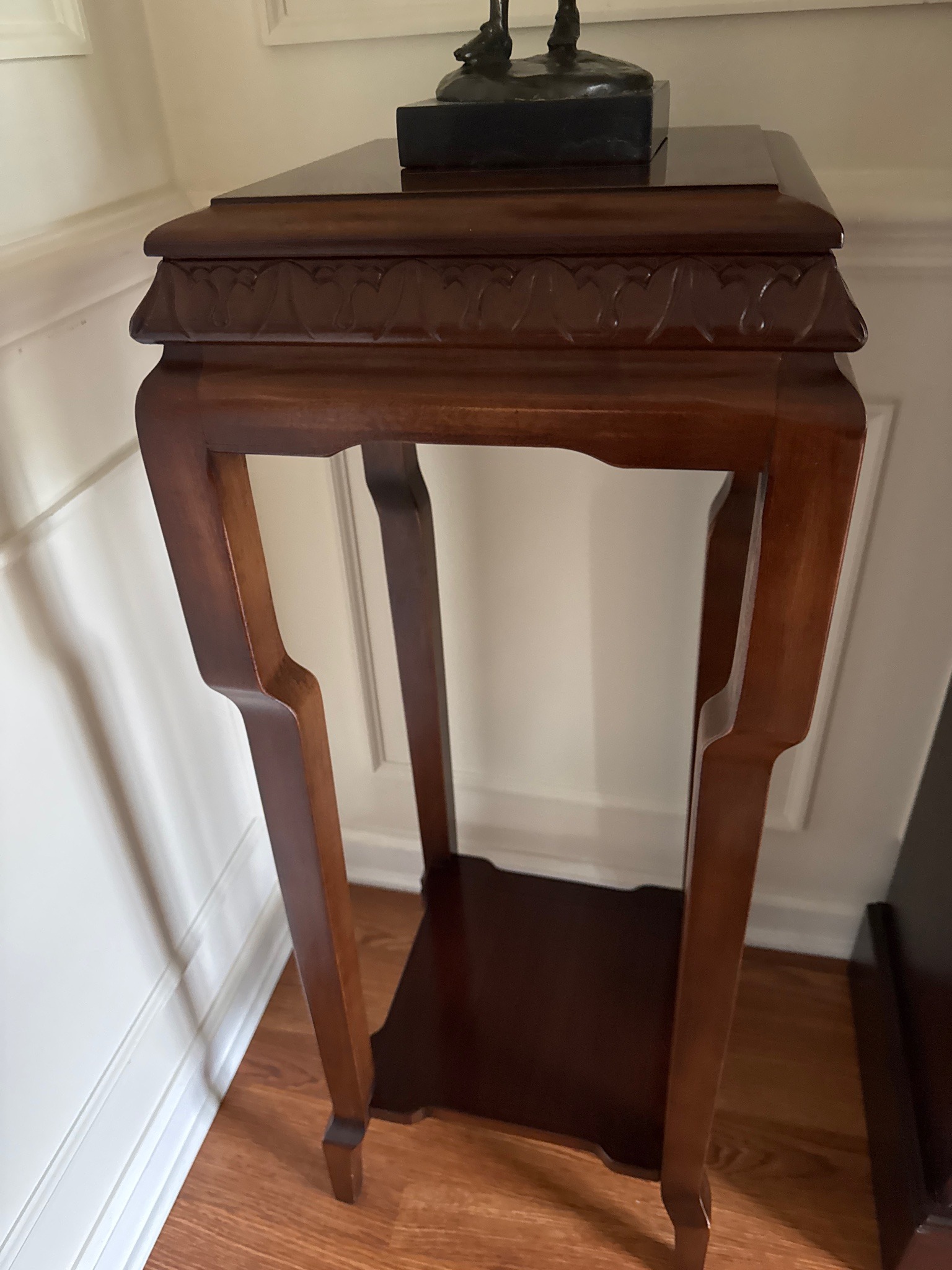
Submitted item photo
Submitted photo · May 30, 2026

User's notes

No additional notes provided.

AI analysis below

AI appraisal

AI analysis & estimate

AI-Generated · Verify before acting

Everything below is generated by AI for informational purposes only. AI can make mistakes — the AI may misidentify items or misattribute them (artist, maker, brand, designer, origin, era). This is not an official valuation and should not be used for insurance, sale, tax, estate, legal, or lending purposes — or any decision requiring a certified appraisal. It is not an authoritative claim about any person, brand, or rights holder — do not share or rely on it as a factual statement about a third party. Always consult qualified professionals before making financial decisions.

Read the full disclaimer

AI Identification

·Not independently authenticated·Verify before acting

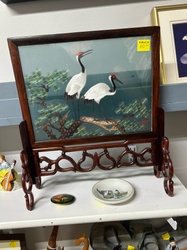
Chinese-Style Carved Hardwood Pedestal Stand

Furniture / Oriental Antiques & Decorative Arts

AI Estimated Value

·Not an official valuation·Verify before acting

$400 - $650

As of May 30, 2026

AI Item Analysis

·AI can make mistakes·Verify before acting
This is a tall, rectangular pedestal or plant stand crafted in a traditional Chinese Ming-style aesthetic. The piece is constructed from a dense hardwood, likely rosewood or a similar species, featuring a warm reddish-brown finish that accentuates the natural grain. The top surface is flat and inset, resting above a waist with a hand-carved frieze depicting a repeating ruyi-head or stylized cloud pattern. The stand is supported by four square-section legs that transition into elegant inward-curving waistlines and terminate in subtle horse-hoof feet. A low-set stretcher shelf provides additional stability and display space, mirroring the rectangular form of the top. The joinery appears to be traditional mortise-and-tenon, a hallmark of high-quality cabinetry. In terms of condition, the wood retains a high luster with no immediate evidence of major splitting, though minor surface scuffs are visible near the base and legs consistent with age. This item likely dates to the late 20th century, representing a fine reproduction of classical Oriental furniture. Currently, it serves as a base for a bronze-finished sculpture, highlighting its function as a display piece for fine art.

AI Appraisal Report

·AI can make mistakes·Verify before acting
Based on my visual examination of this Chinese-style pedestal stand, I have assessed it as a high-quality reproduction of classical Ming-period furniture, likely manufactured in the late 20th century. The piece exhibits characteristic traits of fine craftsmanship, including traditional mortise-and-tenon joinery and a hand-carved frieze utilizing the ruyi-head motif. The use of a dense hardwood—suggestive of rosewood (Huali) or a related tropical species—adds significant weight and durability, which is highly valued in the decorative arts market. The condition appears excellent, with the high luster of the finish indicating regular care. The minor scuffs noted at the base are consistent with secondary market furniture and do not detract significantly from the aesthetic or structural integrity. Market demand for Chinoiserie remains steady, particularly for functional display pieces that provide height and vintage character to contemporary interiors. Comparables for late 20th-century hardwood stands of this height typically sell within the $400 to $700 range at regional auction houses. However, there are significant limitations to this appraisal. From images alone, it is impossible to definitively distinguish between vintage rosewood and modern stained substitutes. A physical inspection is required to verify the wood's density, grain patterns, and any characteristic scent. Furthermore, I cannot inspect the underside for maker’s marks or specific joinery wear that would confirm its exact age. To elevate this valuation to that of an antique (19th century or earlier), provenance documentation or a scientific analysis of the patina and wood cell structure would be necessary. Without these, it is appraised as a decorative 20th-century revival piece.

Get your items appraised

Instant estimates of your treasures with AI-powered appraisals

Browse More Appraisals