AI identification & appraisal estimate

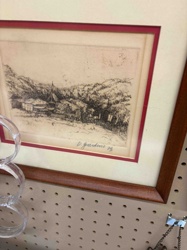
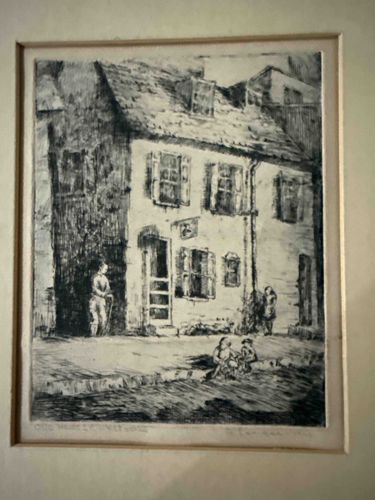
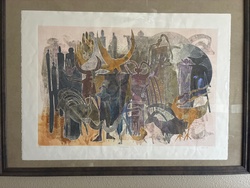
Otto Henry Bacher Etching of the Casa d'Oro (The Lace Maker's House), Venice

Submitted photo of Otto Henry Bacher Etching of the Casa d'Oro (The Lace Maker's House), Venice
Photo submitted by the user — not generated by AI

AI Estimated Value

Not an official valuation

$1,200 - $1,800

AI estimate as of December 31, 2025 · verify with a professional before acting

AI-Generated · Verify before acting

Everything on this page is generated by AI for informational purposes only. AI can make mistakes — the AI may misidentify items or misattribute them (artist, maker, brand, designer, origin, era). This is not an official valuation and should not be used for insurance, sale, tax, estate, legal, or lending purposes — or any decision requiring a certified appraisal. It is not an authoritative claim about any person, brand, or rights holder — do not share or rely on it as a factual statement about a third party. Always consult qualified professionals before making financial decisions.

Read the full disclaimer

AI Item Analysis

This item is an original black and white etching on paper, depicting a street scene in Venice featuring a historic building known as the Casa d'Oro or the Lace Maker's house. The artwork is executed in a highly detailed, tonal style characteristic of late 19th-century American etchers. The composition shows a three-story building with prominent shutters, a dormer window, and various figures interacting in the foreground, including children playing and a standing figure to the left. The print displays significant plate tone, especially in the shadowed areas and the foreground street surface, adding depth and atmosphere to the scene. The piece is signed in the lower left corner within the plate 'OTTO HENRY BACHER 1882' and features a pencil signature in the lower right margin, which is a key indicator of authenticity and value. The paper appears to be an off-white or cream-colored laid paper, consistent with high-quality artist paper of the era. Regarding condition, the print shows some minor foxing and slight yellowing consistent with age, but the line work remains crisp and the contrast is well-maintained. The work is housed in a simple light-colored mat, which shows some wear along the edges. Otto Bacher was a close associate of James Abbott McNeill Whistler, and this piece demonstrates the strong influence of Whistler’s Venetian etchings through its delicate line work and masterful use of negative space.
AI Appraisal Report

I have completed a visual examination of the original Otto Henry Bacher etching, 'Casa d'Oro (The Lace Maker's House), Venice,' dated 1882. This work is a premier example of the 'Venetian Etchers' movement. The presence of both a plate signature and a pencil signature in the lower right margin significantly elevates its market desirability, as pencil-signed impressions are rarer and preferred by collectors. The technical execution shows a masterful control of plate tone and delicate needlework, heavily influenced by Bacher's close association with James Abbott McNeill Whistler during their time at the Casa Jankovitz. The condition appears fair to good; while the line work remains sharp, the observed foxing and marginal yellowing suggest the need for professional conservation to prevent further acidification. Market demand for Bacher remains steady among collectors of the Etching Revival, with similar Venetian subjects recently fetching between $1,000 and $2,000 at auction depending on the richness of the impression. The primary value drivers here are the Whistlerian influence and the topographical significance of the Venetian subject matter. It is important to note that this appraisal is based solely on digital images. A definitive authentication would require an in-person inspection to verify paper watermarks (such as 'Van Gelder Zonen'), examine the depth of the plate mark, and confirm the medium of the signature. Provenance documentation or a comparison against the Bacher catalogue raisonné would further solidify this valuation. Scientific testing of the ink and paper fibers could be conducted to rule out modern photogravure reproductions, though the visible plate tone suggests an authentic period pulling.

Keep exploring

More fine art - prints & multiple appraisals

Get your items appraised

Instant AI-powered appraisal estimates from a photo

Browse More Appraisals