AI estimate as of September 27, 2025 · verify with a professional before acting
AI-Generated · Verify before acting
Everything on this page is generated by AI for informational purposes only. AI can make mistakes — the AI may misidentify items or misattribute them (artist, maker, brand, designer, origin, era). This is not an official valuation and should not be used for insurance, sale, tax, estate, legal, or lending purposes — or any decision requiring a certified appraisal. It is not an authoritative claim about any person, brand, or rights holder — do not share or rely on it as a factual statement about a third party. Always consult qualified professionals before making financial decisions.
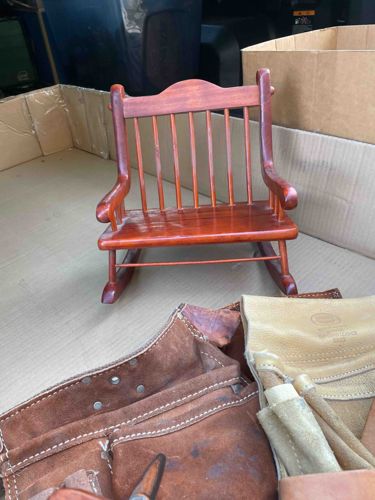
This is a miniature wooden rocking chair, likely intended for display, a doll, or as a decorative accent. It features a classic spindle-back design with a slightly curved crest rail and armrests. The chair is constructed from wood, possibly a hardwood like oak or maple, and is finished with a warm, reddish-brown stain that has a glossy, lacquered appearance. The finish shows some minor surface wear, consistent with light handling or age, as evidenced by slight dulling in areas and possible minor scratches that are not clearly visible but suggested by reflections. The seat is solid and flat. The rockers are integrated into the side supports, providing a stable base for the rocking motion. The craftsmanship appears to be of good quality, with evenly spaced spindles and well-turned elements. There are no visible maker's marks or signatures in the provided images. The overall style suggests a traditional or possibly colonial revival aesthetic, often seen in items made from the mid-20th century onwards. Its small scale is its most distinguishing feature, making it a charming decorative piece rather than a functional item for human use. The wood grain is visible under the stain, indicating solid wood construction rather than veneer. No significant damage such as breaks, cracks, or missing pieces are discernible.
AI Appraisal Report
Upon visual examination of the provided image, I assess this miniature wooden rocking chair as a decorative collectible, likely intended for display, a doll, or as a charming accent piece. The condition appears good, with minor surface wear consistent with age and light handling, such as slight dulling of the glossy reddish-brown finish. There are no obvious breaks, cracks, or missing pieces, indicating overall structural integrity. The craftsmanship, characterized by evenly spaced spindles and well-turned elements, suggests good quality manufacturing. Its traditional styling points to a likely production date from the mid-20th century onwards.
Market conditions for such decorative miniatures are generally stable but not exceptionally strong. Comparable items, often found in antique malls, craft fairs, or online marketplaces, typically sell in the $20-$60 range depending on size, wood type, and specific design. While charming, the demand for common decorative miniatures is moderate, and rarity is low unless specific maker's marks or historical significance are present. Factors impacting its value negatively are the lack of identifiable provenance or a known maker, which would elevate its status beyond a generic decorative item. Positively, its good condition and classic aesthetic make it broadly appealing for collectors of miniatures or dollhouse furniture.
It is crucial to note that authentication limitations exist when relying solely on images. Without a physical inspection, determining the exact wood species (e.g., oak, maple), the precise age, or confirming the nature of 'minor scratches' versus significant damage is impossible. An in-person examination would allow for closer inspection of the finish, detection of any subtle repairs, and a thorough search for maker's marks, which are not visible in the image. Provenance documentation, if available, would significantly enhance its value by linking it to a specific manufacturer, craftsman, or historical context. Scientific testing, while not typically applied to items of this value, could confirm wood type or finish composition if there were specific questions about its origin or materials.