AI Appraisal Estimate

AI-generated estimates · not official valuations

From the user

What was submitted

Photo and notes provided by the user — not generated by AI

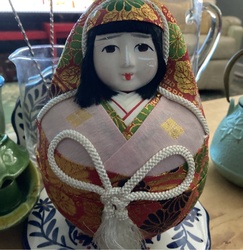
Submitted item photo
Submitted photo · June 6, 2026

User's notes

No additional notes provided.

AI analysis below

AI appraisal

AI analysis & estimate

AI-Generated · Verify before acting

Everything below is generated by AI for informational purposes only. AI can make mistakes — the AI may misidentify items or misattribute them (artist, maker, brand, designer, origin, era). This is not an official valuation and should not be used for insurance, sale, tax, estate, legal, or lending purposes — or any decision requiring a certified appraisal. It is not an authoritative claim about any person, brand, or rights holder — do not share or rely on it as a factual statement about a third party. Always consult qualified professionals before making financial decisions.

Read the full disclaimer

AI Identification

·Not independently authenticated·Verify before acting

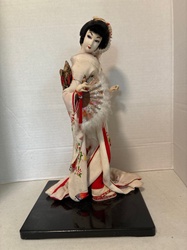
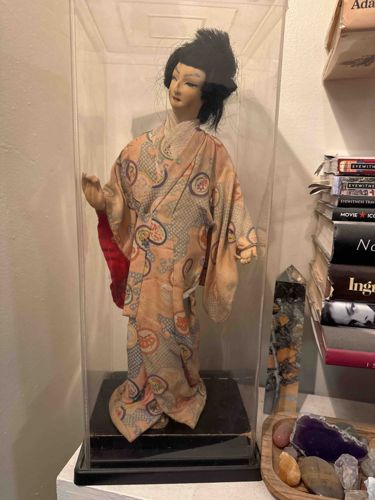
Vintage Japanese Ningyo (Kimono Doll) in Acrylic Display Case

Asian Antiques / Collectible Dolls

AI Estimated Value

·Not an official valuation·Verify before acting

$150 - $250

As of June 6, 2026

AI Item Analysis

·AI can make mistakes·Verify before acting
This is a vintage Japanese Ningyo doll, depicting a female figure in traditional dress, housed within a contemporary acrylic vitrine. The doll stands approximately 12 to 15 inches tall and is constructed with a hand-painted face featuring fine, delicate features and almond-shaped eyes typical of mid-20th-century Japanese craftsmanship. The hair is deep black, styled in a traditional updo, and appears to be made of synthetic or natural fiber. The doll is attired in a layered silk or high-quality rayon kimono with a blush-tan base, decorated with a complex motif of circular crests (mon) and geometric patterns in shades of blue and orange. Underneath the exterior layer, a vibrant red silk under-kimono is visible, adding a striking contrast. The hands are expressive and appear made of gofun (crushed oyster shell paste). Regarding condition, the doll exhibits some visible signs of age including slight fraying of the hair and subtle fading of the textile pigments. The fabric shows minor wrinkling consistent with long-term display. The acrylic case is a modern addition intended to preserve the delicate materials from dust and environmental degradation. Based on the style and materials, this piece likely dates to the Showa era (mid-20th century) and represents a high level of decorative craftsmanship intended for the export or commemorative market.
AI Appraisal Report

·AI can make mistakes·Verify before acting
I have carefully examined the provided images of this Showa-era (mid-20th century) Japanese Ningyo doll. The piece displays the characteristic 'gofun' (oyster shell paste) finish on the face and hands, which appears to be in good condition without the severe cracking often seen in older or poorly stored examples. The multi-layered kimono, featuring 'mon' (crests), signifies a formal or ceremonial depiction. While the craftsmanship is competent, the materials and style suggest this was produced for the mid-century export market or as a high-quality souvenir piece rather than a unique artist-signed work. Market demand for mid-century Japanese dolls is currently stable but modest. The inclusion of a modern acrylic case is a value-add, as it preserves the integrity of the delicate silk and prevents further degradation from UV light and dust. However, the noted fraying of the hair and subtle pigment fading are typical of its age and slightly temper the valuation. Similar examples from the 1950s and 60s frequently trade in the $100 to $300 range at auction, depending on the complexity of the textile patterns and the condition of the gofun. Limitations: This appraisal is based solely on visual evidence. A physical inspection is required to determine if the internal structure is straw-bodied or wood-composite and to check for hidden pest damage. Full authentication would require removing the doll from the case to inspect for a maker’s mark on the base or within the kimono layers. Documentation of provenance or an original ‘tomobako’ (wooden box) would significantly increase marketability and value.

Get your items appraised

Instant estimates of your treasures with AI-powered appraisals

Browse More Appraisals