AI Appraisal Estimate

AI-generated estimates · not official valuations

From the user

What was submitted

Photo and notes provided by the user — not generated by AI

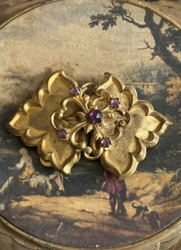
Submitted item photo
Submitted photo · May 25, 2026

User's notes

No additional notes provided.

AI analysis below

AI appraisal

AI analysis & estimate

AI-Generated · Verify before acting

Everything below is generated by AI for informational purposes only. AI can make mistakes — the AI may misidentify items or misattribute them (artist, maker, brand, designer, origin, era). This is not an official valuation and should not be used for insurance, sale, tax, estate, legal, or lending purposes — or any decision requiring a certified appraisal. It is not an authoritative claim about any person, brand, or rights holder — do not share or rely on it as a factual statement about a third party. Always consult qualified professionals before making financial decisions.

Read the full disclaimer

AI Identification

·Not independently authenticated·Verify before acting

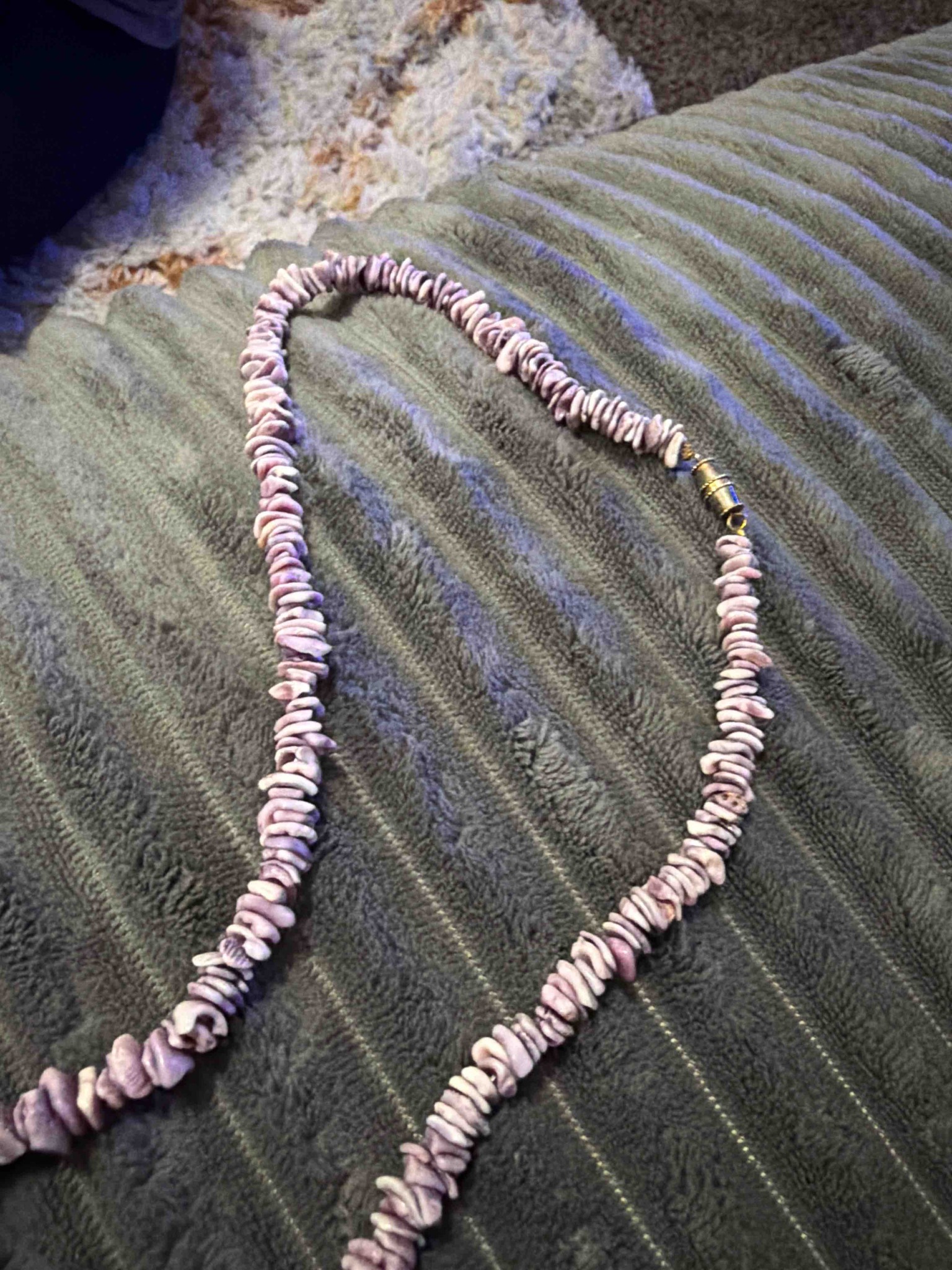
Vintage Purple Spondylus Shell Heishi Necklace

Vintage Jewelry / Accessories

AI Estimated Value

·Not an official valuation·Verify before acting

$125.00 - $185.00

As of May 25, 2026

AI Item Analysis

·AI can make mistakes·Verify before acting
This is a vintage single-strand necklace composed of graduated shell heishi beads. The material appears to be Spondylus shell, commonly known as 'spiny oyster,' specifically in a varied lavender and white coloration. The beads are hand-cut into irregular, thin discs or heishi shapes, showing a natural gradient of color from deep violet to a creamy white. Each bead exhibits original texture with slight ribbing and natural pits, which are characteristic of biological origin rather than synthetic imitation. The necklace is approximately 18 to 22 inches in length, and is secured with a traditional brass-tone barrel screw clasp. This type of clasp is a common identifier for mid-20th-century costume or souvenir jewelry, likely dating from the 1960s to the 1980s. The craftsmanship shows a high degree of labor, with hundreds of tiny shell slices individually drilled and strung. The condition appears to be excellent for its age; the shell fragments maintain a consistent luster without significant chips beyond their organic shape, and the brass clasp shows a slight aged patina but remains functional. The piece represents a classic example of coastal or Southwestern mid-century shell jewelry craft.
AI Appraisal Report

·AI can make mistakes·Verify before acting
Upon visual examination of this vintage single-strand necklace, I find it to be a high-quality example of Spondylus shell (spiny oyster) heishi work, likely originating from the mid-to-late 20th century. The natural variations in the lavender and cream-colored beads confirm biological origin; synthetic imitations rarely capture the micro-pitting and organic ribbing present here. The use of a brass barrel screw clasp is a diagnostic indicator commonly seen in Southwestern and coastal souvenir jewelry from the 1960s through the 1980s. The condition is excellent, with no evidence of significant 'bead-burn' or fraying of the internal stringing. The market for spiny oyster remains steady, though purple varieties generally command a premium over more common orange or red specimens due to their relative scarcity in nature. Comparables for hand-cut heishi of this length and color gradient typically sell in the $100–$250 range at auction or specialty vintage boutiques. The high labor intensity required to cut and graduate these thin discs is a primary value driver. However, there are limitations to this digital appraisal. While the visuals reflect genuine shell, a physical examination is required to rule out color enhancement (dyeing or stabilization) which can affect long-term value. I cannot confirm the tensile strength of the internal cord or the presence of hallmarks on the clasp without a hands-on inspection. For a definitive authentication of origin—such as determining if this is Indigenous-made or a regional export—provenance documentation or 'Maker’s Marks' would be necessary. To confirm the raw material value, refractive index testing and microscopic inspection for dye concentrations would be the standard next steps.

Get your items appraised

Instant estimates of your treasures with AI-powered appraisals

Browse More Appraisals