AI estimate as of August 16, 2025 · verify with a professional before acting
AI-Generated · Verify before acting
Everything on this page is generated by AI for informational purposes only. AI can make mistakes — the AI may misidentify items or misattribute them (artist, maker, brand, designer, origin, era). This is not an official valuation and should not be used for insurance, sale, tax, estate, legal, or lending purposes — or any decision requiring a certified appraisal. It is not an authoritative claim about any person, brand, or rights holder — do not share or rely on it as a factual statement about a third party. Always consult qualified professionals before making financial decisions.
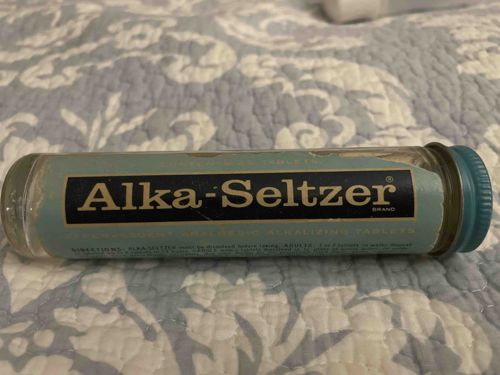
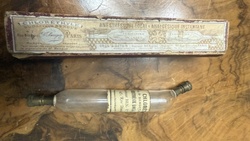
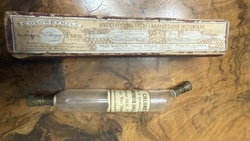
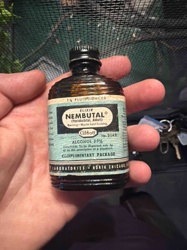
This item is a vintage Alka-Seltzer tablet dispenser, likely from the mid-20th century, possibly dating back to the 1950s or 1960s based on the design and material cues. It consists of a clear glass cylindrical tube, approximately 4-5 inches in length, designed to hold Alka-Seltzer tablets. The glass is relatively clear, allowing visibility of any contents, though in this image it appears empty or contains only residual dust/remains of tablets. A significant feature is the paper or foil label wrapped around the central portion of the tube. This label, predominantly light blue or teal with a darker, almost black, rectangular band, prominently displays 'Alka-Seltzer' in a sans-serif typeface, with 'BRAND' in a smaller font just below and to the right. Text below the main brand name is partially visible, indicating "EFFERVESCENT ANALGESIC ALKALIZING TABLETS" and further directions for use, 'DIRECTIONS: ALKA-SELTZER must be dissolved before taking. ADULTS: 1 or 2 tablets in water. Repeat every 4 hours if necessary. Children 6 to 12 over, do not use more than 8 tablets/day.' The label shows considerable wear, with various areas of discoloration, staining, and peeling, suggesting its age and handling over time. The edges appear frayed and lifted in several places. The dispenser is capped at one end with a teal or dark blue plastic screw-on lid, which features ribbed sides for grip. The lid shows some minor scuffs and dirt but is largely intact. The overall condition of the dispenser reflects its vintage nature; while complete, the label's deterioration is the most significant condition issue, impacting its aesthetic appeal but also confirming its authenticity and age. The construction is simple yet effective for its intended purpose of dispensing medicine on the go.
AI Appraisal Report
I have examined the provided image of this Vintage Alka-Seltzer Glass Tablet Dispenser. My assessment indicates it is an authentic piece of pharmaceutical memorabilia, likely from the 1950s or 1960s, consistent with the design, materials, and typography observed. The clear glass cylindrical tube, teal plastic screw-on lid, and the distinctive 'Alka-Seltzer' label are all period-correct. The most significant condition issue, and indeed a defining characteristic, is the considerable wear to the paper label, exhibiting discoloration, staining, and peeling. While this deterioration impacts aesthetic appeal, it simultaneously reinforces the item's age and genuine vintage status. The scuffs on the lid are minor and expected for an item of this age.
In terms of market conditions, vintage pharmaceutical advertising and medical memorabilia have a niche but consistent collector base. Items like this dispenser, while not exceedingly rare, are less common in complete and relatively good condition, especially with legible labels. Full, intact labels significantly enhance value; the wear on this label slightly reduces its top-tier market potential but does not negate its collectibility. Demand is generally stable among collectors of drug store ephemera and advertising. Factors impacting value include the brand recognition (Alka-Seltzer is iconic), the completeness of the item (tube, lid, label), and, critically, the condition of the label.
It is important to note that my authenticity verification is based solely on visual examination of the image. Without physical inspection, I cannot confirm the integrity of the glass for cracks or internal damage, nor can I definitively assess the material composition of the lid. Furthermore, I cannot verify the absence of odors or residues that might impact desirability. Full authentication would ideally involve in-person examination to verify material integrity, tactile assessment of the label for definitive age, and potentially provenance documentation detailing its acquisition history.