AI estimate as of August 16, 2025 · verify with a professional before acting
AI-Generated · Verify before acting
Everything on this page is generated by AI for informational purposes only. AI can make mistakes — the AI may misidentify items or misattribute them (artist, maker, brand, designer, origin, era). This is not an official valuation and should not be used for insurance, sale, tax, estate, legal, or lending purposes — or any decision requiring a certified appraisal. It is not an authoritative claim about any person, brand, or rights holder — do not share or rely on it as a factual statement about a third party. Always consult qualified professionals before making financial decisions.
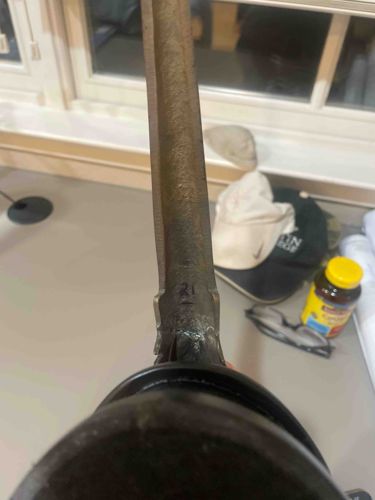
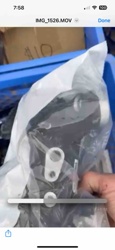
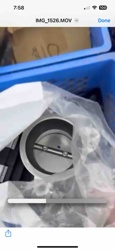
The item appears to be a used Constant Velocity (CV) Axle shaft, specifically the outer joint and part of the shaft. The shaft is made of dark, possibly rust-patinated steel, exhibiting a generally cylindrical shape that transitions into a more intricate joint mechanism. The surface of the shaft shows signs of wear and corrosion, with a mottled, brownish-grey texture indicative of exposure to elements and use. Close inspection reveals numerical markings, specifically '21', stamped or etched onto the shaft near the joint, which could be a manufacturing batch number, part number snippet, or size indicator. There is evidence of welding or a similar joining process where the shaft meets the outer CV joint, suggesting either a repair, a manufacturing joint, or a composite construction. The black, rubber-like boot of the CV joint is partially visible at the bottom of the image, appearing somewhat intact but potentially showing age or use. The overall condition suggests a used automotive component, likely from a vehicle's drivetrain, with visible signs of operational wear and tear. The craftsmanship appears industrial, typical of mass-produced automotive parts, focusing on function and durability rather than aesthetic appeal. Given its function, it is designed for demanding mechanical stress. Estimating a precise age is difficult without specific maker's marks or broader context, but the visible wear suggests it is not new.
AI Appraisal Report
Upon visual examination of the provided image, I assess this Automotive CV Axle Shaft (Partial) as a used component. The condition is fair to poor, showing clear signs of operational wear, surface corrosion, and patination on the steel shaft. The visible '21' marking is likely a manufacturing identifier, not indicative of exceptional rarity or value. The apparent weld mark where the shaft meets the outer CV joint is concerning; if this is a repair, it significantly compromises structural integrity and market value. If it's a manufacturing assembly method, it's less problematic but still indicates a non-premium part. The rubber boot, though partially visible, appears intact, but its age and flexibility cannot be determined from a photograph. Authenticity as an automotive CV axle component is readily apparent; however, its specific make, model applicability, and original equipment manufacturer (OEM) status – all critical for accurate valuation – are impossible to verify from images alone. Without physical inspection to assess the integrity of the weld, the wear within the joint, the flexibility of the boot, or to identify specific manufacturer markings, its functional reliability is unknown.
Market conditions for used automotive CV axle shafts vary widely. Generic used axles typically hold minimal value due to wear and the preference for new or re-manufactured units that come with warranties. Comparables would include used parts sold on online marketplaces or salvage yards, where prices are depressed. Demand for a used partial axle like this is low, as most consumers or mechanics prefer complete, reliable units. The primary factors significantly impacting value are its unknown functional integrity, the suspicious weld, and the difficulty in identifying its precise application. Rarity is not a factor here; these are mass-produced components. My valuation assumes it cannot be reliably re-installed without significant risk.
For full authentication and a more precise valuation, a physical examination would be crucial. This would involve assessing the structural integrity of the weld, checking for play or roughness in the CV joint, evaluating the condition and flexibility of the rubber boot, and thoroughly searching for any manufacturer's hallmarks, part numbers beyond '21', or date codes. Provenance documentation (e.g., source vehicle, mileage, service records) would also provide valuable context. Without these, it remains a generic, used, and compromised automotive component.