Monetaria moneta (Money Cowrie) Shells
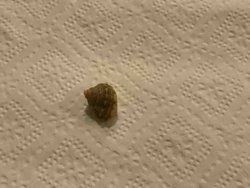
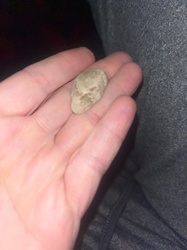
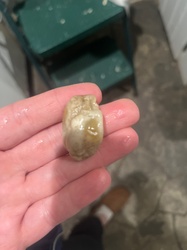
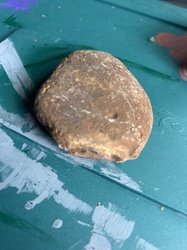
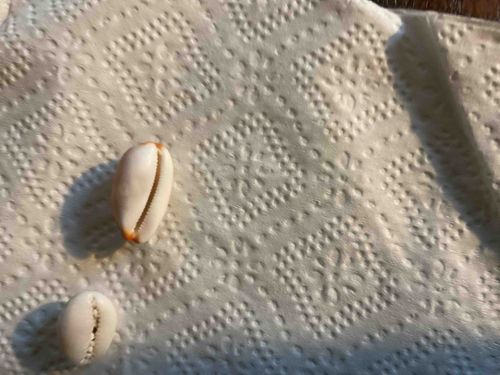
This pair of natural marine gastropod shells of the species Monetaria moneta, commonly referred to as Money Cowries, originates from Oahu, Hawaii. The shells exhibit the classic flattened, sub-rhomboidal shape characteristic of the species. They measure approximately 15mm to 20mm in length, featuring a smooth, porcelain-like dorsal surface with a pale creamy-white to yellowish hue. A distinguishing feature is the subtle orange-yellow ring encircling the dorsal periphery of the larger specimen. The ventral sides reveal a narrow, longitudinal aperture with fine, transverse denticulations (teeth) along both lips. The shells appear to be in good natural condition with well-preserved glossy lusters, though they show slight calcification or wear at the anterior and posterior ends, likely due to wave action. They lack any human-made drill holes, indicating they were collected as natural specimens rather than repurposed for jewelry. Their small size and uniform color represent typical high-quality examples found in the Hawaiian archipelago. Such shells have historical significance as currency and adornments throughout the Indo-Pacific region.
AI-Generated Appraisal Disclaimer
Estimated Value
$10 - $20
Basic Information
Category
Natural History Specimen / Malacology
Appraised On
February 27, 2026
Estimated Value
$10 - $20
Additional Details Provided By Owner
User Provided Information
Two cowries from the Hawaiian island Oahu
Item Description
This pair of natural marine gastropod shells of the species Monetaria moneta, commonly referred to as Money Cowries, originates from Oahu, Hawaii. The shells exhibit the classic flattened, sub-rhomboidal shape characteristic of the species. They measure approximately 15mm to 20mm in length, featuring a smooth, porcelain-like dorsal surface with a pale creamy-white to yellowish hue. A distinguishing feature is the subtle orange-yellow ring encircling the dorsal periphery of the larger specimen. The ventral sides reveal a narrow, longitudinal aperture with fine, transverse denticulations (teeth) along both lips. The shells appear to be in good natural condition with well-preserved glossy lusters, though they show slight calcification or wear at the anterior and posterior ends, likely due to wave action. They lack any human-made drill holes, indicating they were collected as natural specimens rather than repurposed for jewelry. Their small size and uniform color represent typical high-quality examples found in the Hawaiian archipelago. Such shells have historical significance as currency and adornments throughout the Indo-Pacific region.
Get Your Items Appraised
Instant estimates of your treasures with AI-powered instant appraisals