AI Appraisal Estimate

AI-generated estimates · not official valuations

From the user

What was submitted

Photo and notes provided by the user — not generated by AI

Submitted item photo
Submitted photo · June 4, 2026

User's notes

No additional notes provided.

AI analysis below

AI appraisal

AI analysis & estimate

AI-Generated · Verify before acting

Everything below is generated by AI for informational purposes only. AI can make mistakes — the AI may misidentify items or misattribute them (artist, maker, brand, designer, origin, era). This is not an official valuation and should not be used for insurance, sale, tax, estate, legal, or lending purposes — or any decision requiring a certified appraisal. It is not an authoritative claim about any person, brand, or rights holder — do not share or rely on it as a factual statement about a third party. Always consult qualified professionals before making financial decisions.

Read the full disclaimer

AI Identification

·Not independently authenticated·Verify before acting

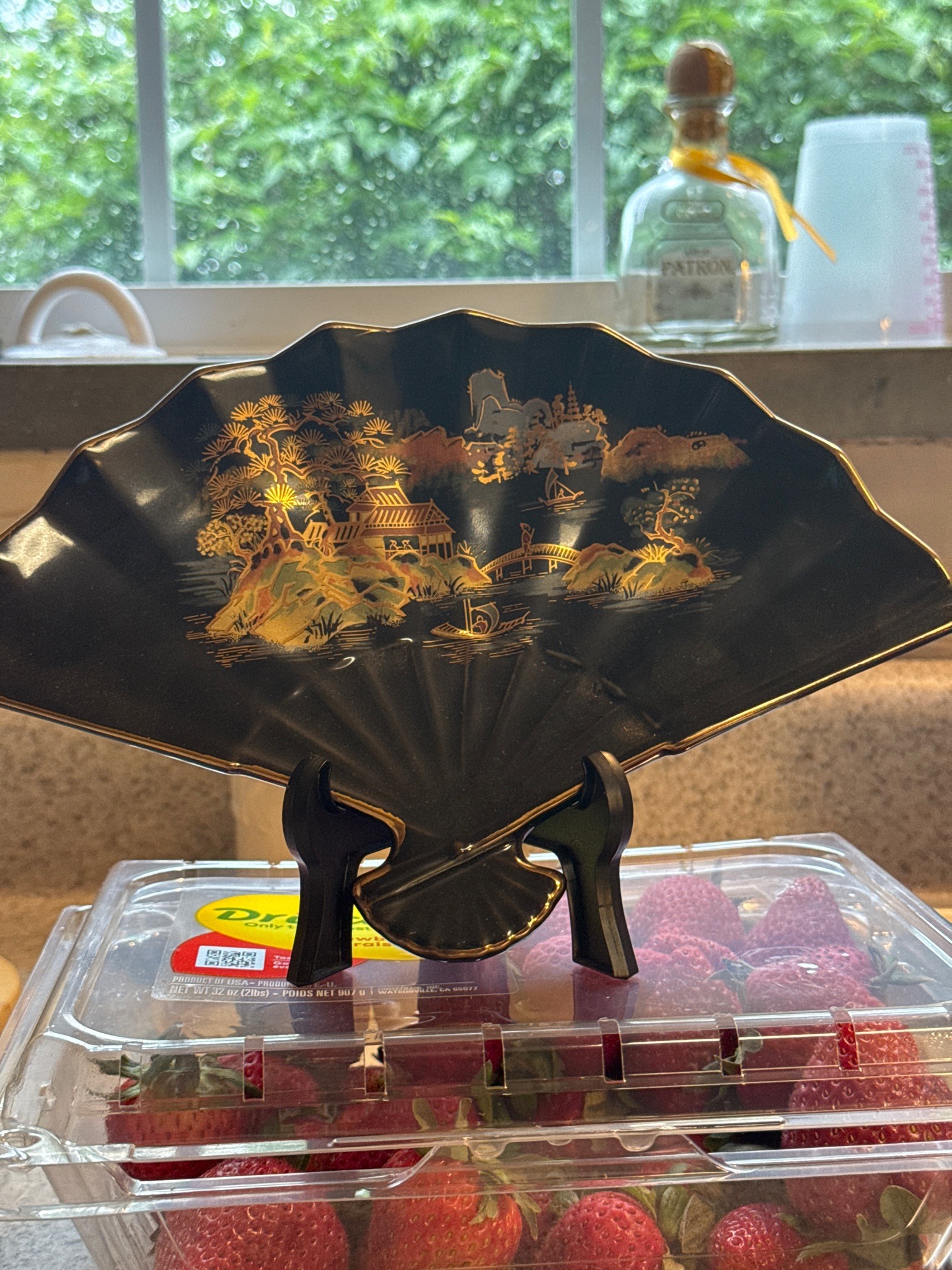
Japanese Black Porcelain Fan-Shaped Dish with Chinoiserie Landscape

Decorative Ceramics and Collectibles

AI Estimated Value

·Not an official valuation·Verify before acting

$45–$75

As of June 4, 2026

AI Item Analysis

·AI can make mistakes·Verify before acting
This item is a decorative porcelain display dish or trinket bowl fashioned in the shape of a traditional folding hand fan (sensu). The piece is constructed from high-fire ceramic with a lustrous black glaze finish, likely of Japanese origin given the 'Chinoiserie' or 'Showa-style' aesthetic common in mid-20th-century giftware (circa 1950s–1970s). The surface features a detailed hand-painted or transfer-applied landscape scene in metallic gold and copper-toned gilding. The scene depicts a serene lakeside village with a traditional pagoda, a high-arched moon bridge, pine trees, rowing boats, and distant mountains. The edges of the fan and the bottom 'pivot' point are accented with a fine gold rim. This piece is currently presented on a black plastic display stand. The craftsmanship displays smooth scalloped edges and molded ridges that mimic the physical folds of an actual paper fan. The condition appears to be excellent with no visible cracks or chips, though minor shelf wear on the bottom and slight thinning of the gold gilding on the high-contact rim points are typical for an item of this vintage. The high-gloss finish provides a deep reflection, often associated with makers like Otagiri or similar porcelain manufacturers from the Seto or Arita regions of Japan.
AI Appraisal Report

·AI can make mistakes·Verify before acting
I have conducted a visual inspection of this Japanese black porcelain fan-shaped dish. The item displays characteristic hallmarks of mid-20th-century Japanese export giftware, likely produced during the late Showa period (circa 1950s–1970s). The high-gloss black glaze and 'Chinoiserie' landscape—featuring gilded depictions of pagodas, moon bridges, and mountains—suggest a mass-produced but high-quality decorative piece, frequently associated with makers like Otagiri or manufacturers based in the Seto region. Condition appears excellent for its vintage. I observe minor thinning of the gold gilding along the scalloped 'folds' of the fan, which is consistent with age and handling. No structural cracks or significant chips were detected in the images provided. The high-contrast aesthetic of gold on black remains a popular 'Mid-Century Modern' accent, though the market for these specific collectibles is currently saturated, which keeps the valuation modest. Comparables sold on secondary markets generally range from $30 to $85 depending on size and the presence of a maker's mark. Limitations: This appraisal is based solely on digital imagery. I cannot verify the presence of a 'Made in Japan' backstamp or specific maker's mark, which would confirm its origin. A physical inspection is required to check for microscopic 'flea bites' or evidence of professional restoration. True authentication would also require assessing the weight and translucency of the porcelain to distinguish it from lower-quality stoneware. Finally, verifying the application method (hand-painted vs. transfer-ware) is necessary to determine if it sits at the higher end of the valuation range.

Get your items appraised

Instant estimates of your treasures with AI-powered appraisals

Browse More Appraisals