AI Appraisal Estimate

AI-generated estimates · not official valuations

From the user

What was submitted

Photo and notes provided by the user — not generated by AI

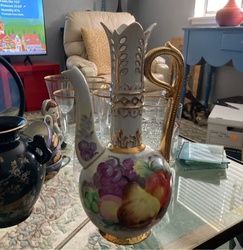
Submitted item photo
Submitted photo · June 6, 2026

User's notes

No additional notes provided.

AI analysis below

AI appraisal

AI analysis & estimate

AI-Generated · Verify before acting

Everything below is generated by AI for informational purposes only. AI can make mistakes — the AI may misidentify items or misattribute them (artist, maker, brand, designer, origin, era). This is not an official valuation and should not be used for insurance, sale, tax, estate, legal, or lending purposes — or any decision requiring a certified appraisal. It is not an authoritative claim about any person, brand, or rights holder — do not share or rely on it as a factual statement about a third party. Always consult qualified professionals before making financial decisions.

Read the full disclaimer

AI Identification

·Not independently authenticated·Verify before acting

Japanese Ceramic Bowl with Hand-Painted Motif

Ceramics/Porcelain

AI Estimated Value

·Not an official valuation·Verify before acting

$15-30

As of June 6, 2026

AI Item Analysis

·AI can make mistakes·Verify before acting
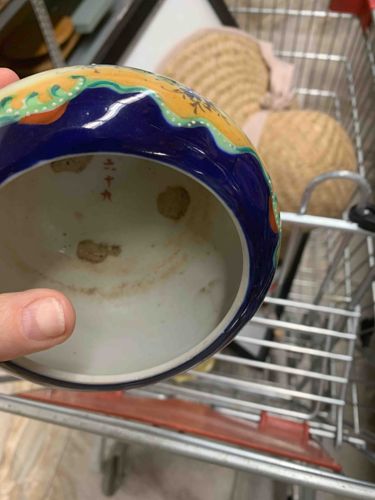
The item is a ceramic bowl, likely a 'donburi' style bowl given its deep, rounded shape, or possibly a teacup. Its exterior features a vibrant, multi-colored decorative motif, primarily a rich cobalt blue base color that transitions into a bright yellow or gold band around the rim. This transition is accented by a stylized wave or cloud pattern in light green, with red or orange accents, suggestive of traditional Asian artistry. The decoration appears to be hand-painted under a glaze, indicating a notable level of craftsmanship. The interior of the bowl is a contrasting plain white or unglazed ivory color. A significant characteristic is the presence of brown staining and irregular, rough patches on the interior bottom and lower walls, which could be residue from use, firing imperfections, or indicate wear and age. The rough patches might be kiln marks or areas where the glaze did not fully adhere. There is a clear red manufacturer's mark or signature, likely in Japanese characters, on the interior wall near the rim, providing a crucial identifier for its origin and potential age. The characters appear to be vertically oriented. The rim of the bowl shows a visible crack, extending from the top edge down into the blue glazed area, which is a notable condition issue affecting its structural integrity and aesthetic. The overall quality of the painting suggests it is not mass-produced, potentially indicating an artisan or studio piece. Given the traditional Japanese styling and the red mark, it is likely of Japanese origin, possibly from the late 19th or early 20th century (Meiji to early Showa era), or a more modern reproduction. The general appearance suggests it has seen regular use.
AI Appraisal Report

·AI can make mistakes·Verify before acting
Upon examining the images of this Japanese ceramic bowl, I note several key characteristics influencing its value. The piece presents as a 'donburi' or a large teacup, distinguished by its vibrant, hand-painted exterior motif featuring cobalt blue, gold, and stylized wave patterns. This level of artistry suggests it is likely a studio piece rather than a mass-produced item. The interior bears a red maker's mark in Japanese characters, which is crucial for identification. Based on the style, it could potentially date from the Meiji (1868-1912) or Taisho (1912-1926) period, a time of high-quality export ware. However, the bowl's condition significantly detracts from its value. A prominent crack runs from the rim downwards, which is a major structural and aesthetic flaw. Additionally, the interior shows considerable staining and rough patches, indicating either heavy use, firing imperfections, or post-production damage. While these might suggest age, they are severe enough to deter most collectors. Market demand exists for well-preserved Japanese ceramics from this era, but pieces with significant damage are difficult to sell. Without a desirable maker's mark that can be identified and attributed to a noted kiln or artist, the value is primarily decorative. A full appraisal would require in-person examination to assess the craquelure, glaze texture, and to translate the signature. Without physical inspection and translation of the mark, I can only provide an estimate based on its decorative qualities and compromised condition.

Get your items appraised

Instant estimates of your treasures with AI-powered appraisals

Browse More Appraisals