AI Appraisal Estimate

AI-generated estimates · not official valuations

From the user

What was submitted

Photo and notes provided by the user — not generated by AI

Submitted item photo
Submitted photo · June 8, 2026

User's notes

No additional notes provided.

AI analysis below

AI appraisal

AI analysis & estimate

AI-Generated · Verify before acting

Everything below is generated by AI for informational purposes only. AI can make mistakes — the AI may misidentify items or misattribute them (artist, maker, brand, designer, origin, era). This is not an official valuation and should not be used for insurance, sale, tax, estate, legal, or lending purposes — or any decision requiring a certified appraisal. It is not an authoritative claim about any person, brand, or rights holder — do not share or rely on it as a factual statement about a third party. Always consult qualified professionals before making financial decisions.

Read the full disclaimer

AI Identification

·Not independently authenticated·Verify before acting

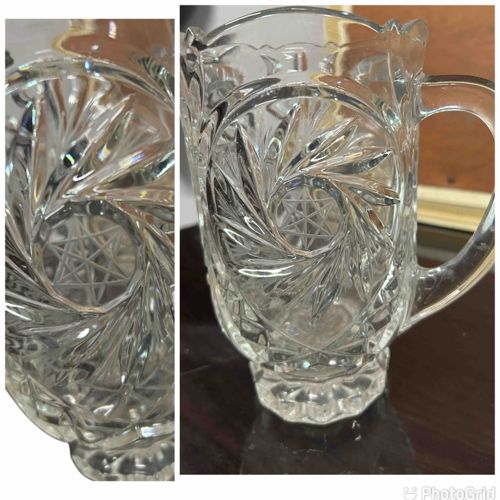
Pressed Glass Pitcher with Starburst and Swirl Pattern

Drinkware / Decorative Glassware

AI Estimated Value

·Not an official valuation·Verify before acting

$35-$65

As of June 8, 2026

AI Item Analysis

·AI can make mistakes·Verify before acting
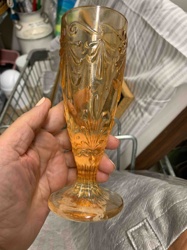
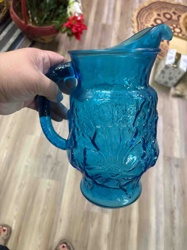
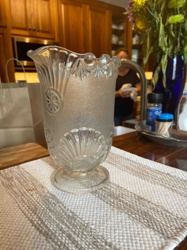
This appears to be a pressed glass pitcher, likely made of clear, colorless soda-lime glass or a similar glass composition, exhibiting a high level of transparency and brilliance. The pitcher features a robust, somewhat squat body that tapers slightly towards the base. Its most prominent characteristic is the intricate, all-over molded pattern. The sides are adorned with a repeating starburst motif, where radiating lines emanate from a central star-like element. This central star detail is particularly visible in a circular medallion on the side of the pitcher and also appears on the bottom. Surrounding these starbursts are flowing, swirl-like patterns that create a sense of movement and catch the light effectively. The handle is an applied glass piece, securely attached, and appears to be plain, forming a simple D-shape. The rim of the pitcher is scalloped or fluted, adding a decorative edge. The base is thick and hexagonal in shape, also decorated with a repeating pattern, likely star or diamond facets, contributing to its stability. There are no visible chips, cracks, or significant damage, though typical wear (minor scratching or dulling of crisp edges) consistent with age and use for pressed glass of this type would be expected. The overall craftsmanship suggests it is a mass-produced item from the late 19th to mid-20th century, a period when pressed glass with elaborate patterns was highly popular, mimicking more expensive cut glass. No specific maker's marks or signatures are discernible from the provided images.
AI Appraisal Report

·AI can make mistakes·Verify before acting
Upon examining the images of this pressed glass pitcher, I assess it to be a well-preserved example from the American Brilliant Period or a slightly later era (circa late 19th to early 20th century). The item appears authentic to its type, representing a mass-produced piece designed to emulate the more expensive American Brilliant Cut Glass. The starburst and swirl pattern is a common and popular motif from this time. Based on the visual evidence, the pitcher is in very good to excellent condition, with no apparent chips, cracks, or repairs. The glass retains a high degree of clarity and the molded details are sharp. The market for this type of pressed glass, often referred to as Early American Pattern Glass (EAPG), is generally stable but modest. While intricate and beautiful, these pitchers were produced in large quantities. Comparable pitchers with similar patterns and in similar condition regularly sell in the $35 to $65 range at auction and in online marketplaces. The value is driven primarily by its decorative appeal and condition rather than rarity. The lack of a discernible maker's mark prevents attribution to a more sought-after manufacturer like Heisey, Cambridge, or Fostoria, which could increase its value. This appraisal is limited by the use of images alone. A definitive authentication would require in-person examination to feel for mold lines, check for signs of modern reproduction, and use a blacklight to test the glass composition for fluorescence, which can sometimes help date the piece (e.g., presence of manganese or uranium). Without physical inspection or provenance, I cannot definitively rule out that it is a later reproduction, though its characteristics are consistent with an antique piece.

Get your items appraised

Instant estimates of your treasures with AI-powered appraisals

Browse More Appraisals