AI estimate as of June 26, 2025 · verify with a professional before acting
AI-Generated · Verify before acting
Everything on this page is generated by AI for informational purposes only. AI can make mistakes — the AI may misidentify items or misattribute them (artist, maker, brand, designer, origin, era). This is not an official valuation and should not be used for insurance, sale, tax, estate, legal, or lending purposes — or any decision requiring a certified appraisal. It is not an authoritative claim about any person, brand, or rights holder — do not share or rely on it as a factual statement about a third party. Always consult qualified professionals before making financial decisions.
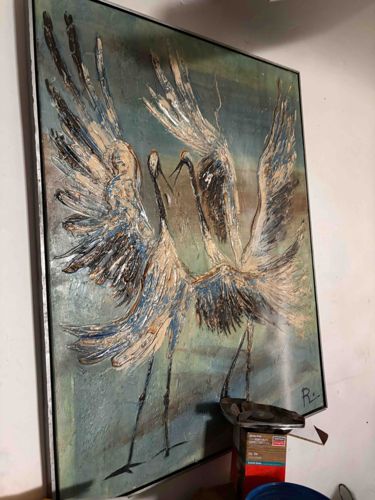
This item is a large, rectangular framed painting, predominantly featuring two stylized, large birds, likely cranes or herons, rendered with significant impasto technique. The frame appears to be a sleek, minimalist dark-toned frame, possibly metallic or a dark wood, encasing the artwork. The painting itself exhibits a highly textured surface, with thick applications of paint, particularly noticeable in the birds' plumage and outstretched wings, creating a three-dimensional effect that contributes to their dynamic appearance. The color palette primarily consists of various shades of blue (ranging from teal to dusty blue), muted greens, earthy browns, off-white, and black accents, which lend a serene yet dramatic atmosphere. The background is more subdued and abstract, featuring washes of blue-green that suggest water or a distant, ethereal landscape. The two birds are depicted seemingly interacting, with their large wings dominating the composition, conveying a sense of motion and grace. Their long, slender legs extend downwards, almost merging with the background. A distinct signature, appearing to be "R.L." or "RG", is visible in the bottom right corner of the canvas. The overall condition appears good, with no obvious signs of significant damage such as tears, major paint chipping, or water stains visible from the provided image, though the lighting and angle make a definitive assessment challenging. The impasto work itself is a key feature and appears robust. The style leans towards modern or contemporary art, possibly dating from the mid-to-late 20th century, embracing abstract expressionist tendencies in its application of paint and semi-abstract subject matter. The quality of craftsmanship is evident in the confident, sculptural brushwork and the evocative rendering of the birds.
AI Appraisal Report
Having virtually examined the provided image of this large, rectangular impasto painting featuring two cranes, I can offer the following appraisal. The painting appears to be in good overall condition; the thick impasto technique, a key feature, seems robust with no visible flaking or significant loss from the image. The frame also appears well-maintained. The color palette and the dynamic, textured rendering of the birds are aesthetically strong. A signature, possibly "R.L." or "RG," is visible; however, authenticity of the artist and the signature cannot be confirmed from an image alone. This is crucial for establishing value.
This piece aligns with modern or contemporary decorative art, often appreciated for its visual impact and subject matter. Art featuring birds, particularly cranes, tends to have broad appeal. Comparable works by unestablished or regional artists, especially those employing significant impasto, typically sell in the mid to high hundreds to low thousands, depending on scale, craftsmanship, and local market demand. Its decorative nature broadens its market appeal. There is a consistent demand for well-executed, appealing decorative art, and the unique texture of the impasto adds to its desirability. Rarity is difficult to ascertain without knowing the artist's identity and output; it is likely an original one-of-a-kind piece.
Positive factors impacting value include its large size, excellent impasto application, and universally appealing subject. The primary limiting factor is the unconfirmed identity of the artist and lack of provenance. Without knowing if "R.L." or "RG" refers to a recognized artist, the value remains primarily decorative rather than artistic. From an image, I cannot definitively confirm paint medium, precise age, or the true dimensions, nor can I verify the authenticity of the signature or the artist’s background. For full authentication and a more definitive specialist appraisal, a physical examination would be essential to inspect the surface, stretcher, and frame in detail. Provenance documentation, such as exhibition history or sales records, and professional art researcher efforts to identify the artist and cross-reference the signature would be paramount. Scientific analysis could further confirm age and materials.