Tudor Revival Style Two-Tier Sideboard Cabinet
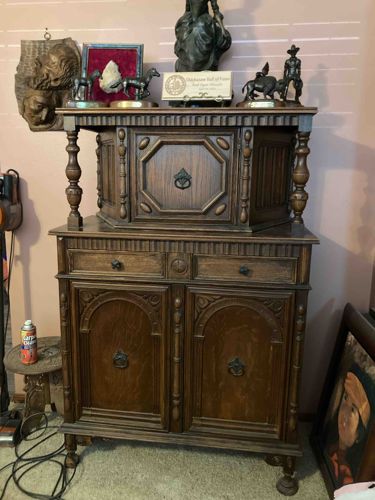
This is a substantial two-tiered wooden sideboard or buffet cabinet designed in the Jacobean or Tudor Revival style, likely dating from the early to mid-20th century. The piece is constructed primarily of oak or a similar hardwood with a medium-to-dark brown stained finish. The upper section features a central recessed octagonal paneled door flanked by fluted vertical panels and supported by turned, bulbous baluster legs on the front corners. The lower section includes a wide drawer with two dark metal pull knobs and a central circular carved medallion, situated above two large cabinet doors. These doors are decorated with inset arched panels and central ring-style metal pulls. Intricate carvings, including rosette motifs and dental molding under the tabletops, add to its ornate character. The piece sits on robust turned bun feet. Structurally, the cabinet appears solid, though there is visible surface wear, particularly light scuffing on the flat surfaces and edges, and a slight dust accumulation consistent with age. No major cracks, missing moldings, or significant structural repairs are immediately evident from the front view, suggesting well-maintained craftsmanship of the era.
AI-Generated Appraisal Disclaimer
Estimated Value
$800 - $1,200
Basic Information
Category
Antique Furniture
Appraised On
January 11, 2026
Estimated Value
$800 - $1,200
Item Description
This is a substantial two-tiered wooden sideboard or buffet cabinet designed in the Jacobean or Tudor Revival style, likely dating from the early to mid-20th century. The piece is constructed primarily of oak or a similar hardwood with a medium-to-dark brown stained finish. The upper section features a central recessed octagonal paneled door flanked by fluted vertical panels and supported by turned, bulbous baluster legs on the front corners. The lower section includes a wide drawer with two dark metal pull knobs and a central circular carved medallion, situated above two large cabinet doors. These doors are decorated with inset arched panels and central ring-style metal pulls. Intricate carvings, including rosette motifs and dental molding under the tabletops, add to its ornate character. The piece sits on robust turned bun feet. Structurally, the cabinet appears solid, though there is visible surface wear, particularly light scuffing on the flat surfaces and edges, and a slight dust accumulation consistent with age. No major cracks, missing moldings, or significant structural repairs are immediately evident from the front view, suggesting well-maintained craftsmanship of the era.
Get Your Items Appraised
Instant estimates of your treasures with AI-powered instant appraisals