AI Appraisal Estimate

AI-generated estimates · not official valuations

From the user

What was submitted

Photo and notes provided by the user — not generated by AI

Submitted item photo
Submitted photo · May 27, 2026

User's notes

No additional notes provided.

AI analysis below

AI appraisal

AI analysis & estimate

AI-Generated · Verify before acting

Everything below is generated by AI for informational purposes only. AI can make mistakes — the AI may misidentify items or misattribute them (artist, maker, brand, designer, origin, era). This is not an official valuation and should not be used for insurance, sale, tax, estate, legal, or lending purposes — or any decision requiring a certified appraisal. It is not an authoritative claim about any person, brand, or rights holder — do not share or rely on it as a factual statement about a third party. Always consult qualified professionals before making financial decisions.

Read the full disclaimer

AI Identification

·Not independently authenticated·Verify before acting

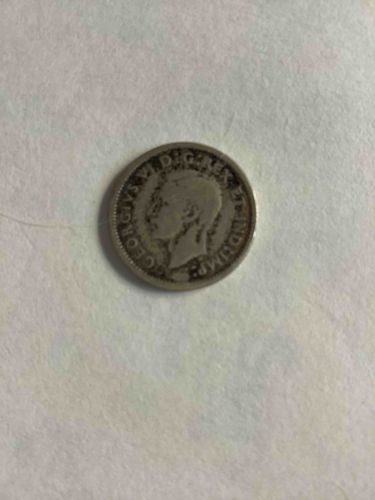
King George VI Coin

Coin

AI Estimated Value

·Not an official valuation·Verify before acting

$2 - $10

As of May 27, 2026

AI Item Analysis

·AI can make mistakes·Verify before acting
The item is a circular metal coin, appearing to be made of a silver-colored alloy, possibly silver itself, showing significant surface wear and darkening in the recesses, indicating age and circulation. The approximate diameter appears to be consistent with a standard small to medium sized coin. The obverse side, visible in the image, features a left-facing profile bust of a male monarch, identified by the inscription encircling the effigy. The visible inscription clearly reads "GEORGIVS VI D: G: IMP:", which translates to "George VI by the Grace of God, Emperor." This definitively identifies the monarch as King George VI, who reigned from 1936 to 1952. The details of the king's effigy, such as the hair and facial features, are somewhat softened due to wear, but the overall outline is clear. The lettering within the inscription is legible, though some areas exhibit dirt or toning accumulation. There are no obvious signs of major damage like bending or severe scratches, but the entire surface shows a dull, aged patina rather than a bright, lustrous finish. The rim of the coin appears intact with no significant dings or nicks. The coin's craftsmanship appears to be typical of government-issued coinage, with precise detailing that has been diminished over time. Based on the monarch depicted, the coin can be estimated to date from the mid-20th century, specifically between 1936 and 1952. The overall condition suggests it was in general circulation for some time.

AI Appraisal Report

·AI can make mistakes·Verify before acting
Upon examining the provided image of this King George VI coin, I can confidently assess its authenticity as a genuine circulating coinage from the reign of King George VI (1936-1952). The inscription 'GEORGIVS VI D: G: IMP:' is clear and consistent with known coinage from this period. The visible wear on the effigy and the overall dull patina suggest it was in general circulation for a significant period. I would grade its condition as 'Good' to 'Very Good' due to the softened details from wear, but without severe damage like bends or deep scratches. Market conditions for common King George VI coinage are generally stable but not highly speculative. This particular coin, in its circulated condition and without a visible mint mark or specific rare date, is considered common. Comparable circulated examples typically sell in the low single to double-digit dollar range. Demand exists among collectors of British Commonwealth coinage and those seeking examples of monarchs. Rarity is low for such common issues. Factors significantly impacting value for this type of coin include its specific date, mint mark (if any), and primarily its grade. A higher grade (e.g., Uncirculated) would exponentially increase its value. My assessment of authenticity is based solely on visual inspection of the image. For full authentication, which typically isn't necessary for common circulated coins of this type, I would ideally require in-person examination to verify weight, diameter, thickness, and edge reeding. Provenance documentation could add value for rarer variants, but for this common type, it's not a primary factor. Scientific testing (e.g., metal analysis) is generally reserved for high-value or highly suspect counterfeits, which this coin does not appear to be.

Get your items appraised

Instant estimates of your treasures with AI-powered appraisals

Browse More Appraisals