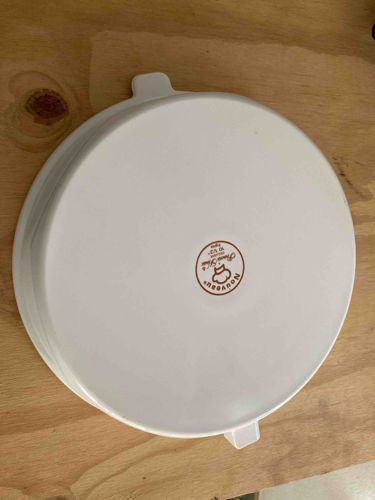
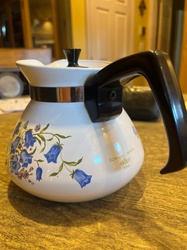
Princess House Nouveau French made Ceramic Pot base 10 and 1/2 inch (non-lid)
These notes were written by the person who submitted this item. Appraiser.AI has not verified them, and the AI's identification and estimate may rely on them.
AI Estimated Value
Not an official valuation
$15 - $25
AI estimate as of October 8, 2025 · verify with a professional before acting
AI-Generated · Verify before acting
Everything on this page is generated by AI for informational purposes only. AI can make mistakes — the AI may misidentify items or misattribute them (artist, maker, brand, designer, origin, era). This is not an official valuation and should not be used for insurance, sale, tax, estate, legal, or lending purposes — or any decision requiring a certified appraisal. It is not an authoritative claim about any person, brand, or rights holder — do not share or rely on it as a factual statement about a third party. Always consult qualified professionals before making financial decisions.
This analysis also relies on unverified notes provided by the user, which may be incomplete or inaccurate and could affect the result.
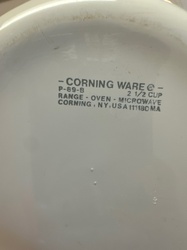
This item is a circular, off-white ceramic piece, likely serving as a lid for a larger pot or potentially a base. It measures approximately 10 1/2 inches in diameter, as indicated by the accompanying context. The ceramic appears to be a durable stoneware or porcelain with a smooth, glossy glaze, characteristic of oven-to-table cookware. The color is a consistent creamy white throughout the visible surface. On the underside, there is a clear manufacturer's mark in a reddish-brown color, encircled by text. The mark contains the words 'Princess House', 'Made in France', and 'Nouveau', along with what appears to be a stylized cat or dog design. This marking confirms its origin and brand, aligning with the Princess House Nouveau line known for its French-made ceramic ovenware. Two small, raised tabs are visible on opposite sides of the rim, which would typically serve as handles or placement guides when used as a lid, or feet if inverted as a base. The overall construction appears robust and practical for kitchen use. No significant wear, chips, cracks, or repairs are immediately visible from the provided image, suggesting it is in good to excellent condition. The clean lines and functional design point to a mid-to-late 20th-century style, common for such household items. The 'Made in France' designation often implies a certain level of craftsmanship and quality in ceramic production.
AI Appraisal Report
Based on my examination of the provided image and description, this Princess House Nouveau Ceramic Pot base, measuring 10.5 inches in diameter, is in excellent condition. The glossy, creamy white glaze appears consistent and free from chips, cracks, or repairs, indicating careful use and preservation. Authenticity is strongly supported by the clear, reddish-brown 'Princess House', 'Made in France', and 'Nouveau' backstamp, which aligns perfectly with known markings for this line. The presence of a stylized cat or dog design further corroborates its origin.
While Princess House items are generally well-regarded for quality, the Nouveau line, while functional and aesthetically pleasing, is not considered rare. "Oven-to-table" cookware like this was widely produced. Market comparables for individual Princess House Nouveau components, especially bases or lids sold separately, typically fall within a modest range. Factors influencing value include the brand recognition, French manufacturing (often perceived as higher quality), and the item's robust condition. However, as a single component rather than a complete set, its utility and thus its market appeal are somewhat diminished. There isn't significant demand driving up prices for individual pieces unless they are rare servingware or a highly sought-after specific piece.
My assessment of authenticity and condition is based solely on visual inspection of the image. For full authentication, a physical examination would allow me to check for invisible hairline cracks, wear patterns not visible from the angle provided, and the tactile quality of the ceramic. While provenance could offer additional historical context, it's not strictly necessary for this type of mass-produced item. No scientific testing would be required, given the clear manufacturer's mark.