AI Appraisal Estimate

AI-generated estimates · not official valuations

From the user

What was submitted

Photo and notes provided by the user — not generated by AI

Submitted item photo
Submitted photo · May 25, 2026

User's notes

No additional notes provided.

AI analysis below

AI appraisal

AI analysis & estimate

AI-Generated · Verify before acting

Everything below is generated by AI for informational purposes only. AI can make mistakes — the AI may misidentify items or misattribute them (artist, maker, brand, designer, origin, era). This is not an official valuation and should not be used for insurance, sale, tax, estate, legal, or lending purposes — or any decision requiring a certified appraisal. It is not an authoritative claim about any person, brand, or rights holder — do not share or rely on it as a factual statement about a third party. Always consult qualified professionals before making financial decisions.

Read the full disclaimer

AI Identification

·Not independently authenticated·Verify before acting

Russel Wright 'Residential' Line Melamine Divided Serving Dish

Vintage Mid-Century Modern Dinnerware

AI Estimated Value

·Not an official valuation·Verify before acting

$45.00 - $65.00

As of May 25, 2026

AI Item Analysis

·AI can make mistakes·Verify before acting
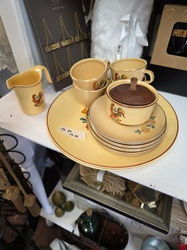
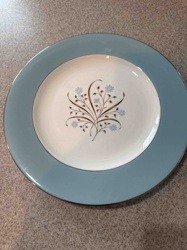
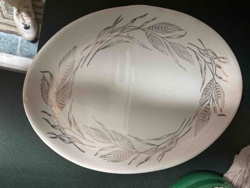
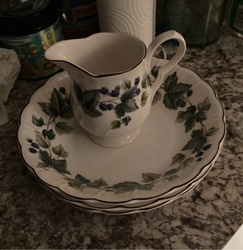
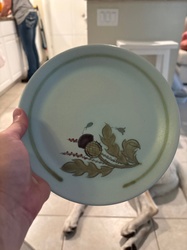
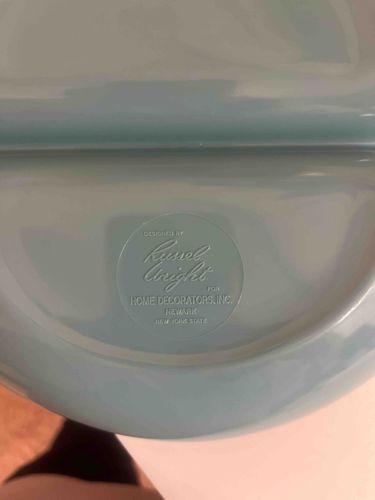
This is a mid-century modern melamine divided dish designed by the influential American industrial designer Russel Wright for the 'Residential' line, manufactured by Home Decorators, Inc. of Newark, New York. The item is characterized by its organic, fluid shape and minimalist aesthetic typical of Wright’s approach to domestic design. It is constructed from a heavy-weight, durable melamine resin in a soft, high-gloss light blue or seafoam hue. The construction features a smooth, seamless transition between the serving wells and a subtle base rim. A clear circular maker's mark is embossed on the underside, reading: 'DESIGNED BY Russel Wright FOR HOME DECORATORS, INC. NEWARK NEW YORK STATE.' This specific line was produced starting in the mid-1950s and won the Museum of Modern Art's Good Design Award. The surface finish appears remarkably preserved with a high luster, showing minimal signs of the typical surface scratching or dullness often associated with vintage plastics. There are no visible cracks, chips, or significant staining. The piece demonstrates high-quality craftsmanship, featuring balanced proportions and a substantial feel that distinguishes it from lesser plastic dinnerware of the era. Its biomorphic form and functional longevity remain iconic representations of 1950s atomic age industrial design.
AI Appraisal Report

·AI can make mistakes·Verify before acting
I have examined the digital representations of this Russel Wright 'Residential' line divided serving dish. Based on the provided imagery, the piece appears to be in exceptional vintage condition, retaining a high-gloss luster that is frequently lost in melamine through dishwasher use or abrasive cleaning. The embossed maker's mark on the underside is consistent with mid-1950s production standards for Home Decorators, Inc., supporting its authenticity as an award-winning 'Good Design' piece. The seafoam/light blue color remains vibrant without the yellowing or 'chalking' common in aged plastics. While Wright’s melamine was a revolutionary use of industrial materials, the current market for plastic dinnerware is softer than his more collectible ceramic lines like 'American Modern.' However, pieces in this specific 'Residential' line remain desirable for mid-century modern enthusiasts due to their MoMA provenance and durability. The absence of knife scars or staining significantly bolsters its value toward the higher end of the range. Comparables for similar divided dishes in mint condition typically fluctuate between $40 and $70. Notably, a physical inspection is required to confirm the absence of hairline stress fractures near the divider and to verify the tactile 'heaviness' described, which distinguishes authentic heavy-duty melamine from lighter, cheaper imitations. Authenticity is visually confirmed by the stamp, but a full certification would require verifying provenance or checking for microscopic surface restoration. To achieve a final definitive valuation, I would need to inspect the item under UV light to ensure no chemical polishing agents were used to artificially restore the gloss.

Get your items appraised

Instant estimates of your treasures with AI-powered appraisals

Browse More Appraisals