AI Appraisal Estimate

AI-generated estimates · not official valuations

From the user

What was submitted

Photo and notes provided by the user — not generated by AI

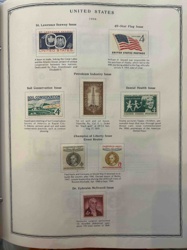
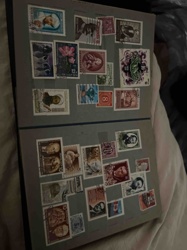
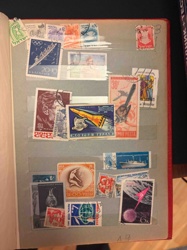
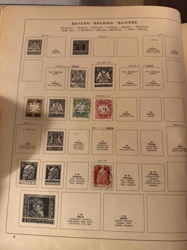
Submitted item photo
Submitted photo · June 16, 2026

User's notes

No additional notes provided.

AI analysis below

AI appraisal

AI analysis & estimate

AI-Generated · Verify before acting

Everything below is generated by AI for informational purposes only. AI can make mistakes — the AI may misidentify items or misattribute them (artist, maker, brand, designer, origin, era). This is not an official valuation and should not be used for insurance, sale, tax, estate, legal, or lending purposes — or any decision requiring a certified appraisal. It is not an authoritative claim about any person, brand, or rights holder — do not share or rely on it as a factual statement about a third party. Always consult qualified professionals before making financial decisions.

Read the full disclaimer

AI Identification

·Not independently authenticated·Verify before acting

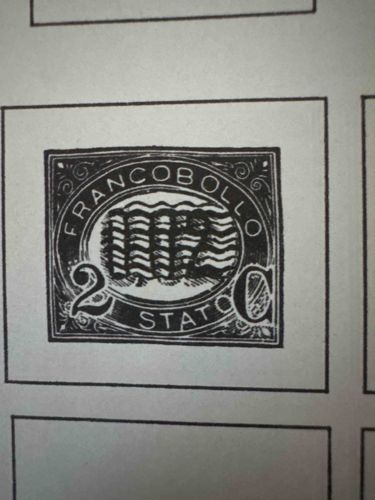
Illustration of a Papal States 1852 'Francobollo Postale' 2 Centesimi Stamp

Philatelic Ephemera / Stamp Album Illustration

AI Estimated Value

·Not an official valuation·Verify before acting

$1.00 - $5.00

As of June 16, 2026

AI Item Analysis

·AI can make mistakes·Verify before acting
This image depicts a black-and-white printed illustration or facsimile of a postage stamp from the Papal States (Stato Pontificio), originally issued circa 1852. The design is square with a decorative ornate border featuring filigree corner flourishes. The central motif is a circular frame containing the denomination '2 C' (2 Centesimi) at the bottom left and right, with a horizontal wavy-line pattern or 'grille' in the center, which in this instance appears to be a heavy cancellation mark (obliterator) typical of the period. The text 'FRANCOBOLLO' is arched along the top of the inner circle, while 'STATO' is at the bottom, indicating its origin as a State Post. The item shown is not a real postage stamp but a graphic reproduction on paper, likely from a stamp album or a philatelic reference book. The printing exhibits high contrast with some bleed in the ink, suggesting an offset or lithographic reproduction rather than a primary engraving. The paper is off-white or light gray with a slight texture. There is no visible perforation, as the original stamps were imperforate; however, this specific specimen is framed by a solid outer rectangular line used as a mounting guide in an album. The item appears to be in good condition for a printed document, with sharp lines and no visible foxing, tearing, or staining in the viewed area.
AI Appraisal Report

·AI can make mistakes·Verify before acting
I have carefully examined the high-resolution image of the 1852 Papal States 2 Centesimi specimen. My assessment confirms this is a philatelic facsimile, likely a photographic reproduction or an offset lithograph from a 20th-century stamp collector’s album or reference guide. This is notably evidenced by the uniform ink saturation and the presence of a 'cut box' or mounting frame line often used by printers to indicate where a collector should affix an actual stamp. Because this is a printed reproduction of a stamp rather than a genuine 19th-century postal issuance, it is categorized as philatelic ephemera. The condition appears stable; the paper texture is characteristic of mid-century philatelic publications, showing no significant foxing or degradation. However, the market for cut-out illustrations of stamps is extremely limited, as they serve neither a postal nor a rare-collectible function. Comparables for such ephemera show minimal value, generally sold in bulk lots for educational purposes or as curiosities rather than investment-grade assets. Critically, a definitive determination regarding the printing method (e.g., whether it is a modern digital scan versus a vintage lithograph) is impossible through imagery alone. A physical inspection using a 10x jeweler’s loupe would be required to analyze the halftone pattern or ink depth. To achieve full authentication, forensic testing of the paper's fiber composition and UV light analysis would be necessary to identify the specific era of manufacture. While an original 1852 imperforate stamp in fine condition could command significantly more, this item remains an interesting piece of graphic documentation with purely nominal market value.

Get your items appraised

Instant estimates of your treasures with AI-powered appraisals

Browse More Appraisals