AI estimate as of September 7, 2025 · verify with a professional before acting
AI-Generated · Verify before acting
Everything on this page is generated by AI for informational purposes only. AI can make mistakes — the AI may misidentify items or misattribute them (artist, maker, brand, designer, origin, era). This is not an official valuation and should not be used for insurance, sale, tax, estate, legal, or lending purposes — or any decision requiring a certified appraisal. It is not an authoritative claim about any person, brand, or rights holder — do not share or rely on it as a factual statement about a third party. Always consult qualified professionals before making financial decisions.
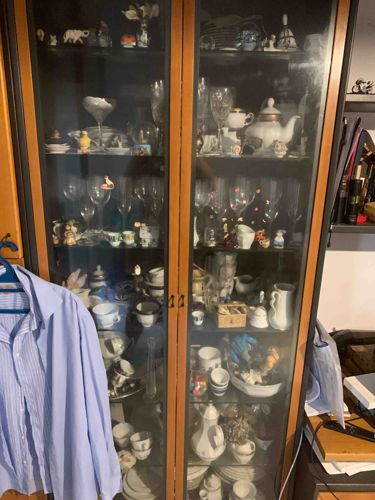
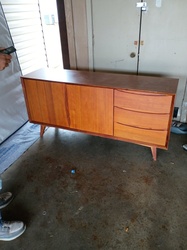
This item is a display cabinet, likely intended for showcasing decorative objects, dishware, and glassware. It features two distinct vertical sections, each with a glass-fronted door, allowing for a clear view of the contents within. The frame of the cabinet appears to be constructed from a light-to-medium brown wood or wood-look laminate, suggesting a warm, traditional, or transitional aesthetic. The doors are primarily glass, extending nearly the full height of each section, and are set within the wood framework. The interior of the cabinet has multiple glass shelves, creating several levels for display. The back panel of the cabinet is dark, enhancing the visibility of items placed inside by providing a contrast. There are numerous items displayed within, including various stemmed glasses (wine glasses, champagne flutes), teacups, saucers, small figurines (e.g., animals, human figures), teapots, pitchers, serving bowls, and decorative plates. Some items, like the teapot and a bell-shaped object, show metallic accents, possibly gold or bronze. The condition of the cabinet itself appears good, with no obvious signs of significant damage, scratches, or wear visible from the provided image, though the lighting is somewhat dim. The glass appears clean. The construction seems robust, indicative of a quality piece designed for stability, given the numerous delicate items it houses. The style suggests it could be from the latter half of the 20th century to early 21st century.
AI Appraisal Report
I have examined the Two-Door Display Cabinet presented in the image. Visually, the cabinet appears to be in good overall condition, with no overt signs of significant damage, deep scratches, or structural issues. The glass panels are clean and intact, and the wood-look laminate or light-to-medium brown wood frame seems solid. The dark back panel effectively highlights the displayed items. I can't definitively confirm the material as solid wood versus laminate from the image alone; this would require an in-person inspection.
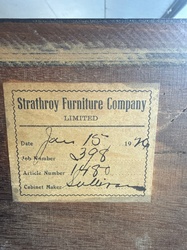
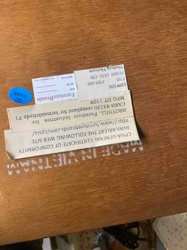
Authenticity: Based on the visual evidence, it appears to be a genuine display cabinet. However, without maker's marks, labels, or provenance documentation, I cannot verify its manufacturer, specific model, or exact date of production. These details would require a physical examination. The style suggests a production period from the late 20th century to early 21st century.
Market Conditions & Comparables: The market for used display cabinets, especially those not crafted from high-end hardwoods or featuring significant artistic design, is generally moderate. Similar two-door glass display cabinets can be found in a range of prices on secondary markets (e.g., online marketplaces, consignment shops). The presence of internal glass shelves is a positive feature, adding to its functionality and appeal.
Demand & Rarity: These types of display cabinets are not considered rare. Demand is steady for functional pieces, particularly those in good condition, but not exceptionally high. The value is primarily driven by utility and aesthetic appeal rather than collectible rarity. The numerous items inside, while showcasing its function, do not add directly to the cabinet's intrinsic value, though they might make it more attractive to a buyer looking for a complete setup.
Factors Impacting Value: The apparent good condition and practical design are positive factors. However, the lack of verifiable premium materials (e.g., solid exotic wood), unique design elements, or a renowned maker limits its high-end value. The difficulty in assessing the precise material (wood vs. laminate) without physical inspection is a limitation. If it is solid wood, the value would lean towards the higher end of the range; if laminate, towards the lower end.
For full authentication and a more precise appraisal, I would require a physical inspection to assess the material quality, joinery, and search for any hidden maker's marks or labels. Provenance documentation, if available, would also be highly beneficial.