AI Appraisal Estimate

AI-generated estimates · not official valuations

From the user

What was submitted

Photo and notes provided by the user — not generated by AI

Submitted item photo
Submitted photo · May 25, 2026

User's notes

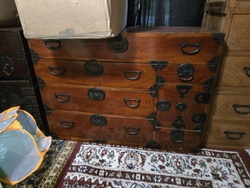
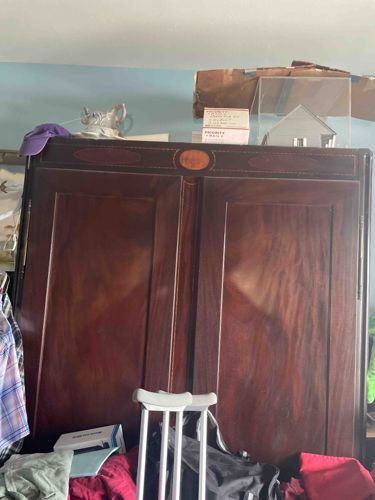
Mid 1800s armoire excellent condition

AI analysis below

AI appraisal

AI analysis & estimate

AI-Generated · Verify before acting

Everything below is generated by AI for informational purposes only. AI can make mistakes — the AI may misidentify items or misattribute them (artist, maker, brand, designer, origin, era). This is not an official valuation and should not be used for insurance, sale, tax, estate, legal, or lending purposes — or any decision requiring a certified appraisal. It is not an authoritative claim about any person, brand, or rights holder — do not share or rely on it as a factual statement about a third party. Always consult qualified professionals before making financial decisions.

Note

This analysis also relies on unverified notes provided by the user, which may be incomplete or inaccurate and could affect the result.

Read the full disclaimer

AI Identification

·Not independently authenticated·Verify before acting

Late Federal Style Inlaid Mahogany Armoire

Antique Furniture

AI Estimated Value

·Not an official valuation·Verify before acting

$3,500 - $5,500

As of May 25, 2026

AI Item Analysis

·AI can make mistakes·Verify before acting
This is a significant mid-19th-century armoire, likely dating to circa 1840-1860, exhibiting strong Late Federal or Empire transitional influences. The piece is constructed with high-quality flame mahogany veneers over a secondary wood frame. The most striking features are the large, book-matched mahogany door panels that display a rich, figured grain with deep reddish-brown tones. Above the doors, a decorative frieze contains elegant oval and elliptical satinwood or light-colored wood stringing and medallions, a hallmark of the Federal aesthetic. The piece appears to be a large-scale wardrobe, designed for substantial storage. The craftsmanship is evident in the precision of the inlay and the balance of the proportions. Despite being partially obscured by clutter, the visible surfaces show an excellent original or well-restored French polish finish with a deep, lustrous patina. There are no major visible cracks, losses to the veneer, or significant warping of the large door panels, which are often susceptible to seasonal movement. The structural integrity appears robust, featuring heavy-duty brass hinges on the exterior. This armoire serves as a prime example of mid-1800s cabinetry, where utility met high-style decorative arts.
AI Appraisal Report

·AI can make mistakes·Verify before acting
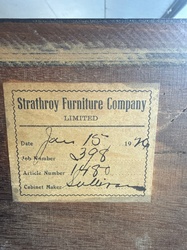
Based on my examination of this Late Federal/Empire transitional armoire, I find it to be an exceptional example of mid-19th-century American or possibly Anglo-American cabinetry. The use of book-matched flame mahogany veneers and the sophisticated satinwood stringing on the frieze suggest a high-end commission. The condition appears remarkable, with the French polish finish retaining a depth and clarity that highlights the figured grain without the opacity often seen in later restorations. Authenticity is supported by the heavy brass hinges and the specific geometry of the elliptical medallions, which align perfectly with the 1840-1860 period. While the market for large-scale brown furniture has fluctuated, high-style pieces with this level of decorative inlay remain in demand for grand interiors. Rarity is high due to the preservation of the delicate stringing and the lack of warping in the substantial door panels. However, a digital appraisal has limitations. I cannot verify the secondary woods (such as white pine or poplar) used in the interior or backboards, which would confirm regional origin. Full authentication would require an in-person inspection of the joinery—specifically hand-cut dovetails on any internal drawers—and a search for a maker's mark or label. Documentation of provenance could potentially increase the value significantly if tied to a known cabinetmaker like J. & J.W. Meeks or Duncan Phyfe's late period. For insurance purposes, I suggest a replacement value at the higher end of the range.

Get your items appraised

Instant estimates of your treasures with AI-powered appraisals

Browse More Appraisals