AI estimate as of August 29, 2025 · verify with a professional before acting
AI-Generated · Verify before acting
Everything on this page is generated by AI for informational purposes only. AI can make mistakes — the AI may misidentify items or misattribute them (artist, maker, brand, designer, origin, era). This is not an official valuation and should not be used for insurance, sale, tax, estate, legal, or lending purposes — or any decision requiring a certified appraisal. It is not an authoritative claim about any person, brand, or rights holder — do not share or rely on it as a factual statement about a third party. Always consult qualified professionals before making financial decisions.
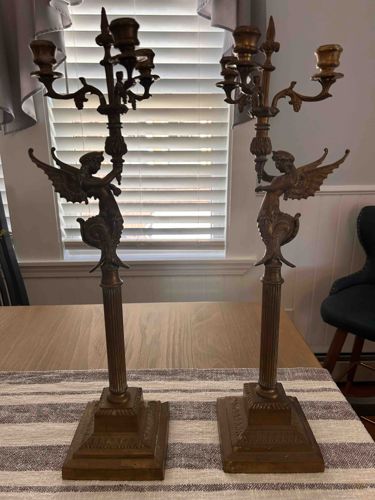
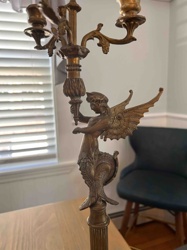
This is a pair of antique or vintage candelabras, likely constructed from bronze or brass given their color and apparent weight. Each candelabra features an elaborate design, predominantly in a dark, aged brass or bronze finish, with some lighter, more polished brass accents on the candle cups. They stand approximately tall, with a stable rectangular base that exhibits decorative molding or possibly acanthus leaf motifs around the edges. The central standard of each candelabra is columnar, fluted, and rises to support a figural element: a winged cherub or putto. This figure, cast in metal, appears to be holding the multi-branched candleholder assembly aloft. Above the cherub, the candelabra branches out to hold three candles, with the central candle holder positioned highest, flanked by two lower, gracefully curved arms. The candle cups are relatively simple, suggesting functionality over excessive ornamentation. Some surface wear, scratches, and a rich, dark patina consistent with age are observable, particularly in recessed areas, indicating the items have not been recently polished. The figures of the cherubs show good detail in their wings and drapery, suggesting quality casting. There are no immediate signs of significant damage like breaks or repairs, though the overall condition implies typical wear from handling and display over time. The style appears to be neo-classical or French Empire revival, possibly dating from the late 19th to early 20th century. The sturdy construction and ornate design point to a decorative purpose, likely for a formal setting. No discernible maker's marks or signatures are visible in the provided images.
AI Appraisal Report
Based on my visual examination of the provided image, I assess this pair of bronze/brass cherub candelabras to be in good antique/vintage condition. The authenticity appears consistent with the described circa late 19th to early 20th century Neo-Classical or French Empire Revival style, characterized by the figural cherub elements, fluted columns, and decorative bases. The dark, aged patina, surface wear, and minor scratches are typical indicators of age and use, and critically, there are no visible signs of significant damage, repairs, or breaks, which would negatively impact value. The quality of casting, particularly in the cherubs' details, suggests a well-made decorative item of its period.
In terms of market conditions, similar brass or bronze candelabras of this size and style generally see moderate demand. Figurative elements, especially cherubs, can enhance desirability. Comparables in the current decorative arts market for a pair in this condition typically range from $700 to $1,500, depending on provenance, exact material composition, and retail venue. Rarity is not exceptionally high for this style, but a well-preserved pair maintains appeal. Factors positively impacting value include their matched set status, good condition, and charming figural design. The absence of maker's marks is a slight detractor, as a known foundry or artist could significantly increase value.
It is crucial to note that this authenticity verification is based solely on photographic evidence. For full authentication and a more precise valuation, an in-person examination is essential to confirm the metal composition (e.g., bronze vs. brass), assess weight, thoroughly inspect for repairs not visible in images, and search for any hidden marks. Provenance documentation, if available, would also be invaluable in confirming age and origin. Scientific testing, such as XRF analysis for metal composition, could definitively confirm material authenticity.