AI estimate as of June 17, 2025 · verify with a professional before acting
AI-Generated · Verify before acting
Everything on this page is generated by AI for informational purposes only. AI can make mistakes — the AI may misidentify items or misattribute them (artist, maker, brand, designer, origin, era). This is not an official valuation and should not be used for insurance, sale, tax, estate, legal, or lending purposes — or any decision requiring a certified appraisal. It is not an authoritative claim about any person, brand, or rights holder — do not share or rely on it as a factual statement about a third party. Always consult qualified professionals before making financial decisions.
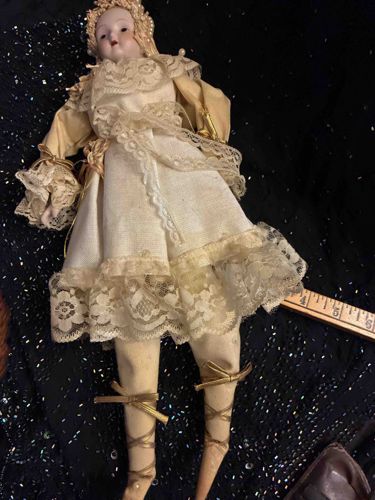
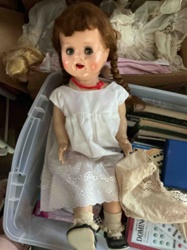
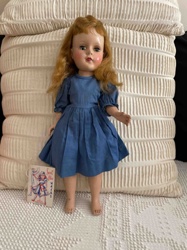
This is an antique small bisque head doll with a cloth body and pointed cloth legs. The head appears to be made of bisque or porcelain, showing a pale complexion with hand-painted facial features. The hair is molded and painted, possibly styled in waves and adorned with a headdress or bonnet decorated with small pearl-like beads. The doll is dressed in an elaborate costume featuring a champagne-colored bodice with puffed sleeves and ruffled cuffs, likely made of silk or satin. The dress has a high ruffle around the neck and across the chest, crafted from a beige or cream-colored lace. The skirt is made of an off-white fabric, possibly linen or cotton, gathered at the waist and featuring two tiers of the same lace trim as the bodice. Gold string or ribbon is used to cinch the waist and tie bows on the arms above the elbows and around the lower legs. The legs are slender and pointed, made of a beige cloth material, and have the gold string wrapped around them in a criss-cross pattern resembling lacing or elaborate garters. The doll has visible signs of age and wear, including potential discoloration and minor fraying of the fabric and lace. The paint on the face may show some wear or fading consistent with age. The overall construction suggests a hand-assembled piece, typical of earlier doll manufacturing. There are no visible manufacturer's marks or stamps in the provided image. The doll's style, particularly the lace trim and the overall construction of the costume, suggests a potential age from the late 19th or early 20th century. The craftsmanship appears to be moderate, with attention paid to the details of the costume and delicate facial features.
AI Appraisal Report
Based on my visual examination of the provided image of the Antique Bisque Head Doll with Cloth Body and Lace Dress, I assess the condition as fair, consistent with its likely age of late 19th or early 20th century. There is visible wear, including discoloration and potential fraying of the fabric and lace detailing. The bisque head appears intact, but surface wear on the painted features is suggested. Authenticity is indicated by the craftsmanship and materials, typical of the period for this style of doll. However, without in-person inspection, I cannot confirm the authenticity of the bisque or rule out repairs or later modifications. Physical examination would allow for a detailed assessment of the bisque's composition, condition, and any hidden damages or repairs. Testing for materials and dyes could further inform the age. Provenance documentation, if available, would significantly enhance authentication. Market conditions for antique bisque dolls are stable for recognizable manufacturers and high-quality examples. This doll, lacking visible marks and showing wear, falls into a lower segment. Demand exists among collectors of antique dolls, but without knowing the maker, or if it's a common German or French piece, the demand is limited. Rarity is difficult to determine from the image alone; it appears to be a factory-made or small workshop piece rather than unique. Factors significantly impacting value are the lack of identification marks, the evident wear, and the uncertainty of origin. In-person examination is crucial to confirm the material of the head, assess its condition thoroughly (chips, cracks, repairs), evaluate the body's construction and condition, and search for any hidden marks. Provenance would also be a key factor.
LIMITATIONS: Authenticity cannot be fully verified from images alone. In-person inspection, potential testing of materials, and provenance documentation are essential for definitive authentication and a more precise valuation.