AI Appraisal Estimate

AI-generated estimates · not official valuations

From the user

What was submitted

Photo and notes provided by the user — not generated by AI

Submitted item photo
Submitted photo · June 8, 2026

User's notes

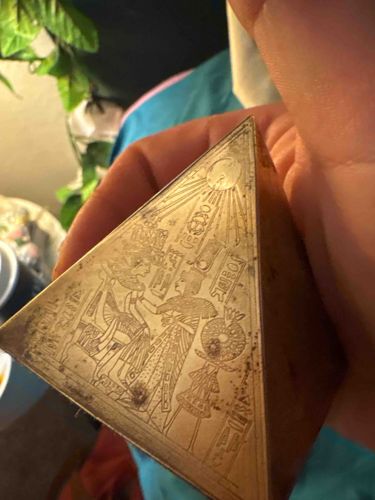
Brass pyramid with hieroglyphs maybe old

AI analysis below

AI appraisal

AI analysis & estimate

AI-Generated · Verify before acting

Everything below is generated by AI for informational purposes only. AI can make mistakes — the AI may misidentify items or misattribute them (artist, maker, brand, designer, origin, era). This is not an official valuation and should not be used for insurance, sale, tax, estate, legal, or lending purposes — or any decision requiring a certified appraisal. It is not an authoritative claim about any person, brand, or rights holder — do not share or rely on it as a factual statement about a third party. Always consult qualified professionals before making financial decisions.

Note

This analysis also relies on unverified notes provided by the user, which may be incomplete or inaccurate and could affect the result.

Read the full disclaimer

AI Identification

·Not independently authenticated·Verify before acting

Etched Brass Egyptian Revival Souvenir Pyramid

Vintage Metalware / Decorative Art

AI Estimated Value

·Not an official valuation·Verify before acting

$25.00 - $45.00

As of June 8, 2026

AI Item Analysis

·AI can make mistakes·Verify before acting
This item is a four-sided Egyptian-style pyramid constructed from cast or sheet brass with a polished yellow metal finish. The object serves as an example of Egyptian Revival decorative art, commonly produced as tourist souvenirs in the mid-to-late 20th century. One visible face features a detailed fine-line etching depicting a pharaonic scene, including a seated deity or ruler being attended by a standing figure, set beneath a radiating solar disc. The imagery is accompanied by faux-hieroglyphic cartouches and symbols meant to evoke an ancient aesthetic. The construction appears hollow, held in a hand for scale, suggesting a height of approximately 3 to 4 inches. The surface shows clear signs of age-related patina, including dark oxidation spots (verdigris) and surface scratches. There is a noticeable accumulation of grime within the etched lines, which highlights the design but also indicates a lack of recent professional cleaning. The craftsmanship is commercial rather than artisanal, with the etching being shallow and likely machine-rendered or chemically etched. While it captures the 'Grand Tour' spirit, the condition and style suggest it is a vintage decorative piece from the 1960s-1980s rather than an antiquity.
AI Appraisal Report

·AI can make mistakes·Verify before acting
I have examined the images of the etched brass Egyptian Revival pyramid. My visual analysis identifies this as a mid-to-late 20th-century souvenir, likely produced for the Egyptian tourist trade between 1960 and 1980. The polished yellow metal exhibits characteristic oxidation and verdigris consistent with aged brass rather than gold or bronze. The 'etched' scene and faux-hieroglyphs are shallow and suggest chemical etching or machine engraving rather than hand-tooled craftsmanship. The hollow construction and visible surface wear indicate a mass-produced decorative object rather than an artisanal or ancient artifact. The market for Egyptian Revival souvenirs is saturated, with high availability of similar brass wares (plates, boxes, and pyramids). Rarer, larger, or signed pieces Occasionally command higher prices, but this specific example aligns with standard 'Grand Tour' style desktop curios. The presence of surface grime and oxidation slightly reduces its aesthetic appeal, though some collectors prefer the original patina. Comparable sales on secondary markets typically fall within the $20 to $50 range. A definitive valuation is limited by the digital nature of this inspection. A physical examination would be required to verify the exact metal composition (via acid testing) and to inspect the base for maker’s marks that may be obscured. To upgrade this from a decorative souvenir to a collectible antiquity, one would need provenance documentation linking it to a specific mid-century collection or archaeological site, though the stylistic elements strongly preclude the latter. Scientific testing, such as X-ray fluorescence (XRF), could confirm the alloy composition but would likely exceed the value of the item itself.

Get your items appraised

Instant estimates of your treasures with AI-powered appraisals

Browse More Appraisals