AI identification & appraisal estimate

1950s Laos Silver Marriage Necklace

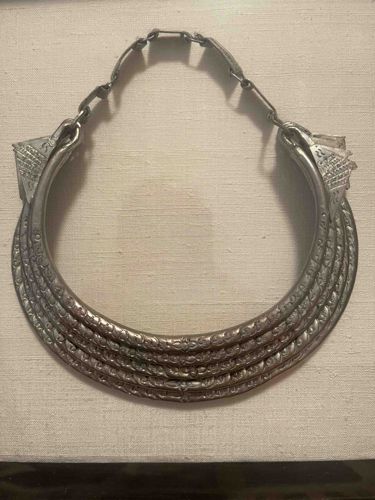
Submitted photo of 1950s Laos Silver Marriage Necklace
Photo submitted by the user — not generated by AI

User's notes

1950s Laos Silver Marriage Necklace 5” across

These notes were written by the person who submitted this item. Appraiser.AI has not verified them, and the AI's identification and estimate may rely on them.

AI Estimated Value

Not an official valuation

$800-1,500

AI estimate as of June 28, 2025 · verify with a professional before acting

AI-Generated · Verify before acting

Everything on this page is generated by AI for informational purposes only. AI can make mistakes — the AI may misidentify items or misattribute them (artist, maker, brand, designer, origin, era). This is not an official valuation and should not be used for insurance, sale, tax, estate, legal, or lending purposes — or any decision requiring a certified appraisal. It is not an authoritative claim about any person, brand, or rights holder — do not share or rely on it as a factual statement about a third party. Always consult qualified professionals before making financial decisions.

This analysis also relies on unverified notes provided by the user, which may be incomplete or inaccurate and could affect the result.

Read the full disclaimer

AI Item Analysis

This item is identified as a traditional Laotian silver marriage necklace, consistent with objects dating from the 1950s as per the provided context. The necklace measures approximately 5 inches across its primary rigid section and is constructed from what appears to be silver, displaying a characteristic silvery-grey hue with a well-developed, dark patina nestled within its intricate designs. This patina is testament to its age and authentic material. The central element of the necklace is a substantial, rigid, collar-like structure, visibly composed of five meticulously stacked, rounded bands. Each of these individual bands is elaborately decorated with finely detailed geometric or stylized floral patterns, likely achieved through traditional techniques such as repoussé or stamping. The nuanced irregularities in the patterns suggest dedicated manual artisan craftsmanship rather than industrial production. The ends of this rigid collar transition into distinctive, flared finials, angular in shape and similarly adorned with incised or textured patterns that integrate seamlessly with the main design. These finials serve as robust attachment points for a connecting chain, which consists of broad, flat links, completing the wearable circumference of the necklace. The overall condition of the necklace appears to be good for its age, exhibiting wear consistent with historical use and handling. There are no immediately discernible signs of major damage, breaks, or past repairs. The rich, antique patina is a significant quality indicator, enhancing its visual appeal and historical authenticity. The robust construction and intricate detailing indicate a piece of considerable cultural significance, embodying traditional Laotian artistry and its function as a ceremonial marriage adornment.
AI Appraisal Report

Based on the provided description and visual details, I appraise this 1950s Laotian silver marriage necklace. The piece exhibits characteristics consistent with authentic ethnographic jewelry from the period. The well-developed, dark patina within its intricate geometric and stylized floral patterns, achieved through apparent manual techniques like repoussé or stamping, strongly indicates age and traditional craftsmanship rather than industrial production. Its reported good condition, exhibiting wear consistent with historical use and no discernible major damage, positively impacts its value. The market for authentic antique Southeast Asian ethnographic jewelry, especially significant ceremonial pieces like marriage necklaces, remains stable among collectors of Asian and tribal art. While not exceedingly rare, well-preserved, original handcrafted items like this are highly sought after. Factors positively impacting value include its cultural significance, apparent silver composition, intricate detailing, and robust construction. My appraisal is necessarily limited as it's based solely on textual description and perceived visual attributes from images. Definitive authenticity requires direct physical examination. An in-person inspection would allow me to verify silver purity (e.g., XRF testing), precisely assess construction methods (e.g., traditional joinery, tool marks), and microscopically examine the patina. Provenance documentation would further solidify its history and value. Without these, the '1950s' attribution and silver purity are accepted as described but not independently verified.

Keep exploring

More jewelry appraisals

Get your items appraised

Instant AI-powered appraisal estimates from a photo

Browse More Appraisals