AI Appraisal Estimate

AI-generated estimates · not official valuations

From the user

What was submitted

Photo and notes provided by the user — not generated by AI

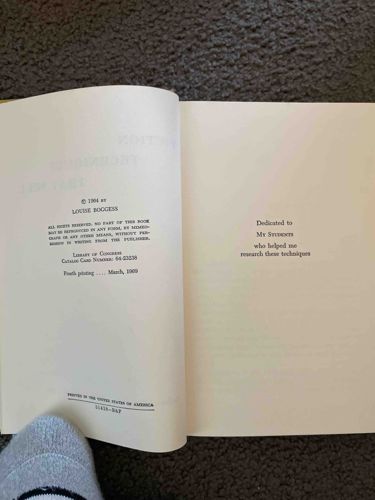
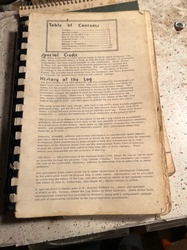
Submitted item photo
Submitted photo · June 4, 2026

User's notes

No additional notes provided.

AI analysis below

AI appraisal

AI analysis & estimate

AI-Generated · Verify before acting

Everything below is generated by AI for informational purposes only. AI can make mistakes — the AI may misidentify items or misattribute them (artist, maker, brand, designer, origin, era). This is not an official valuation and should not be used for insurance, sale, tax, estate, legal, or lending purposes — or any decision requiring a certified appraisal. It is not an authoritative claim about any person, brand, or rights holder — do not share or rely on it as a factual statement about a third party. Always consult qualified professionals before making financial decisions.

Read the full disclaimer

AI Identification

·Not independently authenticated·Verify before acting

Fiction Techniques That Sell by Louise Boggess, Fourth Printing

Books and Manuscripts

AI Estimated Value

·Not an official valuation·Verify before acting

$15-25

As of June 4, 2026

AI Item Analysis

·AI can make mistakes·Verify before acting
This item is an open hardcover or softcover book displaying the copyright and dedication pages. The copyright information confirms the work was authored by Louise Boggess in 1964, with this specific copy being a fourth printing dated March 1969. The Library of Congress Catalog Card Number is listed as 64-23538. Physically, the book features creamy, off-white paper stock that shows standard aging consistent with its fifty-year-plus age. The font used for the typography is a classic black serif, typical of mid-20th-century educational or technical publications. The dedication page on the right reads, 'Dedicated to MY STUDENTS who helped me research these techniques.' The book's construction appears to be a standard industrial binding, and the pages are shown lying open with a slight curve, suggesting a sturdy spine. There are no major visible stains, tears, or foxing on the displayed pages, though light shadows and slight edge wear are present. The item was printed in the United States of America as indicated by the '11428-BAP' manufacturing code at the bottom left. This book represents a specialized mid-century guide for aspiring commercial writers, reflecting the instructional styles of the 1960s.
AI Appraisal Report

·AI can make mistakes·Verify before acting
I have examined the digital representation of the fourth printing (March 1969) of 'Fiction Techniques That Sell' by Louise Boggess. The volume exhibits typical characteristics of a mass-produced mid-century instructional manual. The internal pages appear well-preserved with expected oxidation given the paper stock, showing a consistent off-white patina. The binding tension appears stable, and no significant foxing or damp staining is visible on the copyright or dedication leaves. From a market perspective, Louise Boggess was a respected writer and instructor, but this work was produced in high volume for the educational market. As a fourth printing rather than a first edition, its value to serious bibliophiles is limited. The current market for mid-century 'how-to' writing guides is primarily driven by nostalgic collectors or students of vintage pedagogy. Comparable sales for non-first edition printings of this title generally fluctuate between $10 and $30 depending on the presence and condition of the dust jacket, which is not evaluated here. While the typography and manufacturing codes (11428-BAP) are consistent with period-correct production from Prentice-Hall/BAP, a definitive authentication of the binding's structural integrity is impossible through imagery alone. A physical inspection would be required to check for 'cracked' hinges, odors indicative of mold, or brittle page edges. Furthermore, I cannot verify the presence of owner inscriptions or marginalia which could either enhance (if belonging to a notable author) or detract from the value. For full authentication, provenance documentation or a physical review of the cover condition would be necessary.

Get your items appraised

Instant estimates of your treasures with AI-powered appraisals

Browse More Appraisals