AI Appraisal Estimate

AI-generated estimates · not official valuations

From the user

What was submitted

Photo and notes provided by the user — not generated by AI

Submitted item photo
Submitted photo · May 27, 2026

User's notes

No additional notes provided.

AI analysis below

AI appraisal

AI analysis & estimate

AI-Generated · Verify before acting

Everything below is generated by AI for informational purposes only. AI can make mistakes — the AI may misidentify items or misattribute them (artist, maker, brand, designer, origin, era). This is not an official valuation and should not be used for insurance, sale, tax, estate, legal, or lending purposes — or any decision requiring a certified appraisal. It is not an authoritative claim about any person, brand, or rights holder — do not share or rely on it as a factual statement about a third party. Always consult qualified professionals before making financial decisions.

Read the full disclaimer

AI Identification

·Not independently authenticated·Verify before acting

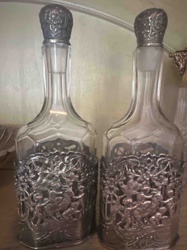
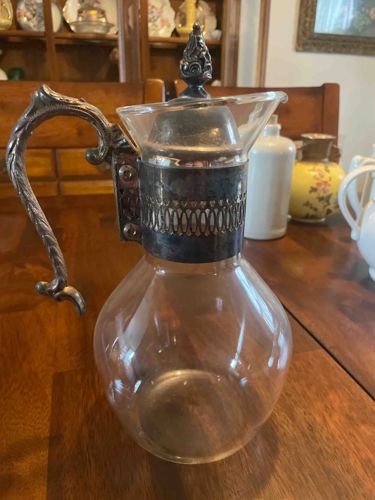
Silver-Plated Mounted Glass Claret Jug

Antique & Vintage Barware

AI Estimated Value

·Not an official valuation·Verify before acting

$45-75

As of May 27, 2026

AI Item Analysis

·AI can make mistakes·Verify before acting
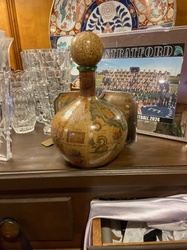
This is a decorative claret jug featuring a bulbous clear glass body and silver-plated metal fittings. The vessel is constructed with a hand-blown or molded glass carafe that tapers at the neck where it is secured by a wide metal collar. The collar exhibits an openwork gallery design with vertical oval piercings, adding a light, architectural quality to the piece. Attached to this collar is a highly ornate, cast metal handle with scrollwork and foliate motifs, characteristic of the Victorian or Neo-Renaissance revival styles. The jug is crowned with a fitted metal lid featuring a decorative finial shaped like a stylized pinecone or acanthine bud. The silver plating shows significant signs of tarnish and oxidation, particularly on the collar and lid, which is common for items of this age (likely mid-to-late 20th century). The glass appears to be in good condition without visible cracks, though minor surface scratches and internal residue are present. The construction utilizes visible screws to join the handle to the collar, suggesting a mass-production technique rather than bespoke silversmithing. This style of barware was popularly used for serving wine or iced water, blending elegant crystal aesthetics with functional metalwork.
AI Appraisal Report

·AI can make mistakes·Verify before acting
Based on my visual examination of this silver-plated mounted glass claret jug, I have determined it to be a decorative 20th-century piece, likely produced in the 1960s or 1970s, designed in the Victorian Revival style. The construction features—specifically the visible mechanical screws and the cast openwork gallery on the collar—indicate mass-production rather than period hand-craftsmanship. The glass body appears intact, though the silver plating exhibits significant oxidation and tarnish, which may mask underlying base metal wear or 'bleeding' of the copper/brass substrate. The current market for vintage barware of this specific caliber is saturated. Similar silver-plated claret jugs from brands like Sheridan or Leonard frequently appear at estate sales and online auctions, generally fetching modest prices compared to their sterling silver counterparts or high-end makers like Elkington & Co. The visible surface scratches and internal residue noted during inspection further place this item in a 'utility/decorative' category rather than 'collector grade.' Limitations: My assessment is based solely on high-resolution imagery. A physical inspection is required to determine the exact metal composition—specifically to check for maker's marks or hallmarks under the tarnish. Furthermore, I cannot verify the presence of hair-line fractures in the glass neck where it meets the metal mount without tactile examination. To confirm authenticity or a higher valuation, provenance documentation or a scientific acid test of the metal would be necessary to rule out white metal alloys or verify the thickness of the silver plate.

Get your items appraised

Instant estimates of your treasures with AI-powered appraisals

Browse More Appraisals