Japanese Satsuma Tripod Koro with Satsuma-style Decoration
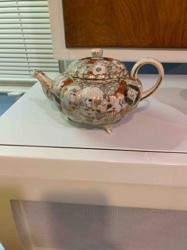
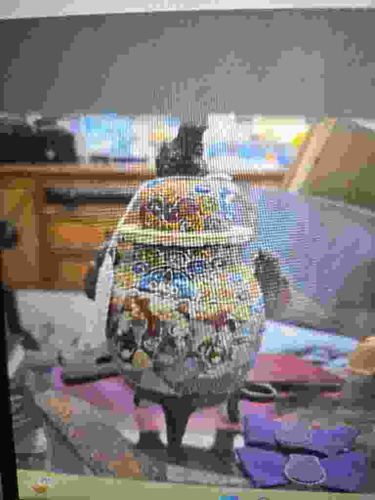
This item is an ornate Japanese porcelain censer, specifically a tripod koro, featuring a distinctive bulbous body supported by three dark, possibly bronze or iron, cabriole legs. The vessel is capped with a domed lid, which appears to be surmounted by a sculptural finial, likely representing a shishi (lion dog). The surface is densely decorated in the traditional Satsuma style, characterized by a creamy, crackle-glazed base overlaid with intricate millefleur or polychrome enamel motifs including florals and medallions. The color palette is rich, utilizing golds, reds, and blues in a 'thousand flowers' or 'brocade' pattern that covers nearly the entire surface of both the body and the lid. The construction appears to be high-quality ceramic, though the image's resolution makes it difficult to verify specific maker's marks or stamps on the underside. Visible condition shows some surface wear and potential dust accumulation in the crevices of the decorative enamels, but no major structural cracks are immediately apparent. Given its styling, this piece likely dates to the late Meiji (1868-1912) or Taisho period (1912-1926), a time when such highly decorative export wares were popular. The intricate enameling and the use of the tripod base are hallmarks of artisanal craftsmanship intended for a formal setting or display cabinet.
AI-Generated Appraisal Disclaimer
Estimated Value
$400 - $650
Basic Information
Category
Fine Art Ceramics & Oriental Antiques
Appraised On
March 7, 2026
Estimated Value
$400 - $650
Item Description
This item is an ornate Japanese porcelain censer, specifically a tripod koro, featuring a distinctive bulbous body supported by three dark, possibly bronze or iron, cabriole legs. The vessel is capped with a domed lid, which appears to be surmounted by a sculptural finial, likely representing a shishi (lion dog). The surface is densely decorated in the traditional Satsuma style, characterized by a creamy, crackle-glazed base overlaid with intricate millefleur or polychrome enamel motifs including florals and medallions. The color palette is rich, utilizing golds, reds, and blues in a 'thousand flowers' or 'brocade' pattern that covers nearly the entire surface of both the body and the lid. The construction appears to be high-quality ceramic, though the image's resolution makes it difficult to verify specific maker's marks or stamps on the underside. Visible condition shows some surface wear and potential dust accumulation in the crevices of the decorative enamels, but no major structural cracks are immediately apparent. Given its styling, this piece likely dates to the late Meiji (1868-1912) or Taisho period (1912-1926), a time when such highly decorative export wares were popular. The intricate enameling and the use of the tripod base are hallmarks of artisanal craftsmanship intended for a formal setting or display cabinet.

Get Your Items Appraised
Instant estimates of your treasures with AI-powered instant appraisals