AI identification & appraisal estimate

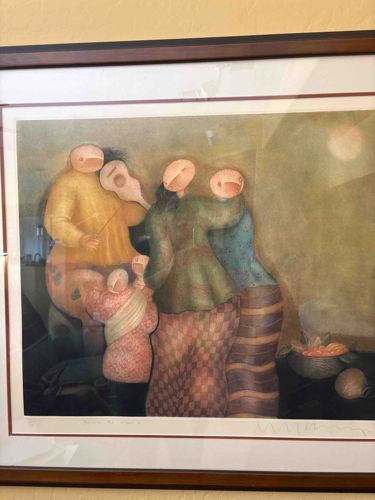
Signed Eng Tay Lithograph depicting a Musical Family

This name is the AI's identification of the item — it may be incorrect.

Submitted photo of Signed Eng Tay Lithograph depicting a Musical Family
Photo submitted by the user — not generated by AI

User's notes

Signed eng ray lithograph

These notes were written by the person who submitted this item. Appraiser.AI has not verified them, and the AI's identification and estimate may rely on them.

AI Estimated Value

Not an official valuation

$450 - $650

AI estimate as of January 24, 2026 · verify with a professional before acting

AI-Generated · Verify before acting

Everything on this page is generated by AI for informational purposes only. AI can make mistakes — the AI may misidentify items or misattribute them (artist, maker, brand, designer, origin, era). This is not an official valuation and should not be used for insurance, sale, tax, estate, legal, or lending purposes — or any decision requiring a certified appraisal. It is not an authoritative claim about any person, brand, or rights holder — do not share or rely on it as a factual statement about a third party. Always consult qualified professionals before making financial decisions.

This analysis also relies on unverified notes provided by the user, which may be incomplete or inaccurate and could affect the result.

Read the full disclaimer

AI Item Analysis

This is a fine art lithograph by the internationally acclaimed artist Eng Tay, known for his poetic depictions of family life and musical themes. The piece features four stylized figures in a soft, atmospheric setting: a figure playing a stringed instrument (likely a cello or guitar), a parent-like figure holding a child, and another standing close by. The figures exhibit the artist's signature aesthetic: rounded, faceless heads and voluminous, textured bodies that convey a sense of harmony and peace. The color palette is rich yet muted, utilizing earth tones like ochre, sage green, and burnt sienna with subtle patterns like checkers and stripes on the clothing. The print displays a high level of craftsmanship with soft internal gradients and stippled textures that mimic the look of an original painting. The work is signed in pencil by the artist in the lower right margin and includes a handwritten title and edition number in the lower left, confirming its status as a limited edition print. It is presented in a professional double-mat with a burgundy inner border and a polished wood frame under glass. While the print appears to be in excellent condition with no visible foxing or fading, there is a slight reflection on the glass from the photographic environment. Eng Tay's work typically blends Eastern sensibilities with Western techniques, likely dating this piece to the late 20th or early 21st century.

AI Appraisal Report

I have carefully examined the provided image and description of the lithograph by Eng Tay. Visually, the piece reflects the artist's characteristic use of monolithic, rounded figures and a harmonious earth-tone palette. Based on the pencil signature and the presence of edition numbering, the work appears consistent with an authentic limited edition lithograph by Tay, likely produced between 1990 and 2005. The condition appears to be excellent, with no evidence of acid burn from the matting or UV-induced fading, though the frame was not opened for inspection of the reverse. The market for Eng Tay remains stable but saturated with prints, which moderates the value compared to his original oils or etchings. Recent auction results for framed lithographs of similar size and thematic content (family/music) typically fall in the $300 to $700 range. The professional double-matting and wood framing add approximately $100-$150 in intrinsic value to the presentation. Factors impacting value include the 'musical' subject matter, which is highly sought after by Tay’s collectors, and the limited edition status. However, authentication based on digital images has inherent limitations; I cannot verify the paper’s watermark, the ink's absorption into the fibers, or the presence of a blind stamp without a physical inspection. For definitive authentication and a formal insurance appraisal, one would need to examine the piece under magnification to confirm the printing process (lithographic stones vs. modern offset) and review provenance or a bill of sale from a recognized gallery. In-person inspection would also confirm if the piece is float-mounted or if the margins have been trimmed, which would negatively impact the market value.

Keep exploring

More fine art prints appraisals

Get your items appraised

Instant AI-powered appraisal estimates from a photo

Browse More Appraisals