AI estimate as of August 7, 2025 · verify with a professional before acting
AI-Generated · Verify before acting
Everything on this page is generated by AI for informational purposes only. AI can make mistakes — the AI may misidentify items or misattribute them (artist, maker, brand, designer, origin, era). This is not an official valuation and should not be used for insurance, sale, tax, estate, legal, or lending purposes — or any decision requiring a certified appraisal. It is not an authoritative claim about any person, brand, or rights holder — do not share or rely on it as a factual statement about a third party. Always consult qualified professionals before making financial decisions.
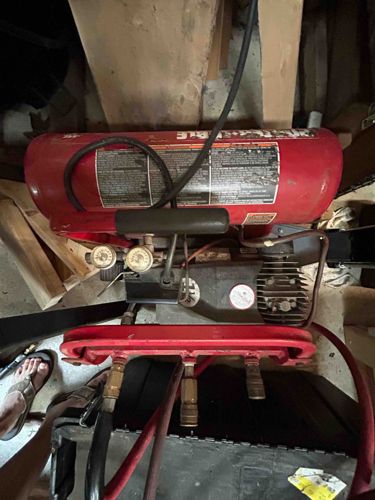
The item is a horizontal air compressor, predominantly red in color, indicative of a typical portable or garage-use model. It features a red cylindrical air tank as its primary component, with various warning and instructional labels clearly visible on its surface. The tank appears to be made of painted steel, showing some minor wear and dust but no significant dents or rust that are discernible. Mounted above the tank is the compressor unit, which includes an electric motor and a pump. The cooling fins on the pump head are visible, suggesting it's an air-cooled unit. Two pressure gauges are mounted prominently on the control panel, along with a black handle for portability, and what appears to be a pressure regulator knob. Below the main compressor unit, there's a red-painted rectangular frame with at least two quick-connect air couplers made of brass. These couplers are designed for attaching hoses and pneumatic tools. Several red air hoses are connected to these couplers or are resting nearby. The overall construction appears robust, suitable for demanding use. While no specific brand markings are clearly legible, the design is consistent with popular consumer-grade and light-commercial air compressors from the mid-2000s to present day, such as those made by Craftsman (a name partially visible), Campbell Hausfeld, or Porter-Cable. The item shows signs of use, including some accumulated dust and minor scuffs on the red paint, but generally appears to be in serviceable condition without obvious major damage or repairs. The presence of multiple quick-connect ports suggests versatility in connecting various pneumatic tools simultaneously.
AI Appraisal Report
I have examined the provided image of this horizontal portable air compressor. Based on my visual assessment, the item appears to be in good, serviceable condition, displaying typical signs of use such as minor scuffs, dust accumulation, but no significant damage like major dents or rust. The presence of visible warning labels and the overall robust construction suggest a consumer-grade or light-commercial unit. The design, including the red cylindrical tank, compressor unit with cooling fins, dual pressure gauges, and multiple quick-connect couplers, is consistent with common models from manufacturers like Craftsman, Campbell Hausfeld, or Porter-Cable, dating from the mid-2000s to the present. The partially visible "Craftsman" branding reinforces this.
In terms of market conditions, portable air compressors of this type are readily available new and used. There's a consistent demand for reliable used units for DIYers and small workshops, as they offer significant cost savings over new equipment. Comparable used models in similar condition typically sell for $100-$200, depending on the tank size (which is not clearly discernible from the image), motor horsepower, and brand reputation. This particular unit's apparent robust construction and multiple quick-connect ports add slight utility appeal. There is no significant rarity associated with this type of item, as they were mass-produced.
Factors significantly impacting value include its working condition (which I cannot verify without testing), tank size, motor power, and portability features. The visible wear is minor and suggests it has been used but not abused.
Limitations to authenticity verification from images alone are significant. I cannot verify the internal condition of the motor or pump, check for air leaks, assess the accuracy of the gauges, or confirm its operational pressure performance. Furthermore, tank integrity and safety certifications cannot be verified without physical inspection. For full authentication and a more precise valuation, an in-person examination would be needed to conduct functionality tests, inspect internal components for wear, and confirm the absence of hidden damage. Provenance documentation (original purchase receipts, service history) would also add significant value and authenticity assurance.