AI Appraisal Estimate

AI-generated estimates · not official valuations

From the user

What was submitted

Photo and notes provided by the user — not generated by AI

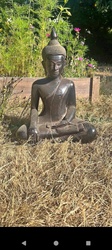
Submitted item photo
Submitted photo · June 1, 2026

User's notes

Burmese authentic antiquity

AI analysis below

AI appraisal

AI analysis & estimate

AI-Generated · Verify before acting

Everything below is generated by AI for informational purposes only. AI can make mistakes — the AI may misidentify items or misattribute them (artist, maker, brand, designer, origin, era). This is not an official valuation and should not be used for insurance, sale, tax, estate, legal, or lending purposes — or any decision requiring a certified appraisal. It is not an authoritative claim about any person, brand, or rights holder — do not share or rely on it as a factual statement about a third party. Always consult qualified professionals before making financial decisions.

Note

This analysis also relies on unverified notes provided by the user, which may be incomplete or inaccurate and could affect the result.

Read the full disclaimer

AI Identification

·Not independently authenticated·Verify before acting

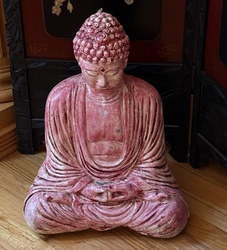
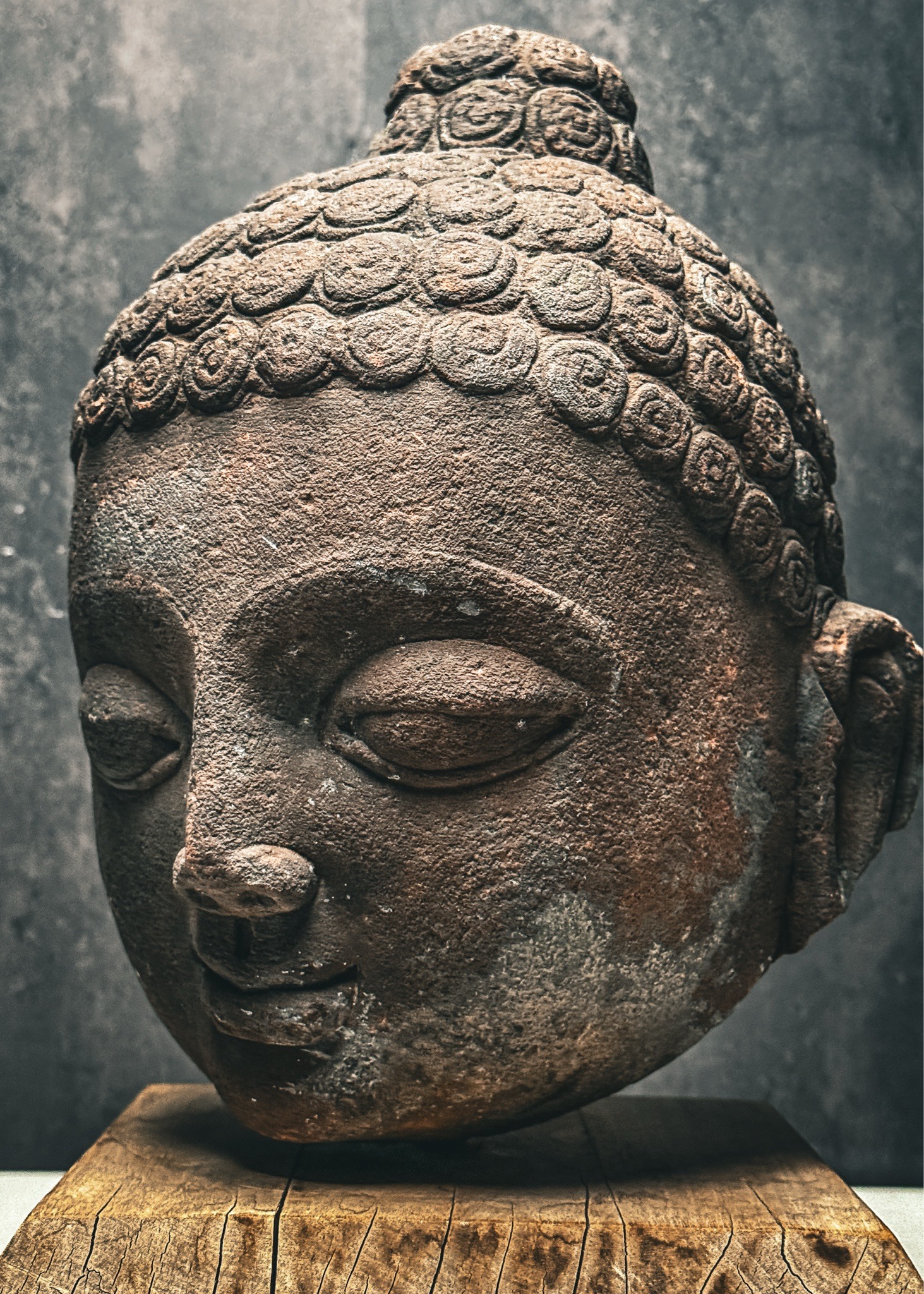
Carved stone head of Buddha in a Southeast Asian style

Sculptures and Statues

AI Estimated Value

·Not an official valuation·Verify before acting

$1,500 - $3,500

As of June 1, 2026

AI Item Analysis

·AI can make mistakes·Verify before acting
This object is a carved head of Buddha, presented as a fragment from a larger sculpture. The piece is stylistically consistent with Southeast Asian Buddhist art, potentially reminiscent of Burmese or Khmer traditions, though origin cannot be verified from photos alone. The user identifies this as a 'Burmese authentic antiquity', a claim that remains unverified and would require professional in-person laboratory analysis for confirmation. The head is carved from a coarse-grained, porous stone with a dark grey and brownish-red hue. It features traditional iconography, including a large ushnisha (cranial bump) covered in tightly curled, snail-like hair spirals. The face is characterized by a meditative expression with downcast, almond-shaped eyes, a broad nose, and full lips displaying a slight smile. The elongated earlobes are partially visible on the left side of the head. Notable surface details include significant weathering, pitting, and possible mineral encrustations that appear consistent with an object of considerable age, though such effects can be artificially accelerated. There are visible areas of lighter grey discoloration or lichen-like growth on the cheek and chin. The head is currently mounted on a rustic wooden base. No maker’s marks or signatures are visible, and as an antiquity-style object, identification relies entirely on stylistic attributes which range from ancient to modern reproduction.
AI Appraisal Report

·AI can make mistakes·Verify before acting
Based on my examination of the provided images, this object is a carved stone head of Buddha presented in a style consistent with Southeast Asian traditions, possibly Burmese or Khmer. The owner identifies this as a 'Burmese authentic antiquity.' Based on what I can see, the piece displays traditional iconography including a pronounced ushnisha and meditative facial features. The surface shows significant weathering and porous textures which might suggest considerable age; however, I cannot verify from a photo whether these effects are natural or artificially induced to simulate antiquity. My value estimate is a hypothesis based on the assumption that the item is an early fragment from the 18th or 19th century or earlier. If physical inspection, provenance documentation, or petrographic testing were to establish it as an ancient Burmese artifact, it would align with the $1,500 - $3,500 range typical for similar stone fragments in the decorative arts market. Conversely, if it is determined to be a 20th-century reproduction or 'in the style of' an antiquity, the value would likely drop significantly to a decorative range of $200 - $400. The market for Southeast Asian Buddhist art is currently stable, with high demand for pieces showing fine carving and convincing patination, though buyers typically require professional and independent scientific confirmation for high-value acquisitions. A physical examination by a specialist in Asian antiquities is required to confirm the material composition and historical origin.

Related Tags

Explore similar items and categories

Get your items appraised

Instant estimates of your treasures with AI-powered appraisals

Browse More Appraisals