AI Appraisal Estimate

AI-generated estimates · not official valuations

From the user

What was submitted

Photo and notes provided by the user — not generated by AI

Submitted item photo
Submitted photo · July 10, 2026

User's notes

Category: Other Material: wood

AI analysis below

AI appraisal

AI analysis & estimate

AI-Generated · Verify before acting

Everything below is generated by AI for informational purposes only. AI can make mistakes — the AI may misidentify items or misattribute them (artist, maker, brand, designer, origin, era). This is not an official valuation and should not be used for insurance, sale, tax, estate, legal, or lending purposes — or any decision requiring a certified appraisal. It is not an authoritative claim about any person, brand, or rights holder — do not share or rely on it as a factual statement about a third party. Always consult qualified professionals before making financial decisions.

Note

This analysis also relies on unverified notes provided by the user, which may be incomplete or inaccurate and could affect the result.

Read the full disclaimer

AI Identification

·Not independently authenticated·Verify before acting

Art Deco-style cedar chest with mixed wood veneers

Furniture

AI Estimated Value

·Not an official valuation·Verify before acting

$250 - $450

As of July 10, 2026

AI Item Analysis

·AI can make mistakes·Verify before acting
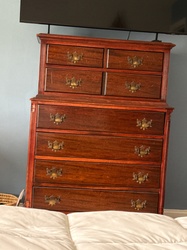
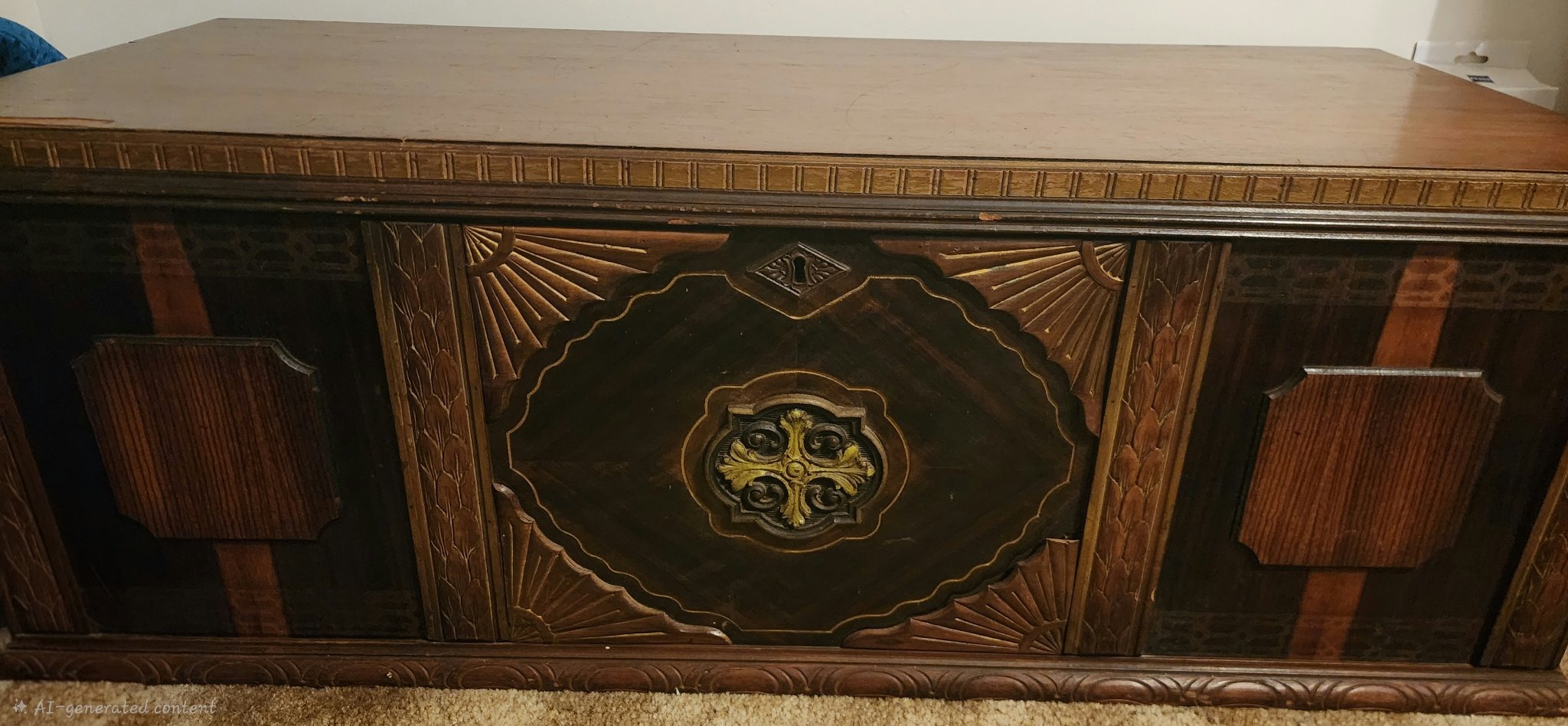
This item is a rectangular wooden chest, stylistically consistent with Hope chests or cedar chests produced in North America during the mid-20th century, specifically the late 1920s to the 1940s. The front facade features elaborate Art Deco geometric patterns, including sunburst or fan-shaped carvings in the corners of the central panel and a scalloped medallion. The piece utilizes mixed wood veneers of varying tones, ranging from deep espresso to warm amber, creating a decorative contrast. There is a centralized, diamond-shaped keyhole escutcheon and a gold-toned ornamental quatrefoil applique at the center. The top edge is finished with a dentil-like trim, and the base features a carved gadrooned or rope-style molding. Visually, the piece shows signs of age-related wear, including minor scuffs on the top surface, small chips in the veneer along the upper trim, and a dulling of the original finish. Without a visible maker's mark or branding—such as a Lane or Cavalier stamp typically found inside the lid—this identification remains a stylistic hypothesis. The construction details, including the use of layered veneers and stylized machine-carved accents, are typical of mass-produced American furniture from the Art Deco period.
AI Appraisal Report

·AI can make mistakes·Verify before acting
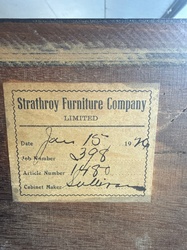
I have examined the images of this Art Deco-style cedar chest, which the owner identifies as a mid-20th-century piece from North America. Based on what I can see, the chest demonstrates stylistic characteristics typical of mass-produced furniture from the 1920s through the 1940s, such as book-matched veneers and machine-carved geometric flourishes. I cannot verify the specific manufacturer from a photo alone, as the provided details mention a lack of a clear maker's mark like those associated with Lane or Cavalier. The valuation assumes a hypothesis that this is a period-produced chest in fair to good condition. The market for mid-century cedar chests is currently stable, driven by aesthetic appeal rather than high-end collectability. The estimated range of $250 - $450 reflects typical market behavior for unattributed Art Deco storage furniture with visible surface wear, such as the scuffs and veneer chips noted. I cannot determine the structural integrity or the scent-retention of the cedar lining without a physical inspection. This estimate would increase by 25-40% if the piece bore a verifiable mark from a premium maker like Lane. Conversely, if a physical examination revealed modern hardware or non-period construction, suggesting a later 'in the style of' reproduction, the value would likely drop below $150. To confirm its origins, one would need to inspect the interior for faint stamps, check the underside for manufacturing codes, and verify the wood species and construction methods in person. Documentation of provenance would also be necessary to solidify any specific historical claims.

Get your items appraised

Instant estimates of your treasures with AI-powered appraisals

Browse More Appraisals