AI Appraisal Estimate

AI-generated estimates · not official valuations

From the user

What was submitted

Photo and notes provided by the user — not generated by AI

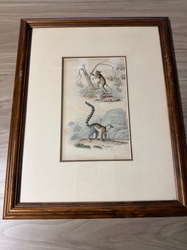
Submitted item photo
Submitted photo · June 6, 2026

User's notes

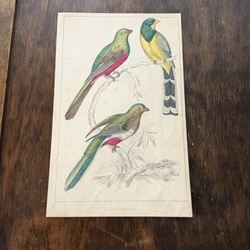
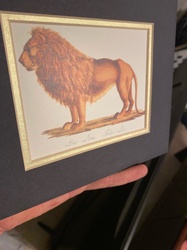
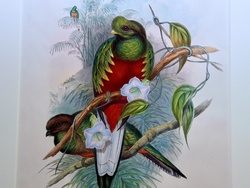
gravure peintes du 18 siècle

AI analysis below

AI appraisal

AI analysis & estimate

AI-Generated · Verify before acting

Everything below is generated by AI for informational purposes only. AI can make mistakes — the AI may misidentify items or misattribute them (artist, maker, brand, designer, origin, era). This is not an official valuation and should not be used for insurance, sale, tax, estate, legal, or lending purposes — or any decision requiring a certified appraisal. It is not an authoritative claim about any person, brand, or rights holder — do not share or rely on it as a factual statement about a third party. Always consult qualified professionals before making financial decisions.

Note

This analysis also relies on unverified notes provided by the user, which may be incomplete or inaccurate and could affect the result.

Read the full disclaimer

AI Identification

·Not independently authenticated·Verify before acting

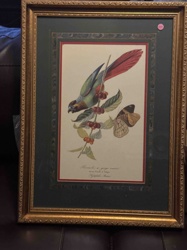
18th-Century Hand-Colored Bird Engraving

Antique Natural History Prints & Fine Art

AI Estimated Value

·Not an official valuation·Verify before acting

$450 - $700

As of June 6, 2026

AI Item Analysis

·AI can make mistakes·Verify before acting
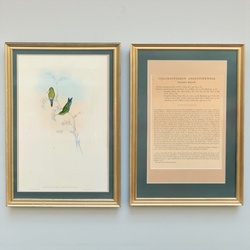
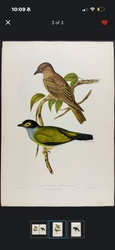
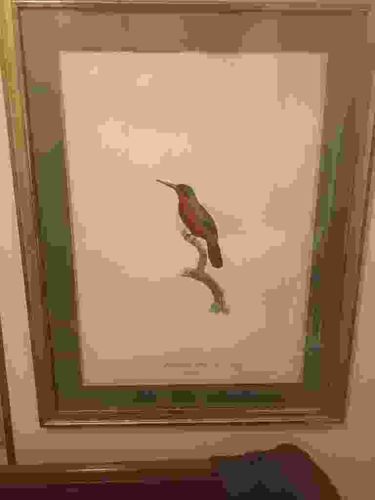
This item is a framed 18th-century hand-colored copperplate engraving depicting a single bird, likely a kingfisher or similar species, perched on a branch. The artwork is characterized by an elegant, scientific illustration style typical of Natural History studies from the 1700s. The bird is rendered with detailed plumage in shades of reddish-brown and deep green, with a prominent long beak. The paper appears to be an aged off-white or cream-toned laid paper, common for the period. Notable features include handwritten or typed scientific nomenclature visible at the bottom of the print, which identifies the species and possibly the original publication plate number. The engraving is housed in a decorative gilded wood frame with a green decorative mat board. Regarding condition, there is visible tanning/toning to the paper consistent with its age, likely due to light exposure and archival materials of the past. The frame shows some minor surface wear and patina. The craftsmanship is high, reflecting the specialized skill of 18th-century etchers and colorists who manually applied watercolors over the printed black ink plates. This piece represents the intersection of scientific discovery and fine art from the Enlightenment era.
AI Appraisal Report

·AI can make mistakes·Verify before acting
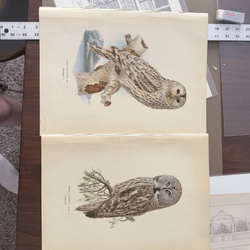
I have virtually examined this 18th-century hand-colored copperplate engraving. The piece exhibits the hallmarks of Enlightenment-era natural history illustration, most likely originating from a significant series such as George Edwards' 'A Natural History of Uncommon Birds' or a similar French compendium from the mid-to-late 1700s. The presence of visible laid paper lines and the characteristic 'bite' of the copperplate edge suggest an authentic period production. The hand-coloring appears to be contemporary with the printing, showing the delicate tonal variations expected of 18th-century colorists. The condition is typical for works of this age; the toning and slight 'foxing' indicate exposure to acidic mounting or light over centuries, which slightly tempers the valuation. However, the preservation of the pigment remains strong. The market for natural history prints remains steady, with high demand for ornithological subjects. Comparable sales for identified plates from reputable 18th-century naturalists typically range from $400 to $1,000 depending on the specific artist and rarity of the species depicted. It is important to note that a definitive authentication cannot be performed via image alone. A physical inspection is necessary to verify the watermark of the paper, check for modern offset-lithographic dots (which would indicate a reproduction), and assess if the matting is acid-free. To finalize this appraisal, I would require provenance documentation or a microscopic examination of the ink-trapping on the paper fibers. The current valuation assumes the engraving is an original period pull and not a later 19th-century restrike or 20th-century facsimile.

Get your items appraised

Instant estimates of your treasures with AI-powered appraisals

Browse More Appraisals