AI Appraisal Estimate

AI-generated estimates · not official valuations

From the user

What was submitted

Photo and notes provided by the user — not generated by AI

Submitted item photo
Submitted photo · June 6, 2026

User's notes

France

AI analysis below

AI appraisal

AI analysis & estimate

AI-Generated · Verify before acting

Everything below is generated by AI for informational purposes only. AI can make mistakes — the AI may misidentify items or misattribute them (artist, maker, brand, designer, origin, era). This is not an official valuation and should not be used for insurance, sale, tax, estate, legal, or lending purposes — or any decision requiring a certified appraisal. It is not an authoritative claim about any person, brand, or rights holder — do not share or rely on it as a factual statement about a third party. Always consult qualified professionals before making financial decisions.

Note

This analysis also relies on unverified notes provided by the user, which may be incomplete or inaccurate and could affect the result.

Read the full disclaimer

AI Identification

·Not independently authenticated·Verify before acting

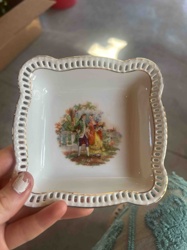
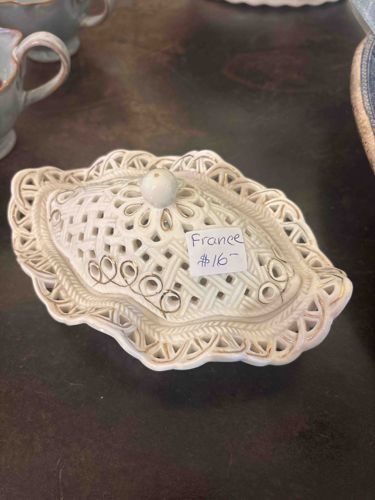
Reticulated Ceramic Trinket Box / Covered Dish

Decorative Arts

AI Estimated Value

·Not an official valuation·Verify before acting

$75-125

As of June 6, 2026

AI Item Analysis

·AI can make mistakes·Verify before acting
This is an oblong or oval-shaped ceramic trinket box or covered dish, likely intended for serving small confectionery items or holding precious trinkets. It is crafted from a light-colored, possibly off-white or cream-colored, glazed ceramic or porcelain. The lid features an intricate openwork design, simulating a woven or lattice pattern, which is typical of reticulated pottery. This openwork allows a glimpse of the contents or simply adds to its decorative appeal. The edges of both the lid and the base are scalloped and adorned with a detailed border pattern, possibly resembling foliage or an ornate braid. A small, spherical finial serves as a handle on the top center of the lid. The overall style suggests a European origin, possibly French given the context, and it appears to be from the late 19th to mid-20th century, a period known for decorative porcelain items. A price tag indicating "France" and "$16" is affixed to the lid. There are some dark, possibly black or dark brown, drawn marks on the lid, which appear to be recent additions, perhaps from a pricing or labeling attempt, rather than original decorative elements or manufacturing flaws. The item shows some minor signs of wear consistent with age and use, but no obvious major chips, cracks, or repairs are visible from the image. The craftsmanship, particularly the delicate openwork, indicates a degree of skill in its production.
AI Appraisal Report

·AI can make mistakes·Verify before acting
Based on my examination of the provided image, this Reticulated Ceramic Trinket Box / Covered Dish appears to be a charming example of decorative ceramic work. The openwork lid, characteristic of reticulated pottery, demonstrates a good level of craftsmanship, particularly in the delicate lattice pattern and scalloped edges. The overall aesthetic points to a European origin, and the owner's note of 'France' (and the tag) aligns with the style prevalent in decorative arts from the late 19th to mid-20th century. The condition appears good from the photo; I note minor wear consistent with age, but no obvious chips, cracks, or repairs are discernible. The dark marks on the lid appear to be later additions (markers), which detract slightly but are likely removable. Market conditions for decorative ceramic trinket boxes of this type are generally stable but not experiencing significant surges. Comparables often include items from Limoges, Sevres (though this is unlikely Sevres), or other French regional potteries. Demand is moderate, driven by collectors of decorative arts, particularly those interested in specific periods or styles like reticulated ceramics. Rarity is not exceptionally high for generalized decorative items of this nature, though the specific pattern and quality impact value. The craftsmanship, perceived age, and decorative appeal are positive value drivers. Limitations exist with image-only appraisal; I cannot definitively confirm the precise ceramic type (porcelain vs. earthenware) or the presence of any artist or factory marks without physical inspection. An in-person examination would allow for tactile assessment of material, a thorough search for maker's marks on the base, and closer inspection for hairline cracks or professional repairs not visible in the photo. Provenance documentation, beyond the 'France' tag, would be invaluable in confirming origin and specific maker. While the 'France' tag suggests origin, without a verifiable maker's mark or more advanced testing, full authentication of a specific factory or exact age remains an assumption based on visual style. The '$16' price tag is likely an old retail price and not reflective of current market value.

Related Tags

Explore similar items and categories

Get your items appraised

Instant estimates of your treasures with AI-powered appraisals

Browse More Appraisals