Early 20th Century Oak and Woven Cane Sewing Rocker
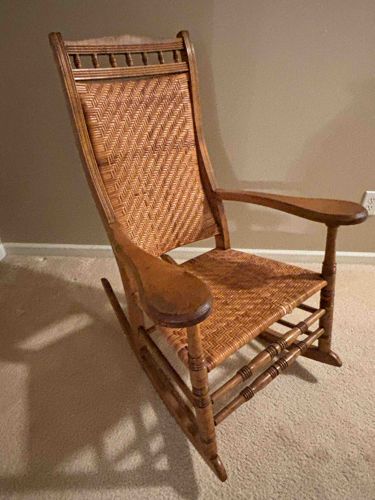
This is an antique rocking chair, likely dating from the early 1900s, constructed from solid wood (likely oak or ash) with intricately woven cane seat and back panels. The chair features a high, slightly curved backrest topped with a decorative spindle galleried crest rail. The wood exhibits a warm, medium-honey oak finish that shows a natural aged patina. The woven cane panels are arranged in a herringbone or basketweave pattern, which remains remarkably intact given the age. Notable design elements include wide, paddle-shaped armrests supported by turned spindles, and a triple-spindle front stretcher with decorative ring turning. The construction uses traditional joinery consistent with the period. In terms of condition, the piece appears well-maintained; however, there is visible darkening or staining on the seat cane, likely from age and use. Small chips and light surface abrasions are visible on the wooden rockers and the rounded edges of the armrests. The structural integrity seems sound with no visible breaks in the spindles or major fraying of the cane. The style reflects the transition between Victorian utilitarianism and the more streamlined Arts and Crafts movement.
AI-Generated Appraisal Disclaimer
Estimated Value
$250.00 - $375.00
Basic Information
Category
Antique Furniture
Appraised On
February 26, 2026
Estimated Value
$250.00 - $375.00
Additional Details Provided By Owner
User Provided Information
100 year old cane and wood rocker great condition
Item Description
This is an antique rocking chair, likely dating from the early 1900s, constructed from solid wood (likely oak or ash) with intricately woven cane seat and back panels. The chair features a high, slightly curved backrest topped with a decorative spindle galleried crest rail. The wood exhibits a warm, medium-honey oak finish that shows a natural aged patina. The woven cane panels are arranged in a herringbone or basketweave pattern, which remains remarkably intact given the age. Notable design elements include wide, paddle-shaped armrests supported by turned spindles, and a triple-spindle front stretcher with decorative ring turning. The construction uses traditional joinery consistent with the period. In terms of condition, the piece appears well-maintained; however, there is visible darkening or staining on the seat cane, likely from age and use. Small chips and light surface abrasions are visible on the wooden rockers and the rounded edges of the armrests. The structural integrity seems sound with no visible breaks in the spindles or major fraying of the cane. The style reflects the transition between Victorian utilitarianism and the more streamlined Arts and Crafts movement.
Related Tags
Get Your Items Appraised
Instant estimates of your treasures with AI-powered instant appraisals