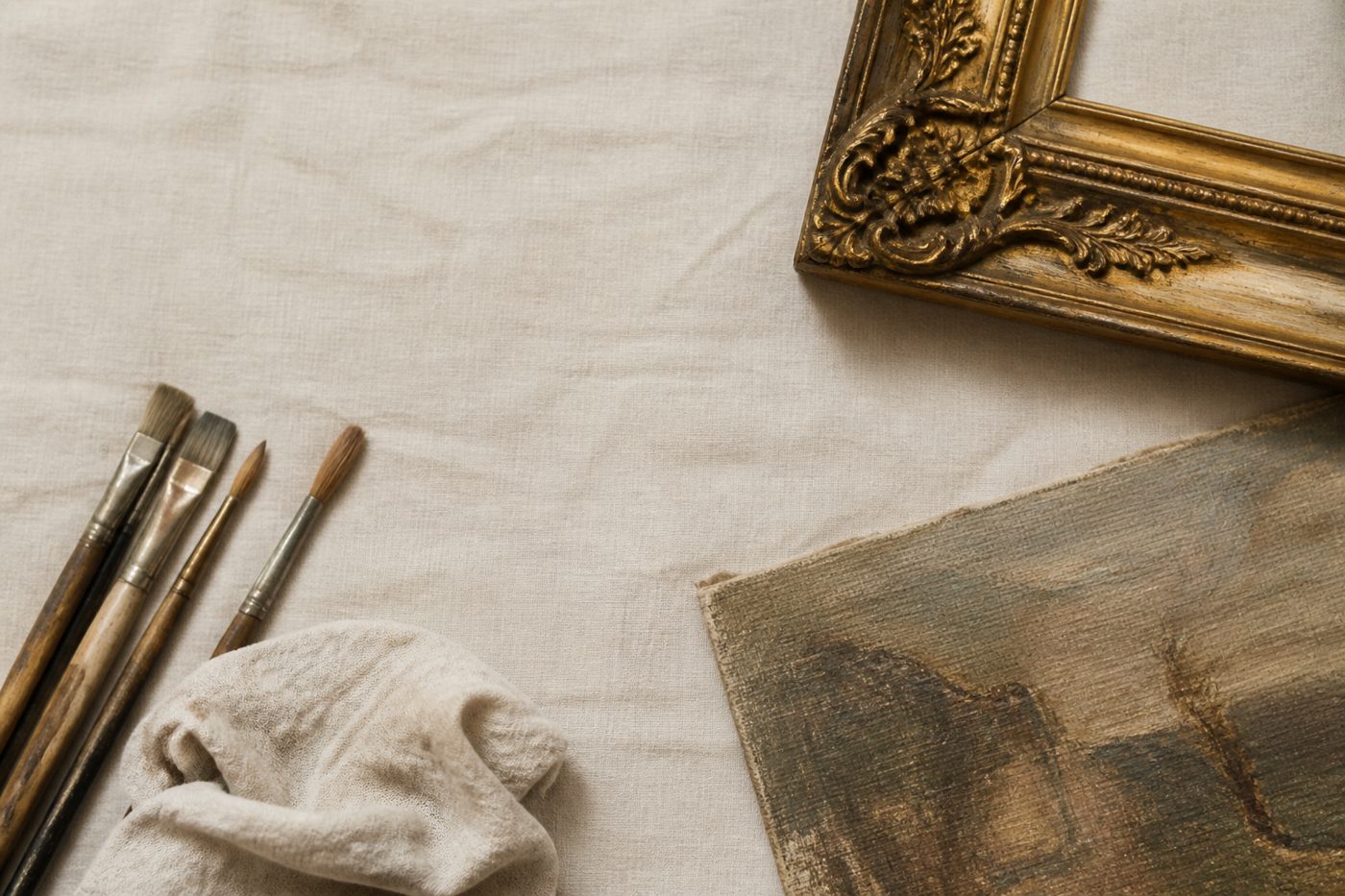
Unlike coins or trading cards, fine art has no universal numeric grading scale — there is no equivalent of a coin's Mint State grade or a card-grading company's 1-to-10 score for an oil painting. Instead, condition is described in narrative condition reports written by conservators, auction specialists, and appraisers. Understanding what those reports look for helps you evaluate your own piece more honestly, whether you are photographing it for an instant AI estimate on appraiser.ai — a helpful first read, though only an in-person professional examination can fully assess condition — or preparing it for sale.
How condition is assessed
A proper condition assessment looks at the work under good light, from the front and the back, and often under raking light (light angled across the surface) or ultraviolet light. Raking light reveals surface irregularities like cupping paint or dents in the canvas; UV light can reveal areas of retouching and later varnish that are invisible in normal light. The back of a painting is as informative as the front: patches, relined canvas, replaced stretcher bars, and labels all tell part of the story.
Common issues in paintings
- Craquelure — the fine network of age cracks in paint. Stable, even craquelure is normal in older paintings and often accepted; lifting or flaking paint is a serious, active problem.
- Discolored varnish — old natural varnishes yellow over time, muting colors. This is often reversible by a conservator, so it is less damaging to value than structural problems.
- Tears, punctures, and dents — physical damage to the canvas, even when repaired, is usually noted and tends to affect desirability, especially in prominent areas like faces or skies.
- Overpaint and restoration — sensitive, minimal, professional restoration is widely accepted. Heavy overpainting that covers original paint, or amateur touch-ups in mismatched colors, tends to concern buyers far more.
- Relining — attaching a new canvas to the back of a weakened original. Common in older paintings, but aggressive historic relining can flatten the paint surface.
Common issues in works on paper
Watercolors, drawings, and prints are more fragile than paintings and have their own vocabulary:
- Foxing — scattered brown spots caused by mold or impurities in the paper.
- Toning and mat burn — overall darkening of the paper, or a brown line where an acidic mat once sat.
- Fading — watercolors and some inks are light-sensitive; a faded sky or lost pinks can be permanent.
- Trimming — margins cut down to fit a frame can reduce a print's appeal, since collectors often prefer full, untrimmed sheets.
Sculpture and photography
For bronze and other sculpture, assessors look at the patina (original surface finish), casting quality, repairs to breaks, and whether bases and mounts are original. A worn or stripped patina is generally viewed as a loss. For photographs, condition centers on surface scratches, silvering in older prints, fading, and creases — along with print date, since prints made close to when the image was taken are often preferred.
What collectors look for
Broadly, collectors tend to reward originality of surface: a painting that retains its original paint layer with minimal intervention, a print with fresh color and full margins, a bronze with its original patina. "Honest" age is usually acceptable; concealed or excessive restoration is what raises flags. This is why disclosure matters when selling — experienced buyers will examine a work closely anyway.
How condition affects desirability
Condition interacts with rarity. For a scarce work by a sought-after artist, buyers often tolerate significant condition issues because another example may never appear. For common prints or decorative paintings, condition can be decisive, since buyers can simply wait for a better example. Before restoring anything, get professional advice: cleaning or repairing a work incorrectly can do more harm than leaving it alone, and a qualified appraiser or conservator can tell you whether treatment is likely to help.