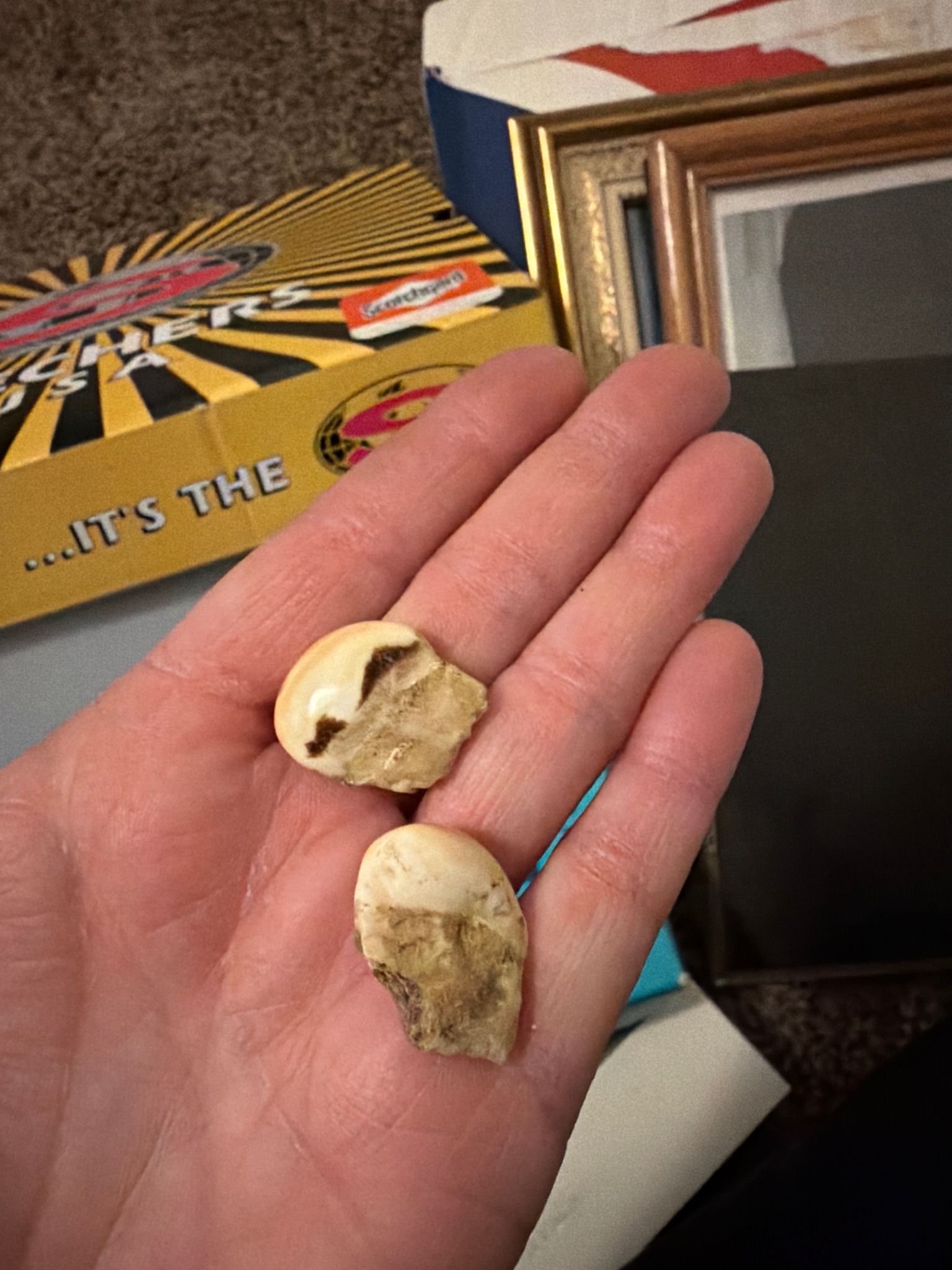
Elk Ivories (Canine Teeth)
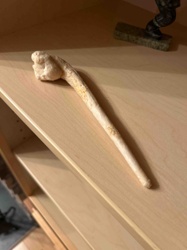
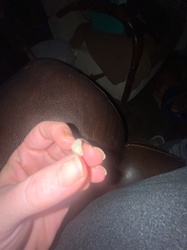
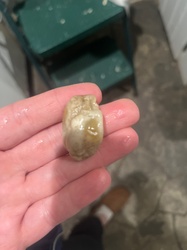
This pair of specimens consists of two elk 'ivories,' which are the vestigial upper canine teeth of a Rocky Mountain elk (Cervus canadensis). The specimens exhibit the classic morphology of elk canines, featuring a smooth, rounded 'pearly' crown and a rougher, porous root structure. The crowns are ivory-white to cream in color, with the upper specimen showing a prominent 'bullseye' or caramel-colored staining on the occlusal surface, a highly desirable trait formed by the elk's diet and chemical reactions in the mouth. The lower specimen appears more weathered with a lighter coloration and a more prominent, jagged root section composed of dentin and cementum. Both pieces show no signs of modern lapidary work, such as polishing or mounting, suggesting they are in a raw, 'harvested' state. The size is consistent with standard mature elk canines, measuring approximately 1 to 1.5 centimeters in length. Regarding condition, they appear stable but possess natural irregularities and organic debris typical of field-recovered biological materials. These items are traditionally used in Western jewelry, specifically for 'elk tooth' rings and watch fobs, a style popularized in the late 19th and early 20th centuries by the Benevolent and Protective Order of Elks (BPOE).

AI-Generated Appraisal Disclaimer
Estimated Value
$40.00 - $65.00
Basic Information
Category
Natural History / Biological Specimens
Appraised On
April 27, 2026
Estimated Value
$40.00 - $65.00
Item Description
This pair of specimens consists of two elk 'ivories,' which are the vestigial upper canine teeth of a Rocky Mountain elk (Cervus canadensis). The specimens exhibit the classic morphology of elk canines, featuring a smooth, rounded 'pearly' crown and a rougher, porous root structure. The crowns are ivory-white to cream in color, with the upper specimen showing a prominent 'bullseye' or caramel-colored staining on the occlusal surface, a highly desirable trait formed by the elk's diet and chemical reactions in the mouth. The lower specimen appears more weathered with a lighter coloration and a more prominent, jagged root section composed of dentin and cementum. Both pieces show no signs of modern lapidary work, such as polishing or mounting, suggesting they are in a raw, 'harvested' state. The size is consistent with standard mature elk canines, measuring approximately 1 to 1.5 centimeters in length. Regarding condition, they appear stable but possess natural irregularities and organic debris typical of field-recovered biological materials. These items are traditionally used in Western jewelry, specifically for 'elk tooth' rings and watch fobs, a style popularized in the late 19th and early 20th centuries by the Benevolent and Protective Order of Elks (BPOE).

Related Tags
Get Your Items Appraised
Instant estimates of your treasures with AI-powered instant appraisals