Japanese Lithophane Geisha Teacup
Fine Ceramics and Porcelain

Japanese Lithophane Geisha Teacup

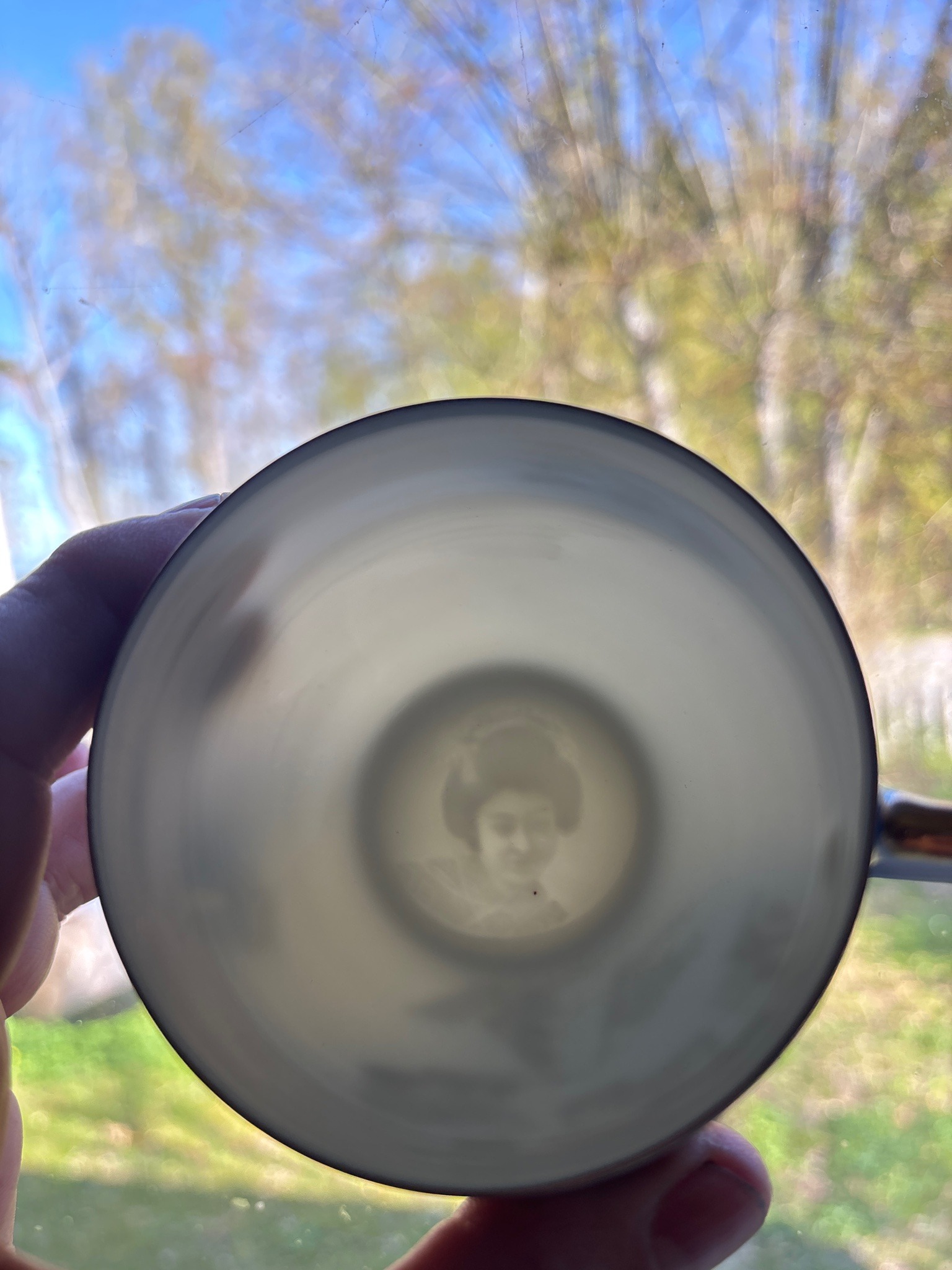
This is a vintage Japanese eggshell porcelain teacup, specifically noteworthy for the lithophane hidden in the base. A lithophane is an etched or molded artwork in very thin porcelain that only becomes visible when held up to a light source, as demonstrated in the image. The hidden image depicts a traditional Japanese Geisha with a classic hairstyle and kimono, rendered in high detail through varying thicknesses of the porcelain body. This teacup is crafted from exceptionally thin, translucent 'eggshell' porcelain, a feat of high-quality ceramic engineering. The exterior appears to have hand-painted motifs, likely in the Kutani or Satsuma style, though they are obscured by the backlighting. The rim is trimmed with a dark band, possibly gold or bronze luster. Based on the Geisha motif and the lithophane technique, this piece likely dates to the early to mid-20th century (Showa era, approx. 1920-1950), an era when such 'dragonware' or 'geishaware' was popular for export. The condition appears excellent with no visible cracks or chips, and the lithophane remains crisp and clear. The craftsmanship is indicative of skilled Japanese ceramic artisans specializing in export ware for the Western market.
Estimated Value

$45.00 - $75.00

Basic Information

Category

Fine Ceramics and Porcelain

Appraised On

May 7, 2026

Estimated Value

$45.00 - $75.00

Item Description

This is a vintage Japanese eggshell porcelain teacup, specifically noteworthy for the lithophane hidden in the base. A lithophane is an etched or molded artwork in very thin porcelain that only becomes visible when held up to a light source, as demonstrated in the image. The hidden image depicts a traditional Japanese Geisha with a classic hairstyle and kimono, rendered in high detail through varying thicknesses of the porcelain body. This teacup is crafted from exceptionally thin, translucent 'eggshell' porcelain, a feat of high-quality ceramic engineering. The exterior appears to have hand-painted motifs, likely in the Kutani or Satsuma style, though they are obscured by the backlighting. The rim is trimmed with a dark band, possibly gold or bronze luster. Based on the Geisha motif and the lithophane technique, this piece likely dates to the early to mid-20th century (Showa era, approx. 1920-1950), an era when such 'dragonware' or 'geishaware' was popular for export. The condition appears excellent with no visible cracks or chips, and the lithophane remains crisp and clear. The craftsmanship is indicative of skilled Japanese ceramic artisans specializing in export ware for the Western market.
Get Your Items Appraised

Instant estimates of your treasures with AI-powered instant appraisals

Browse More Appraisals