Art Deco Alf Lie Kristiania Mantel Clock
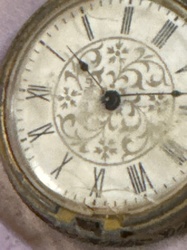
An authentic Art Deco mantel clock originating from Alf Lie in Kristiania (modern-day Oslo), Norway, dating approximately to the 1920s-1930s. The piece features a distinct geometric stepped profile quintessential of the Art Deco movement, constructed from a light-toned wood, likely oak or walnut veneer, over a solid frame. The central block houses a square silvered or cream-toned dial with bold Arabic numerals in a stylized sans-serif typeface. The hands are open-work 'cathedral' or spade style, characteristic of the era. The dial face is accented by a central square wood inlay that matches the exterior case. The clock features two winding holes, indicating a striking movement for hours and half-hours. Physically, the case sits on two small rectangular feet and displays rounded shoulders on the lateral tiers. The condition shows significant signs of age and patina; there is visible wear to the wood finish, including variations in color, surface scuffing, and minor edge chips. The metal bezel around the dial shows some oxidation, and there appears to be a vertical split or visible seam in the wood veneer along the top of the central housing. The movement is likely a mechanical spring-driven type typical of Norwegian horology from the Alf Lie boutique, which was a renowned clockmaker and jeweler in Oslo.
AI-Generated Appraisal Disclaimer
Estimated Value
$450-$700
Basic Information
Category
Horology / Antique Timepieces
Appraised On
December 24, 2025
Estimated Value
$450-$700
Additional Details Provided By Owner
User Provided Information
Alf lie kristiania
Item Description
An authentic Art Deco mantel clock originating from Alf Lie in Kristiania (modern-day Oslo), Norway, dating approximately to the 1920s-1930s. The piece features a distinct geometric stepped profile quintessential of the Art Deco movement, constructed from a light-toned wood, likely oak or walnut veneer, over a solid frame. The central block houses a square silvered or cream-toned dial with bold Arabic numerals in a stylized sans-serif typeface. The hands are open-work 'cathedral' or spade style, characteristic of the era. The dial face is accented by a central square wood inlay that matches the exterior case. The clock features two winding holes, indicating a striking movement for hours and half-hours. Physically, the case sits on two small rectangular feet and displays rounded shoulders on the lateral tiers. The condition shows significant signs of age and patina; there is visible wear to the wood finish, including variations in color, surface scuffing, and minor edge chips. The metal bezel around the dial shows some oxidation, and there appears to be a vertical split or visible seam in the wood veneer along the top of the central housing. The movement is likely a mechanical spring-driven type typical of Norwegian horology from the Alf Lie boutique, which was a renowned clockmaker and jeweler in Oslo.

Get Your Items Appraised
Instant estimates of your treasures with AI-powered instant appraisals