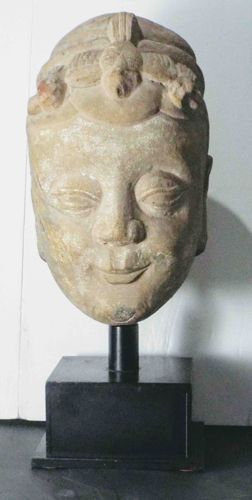
Gandhara-Style Stucco or Terracotta Head of a Bodhisattva
This sculpture depicts an expressive head, likely representing a Bodhisattva or a male figure, crafted from a clay-based material consistent with stucco or terracotta common in ancient Gandharan art. The piece measures approximately life-sized or slightly smaller and is mounted on a modern black exhibition plinth. The figure exhibits a serene, slight smile with almond-shaped eyes framed by heavy lids, a rounded nose, and full cheeks. A distinguishing feature is the elaborate headpiece or topknot (ushnisha), which includes tiered elements and central circular decorations that may represent jewels or fabric folds. The surface shows a variegated sandy-beige color with traces of earth encrustation and a matte, weathered texture. Condition-wise, the piece shows significant age-related wear, including minor chips to the ears, nose, and headdress, along with surface abrasions and pitting that contribute to an authentic ancient patina. The craftsmanship reflects a blend of Hellenistic and Indian stylistic influences, characteristic of the 2nd to 4th centuries CE in the Gandhara region. No maker's marks or signatures are visible, which is typical for religious or architectural sculpture of this period. The quality is high, captured in the subtle modeling of the facial expression and the complexity of the cranial ornamentation.
AI-Generated Appraisal Disclaimer
Estimated Value
$4,000 - $6,500
Basic Information
Category
Fine Art / Antiquities
Appraised On
March 7, 2026
Estimated Value
$4,000 - $6,500
Additional Details Provided By Owner
User Provided Information
Sculpture, unknown artist material is clay
Item Description
This sculpture depicts an expressive head, likely representing a Bodhisattva or a male figure, crafted from a clay-based material consistent with stucco or terracotta common in ancient Gandharan art. The piece measures approximately life-sized or slightly smaller and is mounted on a modern black exhibition plinth. The figure exhibits a serene, slight smile with almond-shaped eyes framed by heavy lids, a rounded nose, and full cheeks. A distinguishing feature is the elaborate headpiece or topknot (ushnisha), which includes tiered elements and central circular decorations that may represent jewels or fabric folds. The surface shows a variegated sandy-beige color with traces of earth encrustation and a matte, weathered texture. Condition-wise, the piece shows significant age-related wear, including minor chips to the ears, nose, and headdress, along with surface abrasions and pitting that contribute to an authentic ancient patina. The craftsmanship reflects a blend of Hellenistic and Indian stylistic influences, characteristic of the 2nd to 4th centuries CE in the Gandhara region. No maker's marks or signatures are visible, which is typical for religious or architectural sculpture of this period. The quality is high, captured in the subtle modeling of the facial expression and the complexity of the cranial ornamentation.
Get Your Items Appraised
Instant estimates of your treasures with AI-powered instant appraisals