Carved Ebony Wood Elephant Figurine
Decorative Arts & Collectibles

Carved Ebony Wood Elephant Figurine

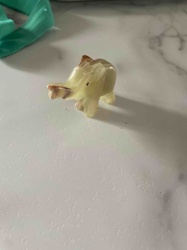
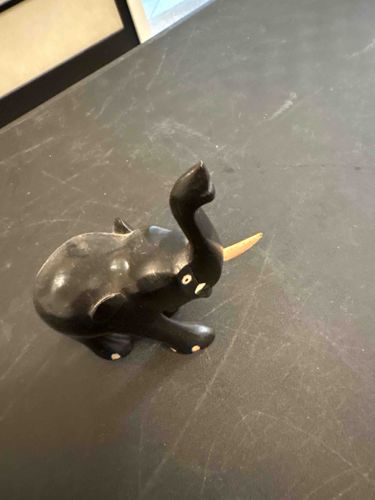
This is a hand-carved miniature elephant figurine, likely crafted from genuine ebony wood or a similar dense, dark tropical hardwood. The piece features a deep, natural black color with a smooth, polished semi-matte finish that showcases the fine grain of the timber. The anatomy is stylized with an upwardly curved trunk, a symbol often associated with good luck. Notable distinguishing elements include inlaid cream-colored accents used to represent the eyes, toe nails, and one remaining tusk; these inlays appear to be made of bone or a synthetic imitation. In terms of condition, there is a prominent defect where the left tusk is missing, leaving an empty socket, while the right tusk remains intact with a slight yellowish patina consistent with age. There is visible surface dust and light scuffing throughout the body, but no major cracks or structural repairs are evident. This style of woodcarving is highly characteristic of East African artistry, specifically the Kamba or Makonde traditions of Kenya and Tanzania, likely dating from the mid-to-late 20th century. The craftsmanship is of good quality, exhibiting fluid lines and symmetrical features that suggest it was created as a high-quality souvenir or decorative export piece during the height of the African safari tourism trade.
Estimated Value

$15 - $35

Basic Information

Category

Decorative Arts & Collectibles

Appraised On

December 20, 2025

Estimated Value

$15 - $35

Item Description

This is a hand-carved miniature elephant figurine, likely crafted from genuine ebony wood or a similar dense, dark tropical hardwood. The piece features a deep, natural black color with a smooth, polished semi-matte finish that showcases the fine grain of the timber. The anatomy is stylized with an upwardly curved trunk, a symbol often associated with good luck. Notable distinguishing elements include inlaid cream-colored accents used to represent the eyes, toe nails, and one remaining tusk; these inlays appear to be made of bone or a synthetic imitation. In terms of condition, there is a prominent defect where the left tusk is missing, leaving an empty socket, while the right tusk remains intact with a slight yellowish patina consistent with age. There is visible surface dust and light scuffing throughout the body, but no major cracks or structural repairs are evident. This style of woodcarving is highly characteristic of East African artistry, specifically the Kamba or Makonde traditions of Kenya and Tanzania, likely dating from the mid-to-late 20th century. The craftsmanship is of good quality, exhibiting fluid lines and symmetrical features that suggest it was created as a high-quality souvenir or decorative export piece during the height of the African safari tourism trade.
Get Your Items Appraised

Instant estimates of your treasures with AI-powered instant appraisals

Browse More Appraisals