Paleolithic Chert Biface Hand Axe Scraper
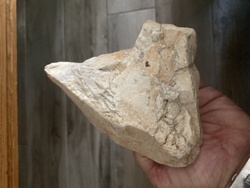
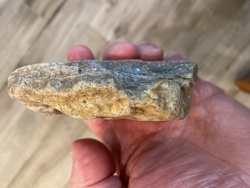
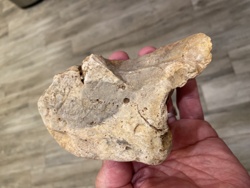
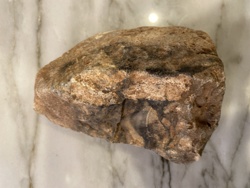
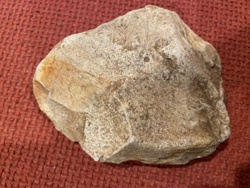
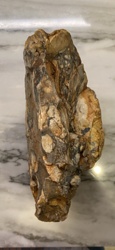
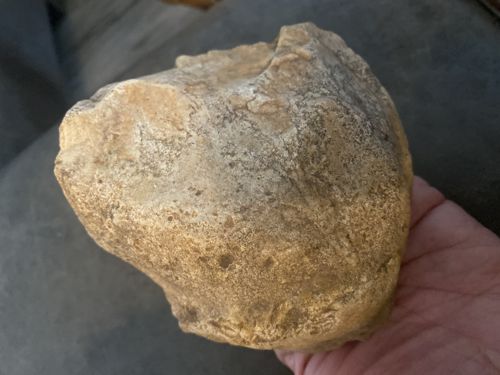
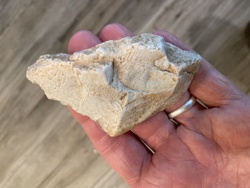
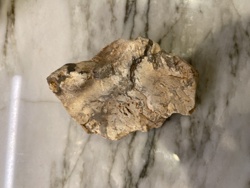
This is a substantial prehistoric stone tool, identified as a biface hand axe and scraper, measuring approximately 4.75 inches by 4 inches. Crafted from local tan-colored chert, the specimen exhibits the characteristic percussion flaking associated with Paleolithic tool manufacture. The body follows a tear-drop or heart-shaped morphology, designed to fit comfortably within the palm of the hand for manual use. It features visible flake scars across its surface where material was intentionally struck away to create sharpened edges and a tapered point. The coloration is primarily a variegated sandy tan and beige, with a heavy textured patina and surface pitting consistent with prolonged exposure to the elements and burial in soil. Notable features include a thickened, rounded base for grip and a progressively thinned working edge. The condition appears stable with no modern fractures, though it shows significant rounding and weathering of the flake ridges, suggesting great antiquity. The craftsmanship represents a utilitarian design, prioritizing durability and multi-functional use for chopping, scraping, or digging. Found in Guthrie, Oklahoma, this artifact serves as an archaeological record of early human migration and resource utilization in the North American Great Plains region.
AI-Generated Appraisal Disclaimer
Estimated Value
$150 - $250
Basic Information
Category
Archaeological Artifacts / Prehistoric Stone Tools
Appraised On
February 19, 2026
Estimated Value
$150 - $250
Additional Details Provided By Owner
User Provided Information
Paleolithic chert bi face hand axe scraper tool found in Guthrie OK measuring 4.75" x 4"
Item Description
This is a substantial prehistoric stone tool, identified as a biface hand axe and scraper, measuring approximately 4.75 inches by 4 inches. Crafted from local tan-colored chert, the specimen exhibits the characteristic percussion flaking associated with Paleolithic tool manufacture. The body follows a tear-drop or heart-shaped morphology, designed to fit comfortably within the palm of the hand for manual use. It features visible flake scars across its surface where material was intentionally struck away to create sharpened edges and a tapered point. The coloration is primarily a variegated sandy tan and beige, with a heavy textured patina and surface pitting consistent with prolonged exposure to the elements and burial in soil. Notable features include a thickened, rounded base for grip and a progressively thinned working edge. The condition appears stable with no modern fractures, though it shows significant rounding and weathering of the flake ridges, suggesting great antiquity. The craftsmanship represents a utilitarian design, prioritizing durability and multi-functional use for chopping, scraping, or digging. Found in Guthrie, Oklahoma, this artifact serves as an archaeological record of early human migration and resource utilization in the North American Great Plains region.
Get Your Items Appraised
Instant estimates of your treasures with AI-powered instant appraisals