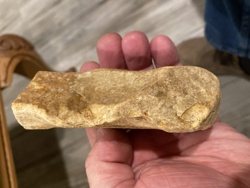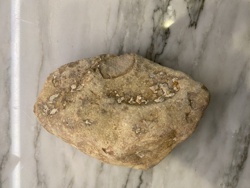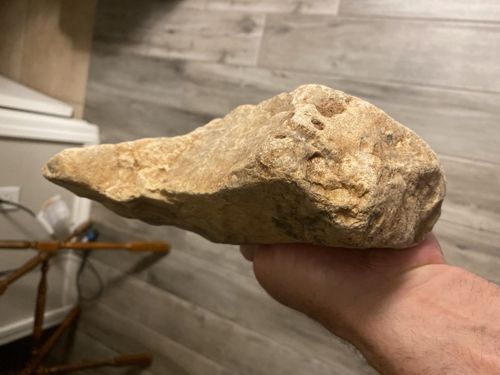
Lower Paleolithic Style Chert Biface Hand Axe / Scraper
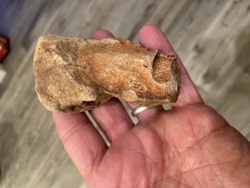
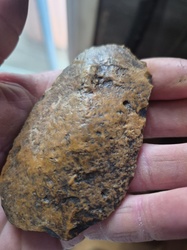
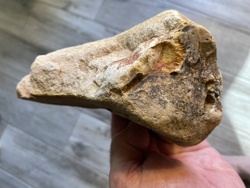
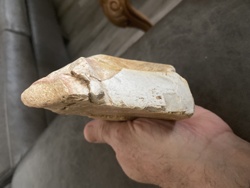
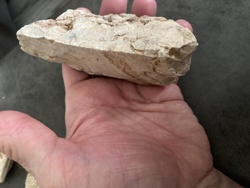
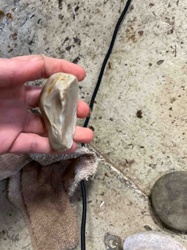
This is a substantial lithic specimen identified as a biface hand axe and scraper tool, measuring approximately 7 inches in length and 5 inches in width. The item is composed of a dense, sedimentary chert or flint-like stone, characterized by a light tan to buff coloration with variations of earthy brown and cream tones throughout. Its physical construction displays bifacial percussion flaking, resulting in a roughly triangular or almond-shaped profile. The tool features a thick, rounded proximal end (butt) suitable for gripping in the palm, tapering significantly to a thinner, albeit weathered, distal point. The edges show evidence of deliberate retouching consistent with scraper usage. Notable surface features include a rugged, pitted texture and visible flake scars that have been rounded by significant geological weathering and patination over time. There are no modern maker's marks or signatures, as it is a primitive lithic tool. The condition exhibits heavy environmental weathering, including rounded edges and minor surface calcification, which is typical for a Lower Paleolithic style artifact. While the provided context suggests an Acheulean origin found in Guthrie, OK, it's important to note that Acheulean technology is traditionally associated with Afro-Eurasia (Old World), and similar North American specimens are often evaluated within the context of Paleo-Indian or more recent indigenous tool-making traditions. The craftsmanship demonstrates a utilitarian focus, with robust percussion flaking designed for durability and multi-functional use in butchery or hide processing.
AI-Generated Appraisal Disclaimer
Estimated Value
$75.00 - $150.00
Basic Information
Category
Archaeological Artifacts / Lithic Tools
Appraised On
March 28, 2026
Estimated Value
$75.00 - $150.00
Additional Details Provided By Owner
User Provided Information
Lower Paleolithic Acheulean chert bi face hand axe scraper's tool found in Guthrie OK measuring 7" x 5"
Item Description
This is a substantial lithic specimen identified as a biface hand axe and scraper tool, measuring approximately 7 inches in length and 5 inches in width. The item is composed of a dense, sedimentary chert or flint-like stone, characterized by a light tan to buff coloration with variations of earthy brown and cream tones throughout. Its physical construction displays bifacial percussion flaking, resulting in a roughly triangular or almond-shaped profile. The tool features a thick, rounded proximal end (butt) suitable for gripping in the palm, tapering significantly to a thinner, albeit weathered, distal point. The edges show evidence of deliberate retouching consistent with scraper usage. Notable surface features include a rugged, pitted texture and visible flake scars that have been rounded by significant geological weathering and patination over time. There are no modern maker's marks or signatures, as it is a primitive lithic tool. The condition exhibits heavy environmental weathering, including rounded edges and minor surface calcification, which is typical for a Lower Paleolithic style artifact. While the provided context suggests an Acheulean origin found in Guthrie, OK, it's important to note that Acheulean technology is traditionally associated with Afro-Eurasia (Old World), and similar North American specimens are often evaluated within the context of Paleo-Indian or more recent indigenous tool-making traditions. The craftsmanship demonstrates a utilitarian focus, with robust percussion flaking designed for durability and multi-functional use in butchery or hide processing.
Get Your Items Appraised
Instant estimates of your treasures with AI-powered instant appraisals