AI Appraisal Estimate

AI-generated estimates · not official valuations

From the user

What was submitted

Photo and notes provided by the user — not generated by AI

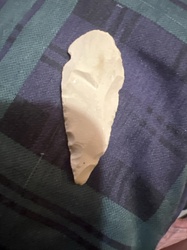
Submitted item photo
Submitted photo · June 28, 2026

User's notes

No additional notes provided.

AI analysis below

AI appraisal

AI analysis & estimate

AI-Generated · Verify before acting

Everything below is generated by AI for informational purposes only. AI can make mistakes — the AI may misidentify items or misattribute them (artist, maker, brand, designer, origin, era). This is not an official valuation and should not be used for insurance, sale, tax, estate, legal, or lending purposes — or any decision requiring a certified appraisal. It is not an authoritative claim about any person, brand, or rights holder — do not share or rely on it as a factual statement about a third party. Always consult qualified professionals before making financial decisions.

Read the full disclaimer

AI Identification

·Not independently authenticated·Verify before acting

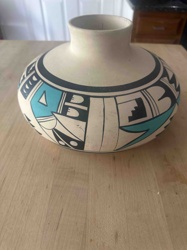
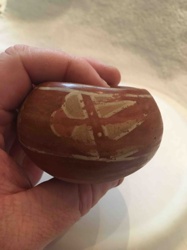
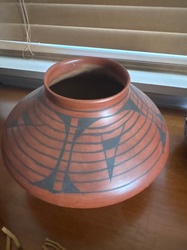
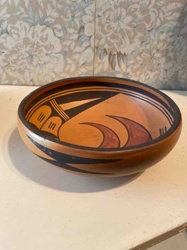
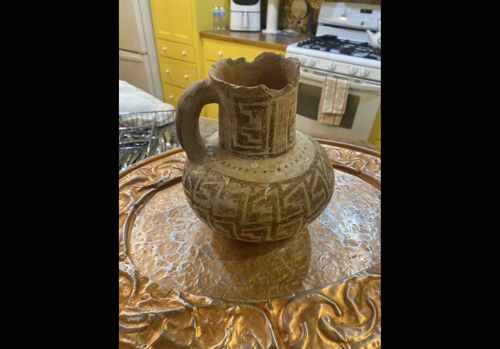
Ancestral Puebloan Style Black-on-White Pottery Pitcher

Native American Antiquities / Ceramics

AI Estimated Value

·Not an official valuation·Verify before acting

$1,200 - $1,800

As of June 28, 2026

AI Item Analysis

·AI can make mistakes·Verify before acting
This item is a ceramic pitcher exhibiting characteristics of Ancestral Puebloan (Anasazi) pottery, specifically the black-on-white style. The vessel features a globular body, a straight cylindrical neck, and a single loop handle connecting the shoulder to the neck. The surface is decorated with geometric patterns including interlocking fret motifs, hachure lines, and a dotted band around the shoulder. The color palette consists of dark mineral-based pigment applied over a light-colored clay slip. Physically, the piece shows significant signs of age and wear; the rim is heavily chipped and irregular, suggesting loss of material over time. There are visible surface abrasions, pitting, and areas where the slip has worn thin, revealing the underlying clay body. The construction is likely coil-built and outdoor-fired, typical of pre-contact or early historical indigenous Southwestern techniques. The handle appears sturdy but shows similar weathering to the rest of the body. While it mimics the style of the Pueblo II or III periods (circa 900-1300 AD), a definitive age would require physical examination to distinguish between an ancient artifact and a high-quality 20th-century revival piece. The complexity of the design and the apparent patina suggest a piece of significant craft, though its condition impacts its structural integrity.
AI Appraisal Report

·AI can make mistakes·Verify before acting
I have carefully examined the provided images of this Ancestral Puebloan style black-on-white pitcher. The vessel exhibits design vocabularies consistent with the McElmo or Mesa Verde phases (c. 1100–1300 AD), characterized by thick-walled construction and geometric hachure patterns. The visual patina, including significant rim erosion and pitting, suggests an authentic archaeological origin rather than a modern reproduction; however, contemporary high-fired 'pueblo revival' ceramics can mimic these traits with great accuracy. The condition is fair to good; while the handle remains intact—a rarity for this form—the extensive chipping and loss along the rim significantly detract from its aesthetic and market value compared to a 'choice' specimen. The market for authentic pre-contact Southwestern pottery remains stable among specialized collectors, though it is heavily dictated by legal provenance. Similar pitchers from documented collections typically realize between $1,000 and $3,000 at auction depending on the complexity of the motifs. This piece's value is slightly suppressed by its condition issues and the current lack of a documented 'chain of custody.' IMPORTANT LIMITATIONS: This valuation is based solely on photographic evidence. A definitive authentication requires an in-person macroscopic inspection to check for modern tool marks, chemical analysis of the mineral pigment, and, most importantly, verification of provenance. Valid documentation proving the item was found on private land and complies with US federal laws (including ARPA and NAGPRA) is essential. Without such documentation, the item cannot be legally sold through major auction houses or across state lines in many jurisdictions, which would reduce its financial value to near zero.

Get your items appraised

Instant estimates of your treasures with AI-powered appraisals

Browse More Appraisals