AI Appraisal Estimate

AI-generated estimates · not official valuations

From the user

What was submitted

Photo and notes provided by the user — not generated by AI

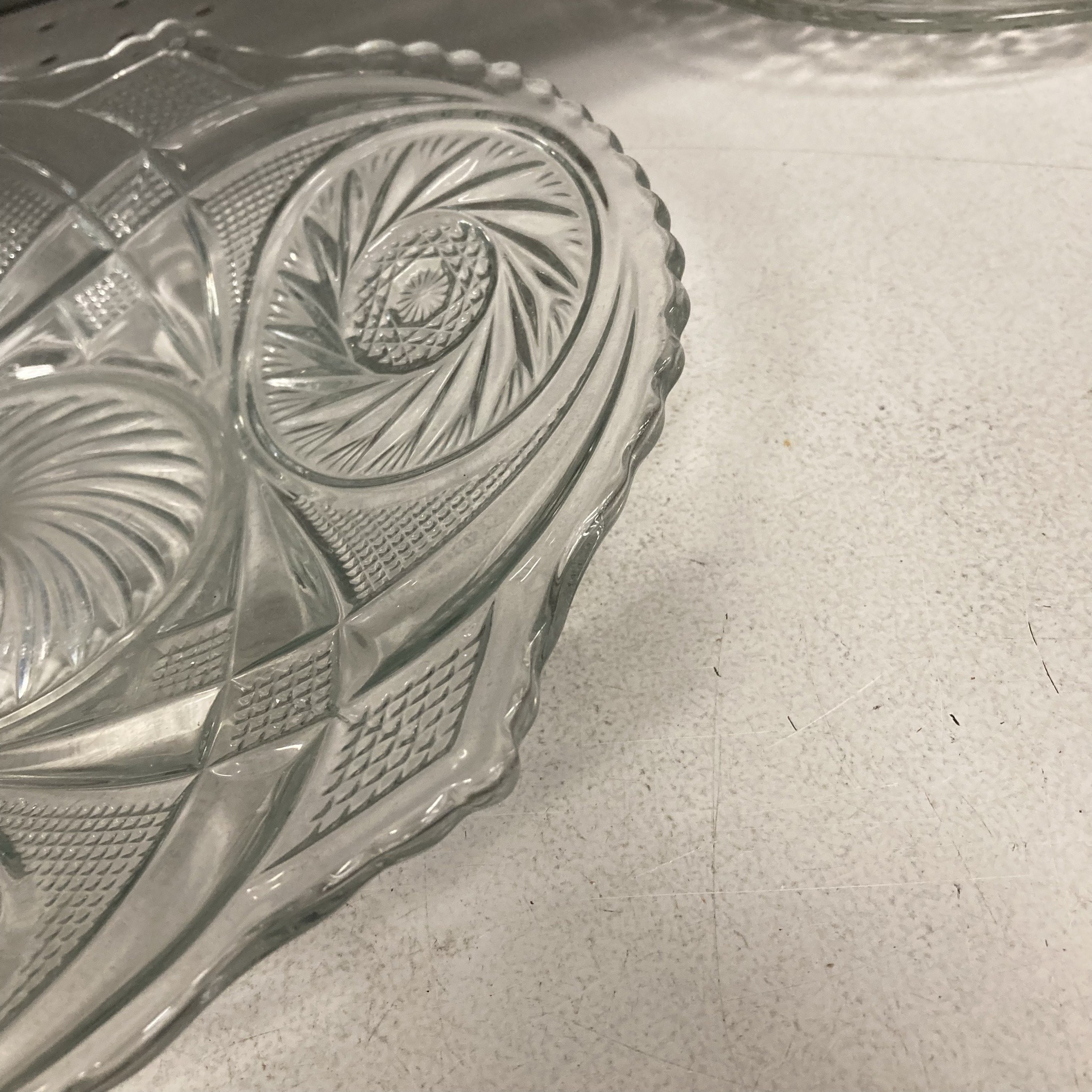
Submitted item photo
Submitted photo · June 25, 2026

User's notes

No additional notes provided.

AI analysis below

AI appraisal

AI analysis & estimate

AI-Generated · Verify before acting

Everything below is generated by AI for informational purposes only. AI can make mistakes — the AI may misidentify items or misattribute them (artist, maker, brand, designer, origin, era). This is not an official valuation and should not be used for insurance, sale, tax, estate, legal, or lending purposes — or any decision requiring a certified appraisal. It is not an authoritative claim about any person, brand, or rights holder — do not share or rely on it as a factual statement about a third party. Always consult qualified professionals before making financial decisions.

Read the full disclaimer

AI Identification

·Not independently authenticated·Verify before acting

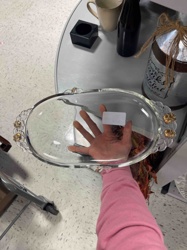
Pressed Glass Platter with Pinwheel and Hobart Pattern

Vintage Glassware / Serveware

AI Estimated Value

·Not an official valuation·Verify before acting

$25 - $45

As of June 25, 2026

AI Item Analysis

·AI can make mistakes·Verify before acting
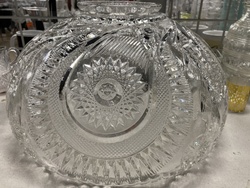
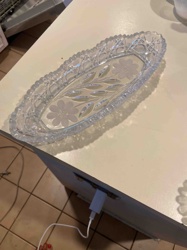
This item is a circular serving platter crafted from clear, heavy-gauge pressed glass. It features an intricate geometric design characteristic of Early American Pattern Glass (EAPG) or mid-20th-century glass manufacturing. The central motifs include large circular 'pinwheels' or 'whirligig' patterns with radiating curved lines that create a sense of movement. Surrounding these are fields of hobnail or cross-hatched textured diamonds, also known as 'fine cut' patterns, which add significant tactile depth and brilliance to the piece. The outer edge is finished with a scalloped, serrated, or 'sawtooth' rim that enhances light refraction. The glass is colorless and reflects light with a high degree of clarity, though pressed glass often shows subtle cooling marks or mold seams, which are visible upon close inspection. Based on the style and craftsmanship, this piece likely dates from the 1940s to the 1960s, a period when manufacturers like Imperial Glass or Anchor Hocking produced similar ornate tableware. The condition appears fair to good; there are no major cracks visible, but the surface shows light scratches consistent with domestic use and shelf wear. No obvious maker's marks or signatures are present in the photograph, which is typical for glass of this era and type.
AI Appraisal Report

·AI can make mistakes·Verify before acting
Based on my visual examination of the pressed glass platter, the item presents as a classic example of mass-produced American brilliant-style glassware from the mid-20th century. The intricate pinwheel and hobstar motifs emulate the more expensive cut glass of the Victorian era but are clearly achieved through a pressing mold, as indicated by the presence of mold seams and the slightly rounded edges of the facets. The condition is noted as fair to good; while the structural integrity is sound, the presence of surface scratching from domestic use and shelf wear is consistent with its age and utility. In the current secondary market, such as online auctions and local antique malls, there is a consistent supply of these unsigned utilitarian pieces. They are valued more for their aesthetic and functional utility than for rarity or collector demand. Pieces from manufacturers like Imperial or Anchor Hocking are ubiquitous, which keeps the price point accessible. A significant limitation of this appraisal is the inability to perform a 'ring test' for lead content or use UV light to check for fluorescence (indicative of specific chemical stabilizers), both of which would help pinpoint the exact manufacturer and decade of production. Furthermore, physical inspection is required to check for 'flea bites' or minute chips along the sawtooth rim that are not visible in photographs. To fully authenticate the piece, I would recommend checking for specific catalog matches in Early American Pattern Glass references and verifying provenance if the piece belonged to a known service set.

Get your items appraised

Instant estimates of your treasures with AI-powered appraisals

Browse More Appraisals